Articles | Volume 11, issue 2
https://doi.org/10.5194/ascmo-11-273-2025
© Author(s) 2025. This work is distributed under
the Creative Commons Attribution 4.0 License.
the Creative Commons Attribution 4.0 License.
https://doi.org/10.5194/ascmo-11-273-2025
© Author(s) 2025. This work is distributed under
the Creative Commons Attribution 4.0 License.
the Creative Commons Attribution 4.0 License.

02 Dec 2025
| 02 Dec 2025
Soil moisture–temperature coupling during extreme warm conditions in 2018 in Sweden: a case study with WRF-CTSM

Center for International Climate Research (CICERO), Oslo, Norway
Department of Geosciences, University of Oslo, Oslo, Norway
Øivind Hodnebrog
Center for International Climate Research (CICERO), Oslo, Norway
Yeliz A. Yilmaz
Department of Geosciences, University of Oslo, Oslo, Norway
Terje K. Berntsen
Department of Geosciences, University of Oslo, Oslo, Norway
Jana Sillmann
Center for International Climate Research (CICERO), Oslo, Norway
Research Unit Sustainability and Climate Risks, Center for Earth System Research and Sustainability (CEN), University of Hamburg, Hamburg, Germany
David M. Lawrence
National Center for Atmospheric Research (NCAR), Boulder, CO, USA
Paul A. Dirmeyer
Atmospheric, Oceanic & Earth Sciences Department, George Mason University, Fairfax, VA, USA
Related authors
No articles found.
Megan D. Fowler, Richard B. Neale, Cecile Hannay, David M. Lawrence, Adam S. Phillips, Isla R. Simpson, and Gustavo Marques
EGUsphere, https://doi.org/10.5194/egusphere-2026-4558, https://doi.org/10.5194/egusphere-2026-4558, 2026
This preprint is open for discussion and under review for Geoscientific Model Development (GMD).
Short summary
Short summary
The development of a coupled Earth System Model is a complex one, necessitating the tracking of model behavior throughout. Here, we document the evolution in one such model with respect to the El Nino Southern Oscillation (ENSO). We assess the performance of simulated ENSO across 60+ development simulations, measured against both observations and previous model versions. This study represents an initial stepping stone in establishing an open and transparent process in model development.
Abigail L. S. Swann, Charles D. Koven, Cristian Proistosecu, Rosie A. Fisher, Benjamin M. Sanderson, Victor Brovkin, Tomohiro Hajima, Chris D. Jones, Nancy Y. Kiang, David M. Lawrence, Spencer Liddicoat, Hannah Liddy, Anastasia Romanou, Roland Séférian, Lori T. Sentman, Norman J. Steinert, Jerry Tjiputra, and Tilo Ziehn
Earth Syst. Dynam., 17, 1237–1275, https://doi.org/10.5194/esd-17-1237-2026, https://doi.org/10.5194/esd-17-1237-2026, 2026
Short summary
Short summary
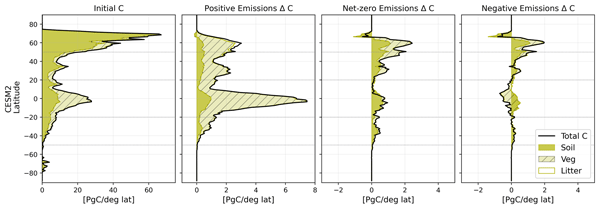
We analyzed simulations from Earth system models (ESM) with a constant rate of emissions, zero emissions, and negative emissions of CO2 to quantify the response of land carbon sinks. We found that under positive emissions vegetation in the tropics gained carbon. Under zero emissions and negative emissions most ESMs lost carbon from vegetation in the tropics but gained carbon in mid- and high-latitudes, mostly in soils. Our findings imply that tropical carbon is vulnerable under zero emissions.
Benjamin Poschlod, Lukas Brunner, and Jana Sillmann
EGUsphere, https://doi.org/10.5194/egusphere-2026-4014, https://doi.org/10.5194/egusphere-2026-4014, 2026
Short summary
Short summary
Scientists often measure drought by counting the longest run of days without meaningful rain. Comparing high-resolution climate models, radar, and station data across Germany, we found that fine-scale maps show sharp, patchy patterns, because a small shower can break the dry streak in one place but not the next. The high-resolution climate model matches what radar observes, but yearly counts are so sensitive to chance rainfall that they are an unreliable basis for tracking drought.
Ragnhild Bieltvedt Skeie, Terje K. Berntsen, Ada Gjermundsen, Ragnar Bang Huseby, Gunnar Myhre, Dirk Olivié, and Trude Storelvmo
EGUsphere, https://doi.org/10.5194/egusphere-2026-4634, https://doi.org/10.5194/egusphere-2026-4634, 2026
This preprint is open for discussion and under review for Earth System Dynamics (ESD).
Short summary
Short summary
Climate sensitivity is a key quantity in climate science. We tested an observation-based method for estimating climate sensitivity by replacing observations with historical climate model simulations. Estimates varied substantially among simulations of the same model where only the initial conditions differed. Since the historical climate is only one realization of the Earth’s climate, this highlights that natural variability is an important source of uncertainty in observation-based estimates.
Matthias Cuntz, Stephan Thober, Anne Verhoef, Yijian Zeng, Aaron Boone, Agnès Ducharne, Sujan Koirala, David M. Lawrence, Philipp de Vrese, Carsten Montzka, Sonia I. Seneviratne, Harry Vereecken, Dani Or, Salma Tafasca, Naoki Mizukami, Rich Ellis, Patrick C. McGuire, and Lukas Gudmundsson
EGUsphere, https://doi.org/10.5194/egusphere-2026-4223, https://doi.org/10.5194/egusphere-2026-4223, 2026
Preprint archived
Short summary
Short summary
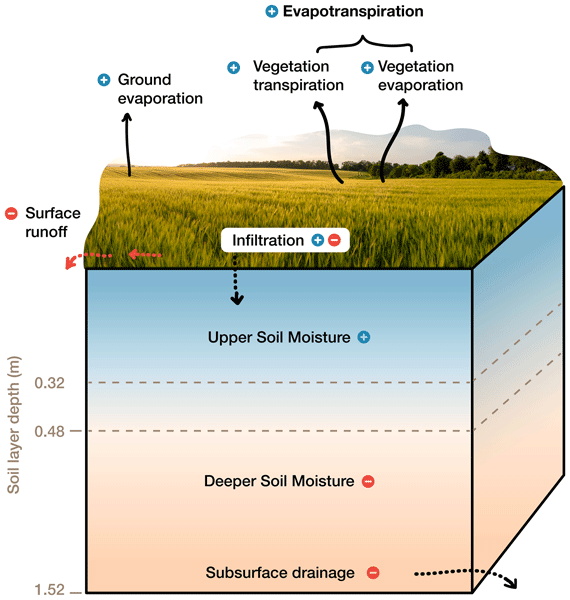
Land surface models (LSMs) are essential tools to analyze future climate change. Here we pushed state-of-the-art LSMs out of their comfort zone revealing hidden connections between processes encoded into the models. The LSMs reacted differently due to complex, sometimes counter-intuitive interactions of different water fluxes. We identified surface runoff and soil evaporation as the two main reasons behind model differences, which should be improved by using more mechanistic descriptions.
Srinath Krishnan, Ragnhild Bieltvedt Skeie, Øivind Hodnebrog, Gunnar Myhre, Maria Sand, Marit Sandstad, Hannah Bryant, Didier A. Hauglustaine, Fabien Paulot, Michael Prather, and David Stevenson
Atmos. Chem. Phys., 26, 9509–9539, https://doi.org/10.5194/acp-26-9509-2026, https://doi.org/10.5194/acp-26-9509-2026, 2026
Short summary
Short summary
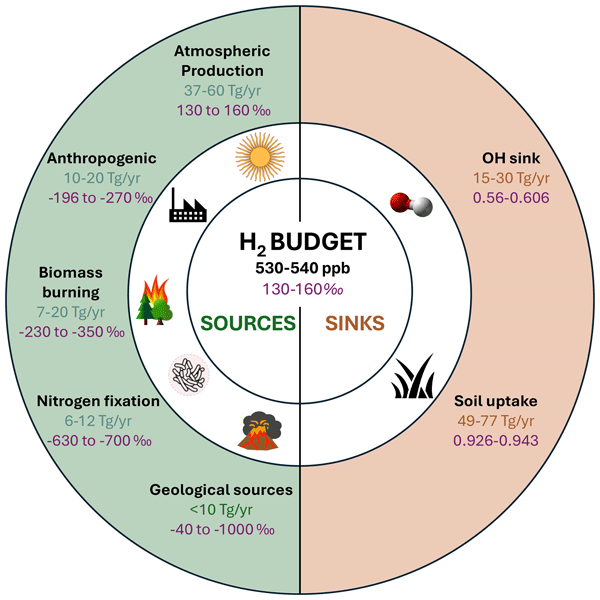
Hydrogen (H2) is an indirect greenhouse gas that can affect climate through chemical reactions in the atmosphere. To better understand this impact, it is important to constrain the sources and sinks of hydrogen. Using a suite of three-dimensional and one-dimensional models, we find that atmospheric production of hydrogen is 37–60 Tg/yr and that the geological source of H2 is much smaller than suggested. More field and isotopic measurements are needed to improve these estimates.
Eunkyo Seo, Seongjun Bae, Junnyeong Han, Cheolhee Yoo, and Paul A. Dirmeyer
EGUsphere, https://doi.org/10.5194/egusphere-2026-3001, https://doi.org/10.5194/egusphere-2026-3001, 2026
This preprint is open for discussion and under review for Hydrology and Earth System Sciences (HESS).
Short summary
Short summary
Soil moisture sensors can be distorted by daytime heating, creating false diurnal rises when soils are actually drying. We developed a Long Short-Term Memory network that learns realistic diurnal cycles from observations and land surface models and uses them to correct these false signals. The corrected records more clearly show daytime soil drying and improve our understanding of how water in the soil influences heat and moisture exchange between the land and atmosphere.
Inne Vanderkelen, Marie-Estelle Demory, Sean Swenson, David M. Lawrence, Benjamin D. Stocker, Myke Koopmans, and Édouard L. Davin
Biogeosciences, 23, 3829–3854, https://doi.org/10.5194/bg-23-3829-2026, https://doi.org/10.5194/bg-23-3829-2026, 2026
Short summary
Short summary
Soil carbon sequestration supports climate mitigation and may enhance water availability. Using a global land model, we show that increased soil organic carbon improves water retention in the root zone and reduces runoff, particularly in dry, sandy regions. Although hydrological changes are modest, they are systematic and suggest co-benefits for vegetation productivity and ecosystem resilience in water-limited areas.
Anastasia Vogelbacher, Malte von Szombathely, Marc Lennartz, Benjamin Poschlod, and Jana Sillmann
Nat. Hazards Earth Syst. Sci., 26, 2765–2783, https://doi.org/10.5194/nhess-26-2765-2026, https://doi.org/10.5194/nhess-26-2765-2026, 2026
Short summary
Short summary
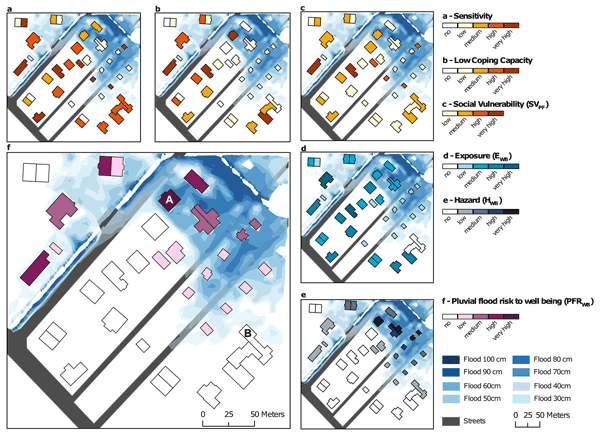
In this study we address risk to pluvial floods by following the risk definition of the Intergovernmental Panel on Climate Change (IPCC), developed in co-operation with stakeholders of the city of Hamburg. We identify buildings in urban areas where residents face higher flood risk due to greater social vulnerability, increased exposure, or elevated flood hazard. We present the development and application of a Python-based ArcGIS toolbox for estimating pluvial flood risk at building scale.
Gyuyeon Choi, Eunkyo Seo, and Paul A. Dirmeyer
EGUsphere, https://doi.org/10.5194/egusphere-2026-2867, https://doi.org/10.5194/egusphere-2026-2867, 2026
Short summary
Short summary
This study evaluates five satellite and four reanalysis products against 6,824 ground-based observations for diurnal cycle fidelity. Satellites show a 1 to 2 hour phase delay from upper-level ice detection, while reanalyses peak 3 to 6 hours early from premature convective onset. Contrasting performances are linked to specific design choices in retrieval algorithms and convective parameterization, offering physically grounded guidance for dataset selection in hydrological and climate studies.
Ingrid Vesterdal Tjessem, Peter Horvath, Adam Eindride Naas, Rune Halvorsen, Kerstin Potthoff, Ketil Isaksen, Ole Einar Tveito, Terje Koren Berntsen, Ida Marielle Mienna, and Anders Bryn
EGUsphere, https://doi.org/10.5194/egusphere-2026-2717, https://doi.org/10.5194/egusphere-2026-2717, 2026
Short summary
Short summary
We investigated how tree- and forest lines (TFLs) in Norway have shifted over the past 50–130 years. Using remapped field observations, we show that the uppermost forest along the boreal-alpine ecotone is advancing at an average rate exceeding 0.5 m per year. This advance is driven by climate warming and land use. Our findings highlight the complexity and variation in TFL dynamics, caused by a combination of regional variation, stochastic disturbances, and time-lags.
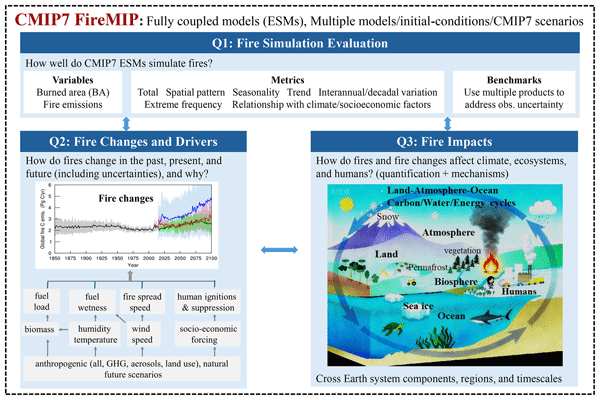
Fang Li, David M. Lawrence, Brendan M. Rogers, Chantelle Burton, Huilin Huang, Yiquan Jiang, Johannes W. Kaiser, Matthew Kasoar, Hanna Lee, Ruby Leung, Lars Nieradzik, Aihui Wang, Daniel S. Ward, Ligeer Ce, Yangchun Li, Zhongda Lin, Apostolos Voulgarakis, and Yongkang Xue
Geosci. Model Dev., 19, 3989–4007, https://doi.org/10.5194/gmd-19-3989-2026, https://doi.org/10.5194/gmd-19-3989-2026, 2026
Short summary
Short summary
Extreme fire events are increasing, and fires are projected to rise across most regions, posing growing risks to ecosystems and society. As a key Earth system process, fire is now modeled in most Earth System Models (ESMs). FireMIP (Fire Modeling Intercomparison Project) within CMIP7 will evaluate fire simulations in state‑of‑the‑art ESMs, project future fire changes, and provide quantitative, process‑based understanding of fire's role in the Earth system.
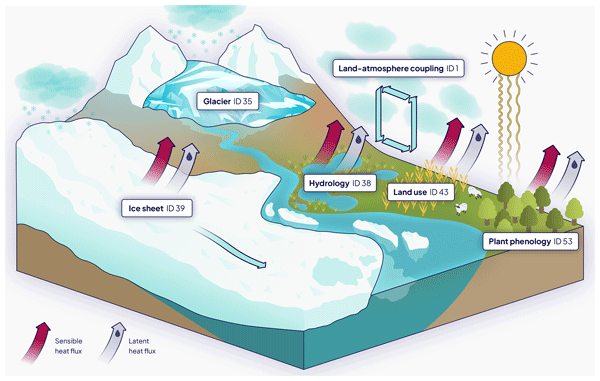
Yue Li, Gang Tang, Eleanor O'Rourke, Samar Minallah, Martim Mas e Braga, Sophie Nowicki, Robin S. Smith, David M. Lawrence, George C. Hurtt, Daniele Peano, Gesa Meyer, Birgit Hassler, Jiafu Mao, Yongkang Xue, and Martin Juckes
Geosci. Model Dev., 19, 3129–3155, https://doi.org/10.5194/gmd-19-3129-2026, https://doi.org/10.5194/gmd-19-3129-2026, 2026
Short summary
Short summary
Land and Land Ice Theme Opportunities describe a list that contains 25 variable groups with 716 variables, which are potentially available to the broad scientific audience for performing analysis in land–atmosphere coupling, hydrological processes and freshwater systems, glacier and ice sheet mass balance and their influence on the sea levels, land use, and plant phenology.

Timothy Tiggeloven, Colin Raymond, Marleen C. de Ruiter, Jana Sillmann, Annegret H. Thieken, Sophie L. Buijs, Roxana Ciurean, Emma Cordier, Julia M. Crummy, Lydia Cumiskey, Kelley De Polt, Melanie Duncan, Davide M. Ferrario, Wiebke S. Jäger, Elco E. Koks, Nicole van Maanen, Heather J. Murdock, Jaroslav Mysiak, Sadhana Nirandjan, Benjamin Poschlod, Peter Priesmeier, Nivedita Sairam, Pia-Johanna Schweizer, Tristian R. Stolte, Marie-Luise Zenker, James E. Daniell, Alexander Fekete, Christian M. Geiß, Marc J. C. van den Homberg, Sirkku K. Juhola, Christian Kuhlicke, Karen Lebek, Robert Šakić Trogrlić, Stefan Schneiderbauer, Silvia Torresan, Cees J. van Westen, Judith N. Claassen, Bijan Khazai, Virginia Murray, Julius Schlumberger, and Philip J. Ward
Geosci. Commun., 9, 185–221, https://doi.org/10.5194/gc-9-185-2026, https://doi.org/10.5194/gc-9-185-2026, 2026
Short summary
Short summary
Natural hazards like floods, earthquakes, and landslides are often interconnected which may create bigger problems than when they occur alone. We studied expert discussions from an international conference to understand how scientists and policymakers can better prepare for these multi-hazards and use new technologies to protect its communities while contributing to dialogues about future international agreements beyond the Sendai Framework and supporting global sustainability goals.
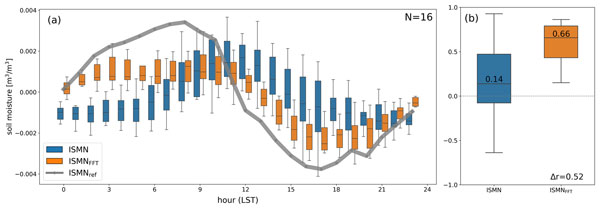
Junnyeong Han, Eunkyo Seo, and Paul A. Dirmeyer
Hydrol. Earth Syst. Sci., 30, 2207–2223, https://doi.org/10.5194/hess-30-2207-2026, https://doi.org/10.5194/hess-30-2207-2026, 2026
Short summary
Short summary
Soil moisture sensors often exhibit misleading daytime peaks because they are sensitive to temperature. This study proposes a method to correct the spurious diurnal cycle of surface soil moisture, using Fourier analysis with land reanalyses. The diurnally adjusted time series better captures realistic soil moisture behavior and provides more reliable insight into land–atmosphere interactions on a diurnal timescale.
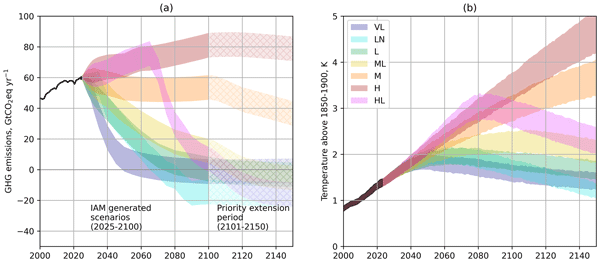
Detlef P. Van Vuuren, Brian C. O'Neill, Claudia Tebaldi, Benjamin M. Sanderson, Louise P. Chini, Pierre Friedlingstein, Tomoko Hasegawa, Keywan Riahi, Bala Govindasamy, Nico Bauer, Veronika Eyring, Cheikh M. N. Fall, Katja Frieler, Matthew J. Gidden, Laila K. Gohar, Annika Högner, Andrew D. Jones, Jarmo Kikstra, Andrew King, Reto Knutti, Elmar Kriegler, Peter Lawrence, Chris Lennard, Jason Lowe, Camilla Mathison, Shahbaz Mehmood, Zebedee Nicholls, Luciana F. Prado, Qiang Zhang, Steven K. Rose, Alex C. Ruane, Marit Sandstad, Carl-Friedrich Schleussner, Roland Seferian, Jana Sillmann, Chris Smith, Anna A. Sörensson, Swapna Panickal, Kaoru Tachiiri, Naomi Vaughan, Saritha S. Vishwanathan, Tokuta Yokohata, Marco Zecchetto, and Tilo Ziehn
Geosci. Model Dev., 19, 2627–2656, https://doi.org/10.5194/gmd-19-2627-2026, https://doi.org/10.5194/gmd-19-2627-2026, 2026
Short summary
Short summary
We propose a set of seven plausible 21st century emission scenarios, and their multi-century extensions, that will be used by the international community of climate modeling centers to produce the next generation of climate projections. These projections will support climate, impact and mitigation researchers, provide information to practitioners to address future risks from climate change, and contribute to policymakers’ considerations of the trade-offs among various levels of mitigation.
Gunnar Myhre, Øivind Hodnebrog, Srinath Krishnan, Maria Sand, Marit Sandstad, Ragnhild B. Skeie, Lieven Clarisse, Bruno Franco, Dylan B. Millet, Kelley C. Wells, Alexander Archibald, Hannah N. Bryant, Alex T. Chaudhri, David S. Stevenson, Didier Hauglustaine, Michael Prather, J. Christopher Kaiser, Dirk J. L. Olivie, Michael Schulz, Oliver Wild, Ye Wang, Thérèse Salameh, Jason E. Williams, Philippe Le Sager, Fabien Paulot, Kostas Tsigaridis, and Haley E. Plaas
Geosci. Model Dev., 19, 2577–2591, https://doi.org/10.5194/gmd-19-2577-2026, https://doi.org/10.5194/gmd-19-2577-2026, 2026
Short summary
Short summary
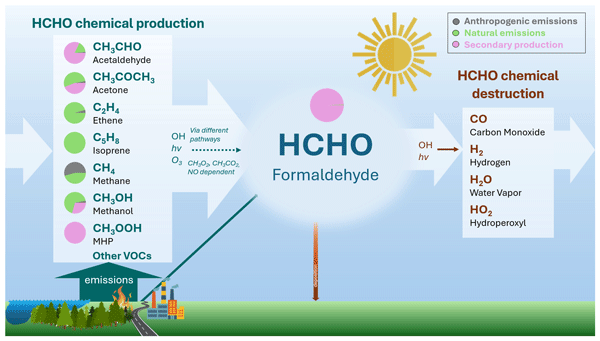
Volatile organic compounds (VOCs) affect air quality and climate, but their behavior in the atmosphere is still uncertain. We launched a global research effort to compare how different models represent these compounds and to improve their accuracy. By analyzing model results alongside observations and satellite data, we aim to better understand the atmospheric composition of these compounds.
Philip J. Ward, Sophie L. Buijs, Roxana Ciurean, Judith N. Claassen, James Daniell, Kelley De Polt, Melanie Duncan, Stefania Gottardo, Stefan Hochrainer-Stigler, Robert Šakić Trogrlić, Julius Schlumberger, Timothy Tiggeloven, Silvia Torresan, Nicole van Maanen, Andrew Warren, Carmen D. Álvarez-Albelo, Vanessa Banks, Benjamin Blanz, Veronica Casartelli, Jordan Correa, Julia Crummy, Anne Sophie Daloz, Marleen C. de Ruiter, Juan José Díaz-Hernández, Jaime Díaz-Pacheco, Pedro Dorta Antequera, Davide Ferrario, David Geurts, Sara García-González, Joel C. Gill, Raúl Hernández-Martín, Wiebke S. Jäger, Abel López-Díez, Lin Ma, Jaroslav Mysiak, Diep Ngoc Nguyen, Noemi Padrón Fumero, Eva-Cristina Petrescu, Karina Reiter, Jana Sillmann, Lara Smale, and Tristian Stolte
Nat. Hazards Earth Syst. Sci., 26, 1325–1345, https://doi.org/10.5194/nhess-26-1325-2026, https://doi.org/10.5194/nhess-26-1325-2026, 2026
Short summary
Short summary
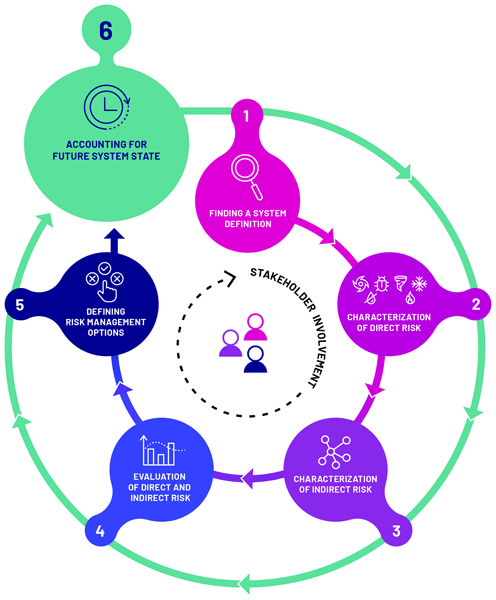
Disasters often result from interactions between different hazards, like floods triggering landslides, or earthquakes followed by tropical cyclones, so-called multi-hazards. People and societies are increasingly exposed and vulnerable to these multi-hazards. Assessing these aspects is referred to as multi-risk assessment and management. In this paper we synthesise key learnings from the MYRIAD-EU (Multi-hazard and sYstemic framework for enhancing Risk-Informed mAnagement and Decision-making in the E.U.) project, reflecting on progress and challenges faced in addressing multi-hazards and multi-risk.
William James Collins, Øivind Hodnebrog, Keith Peter Shine, and James B. Burkholder
EGUsphere, https://doi.org/10.5194/egusphere-2026-674, https://doi.org/10.5194/egusphere-2026-674, 2026
Short summary
Short summary
The global warming potential (GWP) is a commonly used metric for relating the climate impact of emissions of a gas relative to that for carbon dioxide. We show that previous calculations have systematically underestimated these values by applying calculations of radiative forcing efficiency appropriate to changes in surface mole fractions rather than changes in the mass-weighted mean mole fraction in the atmosphere.

Maša Ann, Jörn Behrens, and Jana Sillmann
Nonlin. Processes Geophys., 33, 85–102, https://doi.org/10.5194/npg-33-85-2026, https://doi.org/10.5194/npg-33-85-2026, 2026
Short summary
Short summary
We present a new framework based on Dynamic Mode Decomposition (DMD) to better detect outliers and model extremes. Unlike standard DMD, which focuses on average system behaviour, our approach targets rare, exceptional dynamics. Applied to climate data, it improves extreme event approximation and reveals meaningful spatiotemporal patterns. The method may generalise to other types of extremes.
Eunkyo Seo, Paul A. Dirmeyer, and Sunlae Tak
Geosci. Model Dev., 19, 1261–1280, https://doi.org/10.5194/gmd-19-1261-2026, https://doi.org/10.5194/gmd-19-1261-2026, 2026
Short summary
Short summary
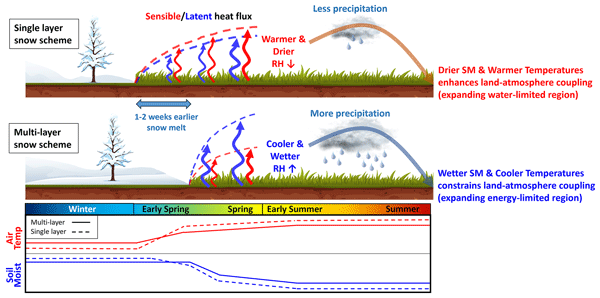
This study examines a multi-layer snow scheme in seasonal forecasts. Compared to a single-layer scheme, it better captures snow insulation, delaying spring snowmelt by 1–2 weeks. This postpones evaporation and slows soil moisture depletion, which promotes evaporative cooling due to increasing energy partitioning into latent heat flux and enhances precipitation occurrence. This leads to realistic land-atmosphere interactions and reduced biases across Northern Hemisphere mid- and high-latitudes.

Nina Schuhen, Carley E. Iles, Marit Sandstad, Viktor Ananiev, and Jana Sillmann
Nat. Hazards Earth Syst. Sci., 26, 753–773, https://doi.org/10.5194/nhess-26-753-2026, https://doi.org/10.5194/nhess-26-753-2026, 2026
Short summary
Short summary
As climate changes, extremes are becoming increasingly frequent. We investigate the time of emergence for a large range of different extremes, meaning the earliest time when a significant change in these extremes can be detected beyond natural variability, whether in the past or in the future. The results are based on 21 global climate models and show considerable differences between regions, types of indices and emissions scenarios, as well as between temperature and precipitation extremes.
William J. Collins, John S. Daniel, Martyn P. Chipperfield, Martin Cussac, Makoto Deushi, Gregory Faluvegi, Paul Griffiths, Øivind Hodnebrog, Larry W. Horowitz, James Keeble, Douglas Kinnison, Vaishali Naik, Fiona M. O'Connor, Drew Shindell, Simone Tilmes, Kostas Tsigaridis, Zihao Wang, and James Weber
EGUsphere, https://doi.org/10.5194/egusphere-2025-6033, https://doi.org/10.5194/egusphere-2025-6033, 2026
Short summary
Short summary
Ozone depleting substances (ODSs) are also greenhouse gases that cause global warming. However, their destruction of ozone contributes a global cooling. We have used results from climate models that include atmospheric chemistry and found that the cooling effect of the ozone depletion diagnosed in the models was larger than that calculated using a standard method. We find that some ODSs have a net cooling effect whereas for others the warming effect is significantly reduced.

Jon Cranko Page, Martin G. De Kauwe, Andy J. Pitman, Isaac R. Towers, Gabriele Arduini, Martin J. Best, Craig R. Ferguson, Jürgen Knauer, Hyungjun Kim, David M. Lawrence, Tomoko Nitta, Keith W. Oleson, Catherine Ottlé, Anna Ukkola, Nicholas Vuichard, Xiaoni Wang-Faivre, and Gab Abramowitz
Biogeosciences, 23, 263–282, https://doi.org/10.5194/bg-23-263-2026, https://doi.org/10.5194/bg-23-263-2026, 2026
Short summary
Short summary
This paper used a large dataset of observations, machine learning predictions, and computer model simulations to test how well land surface models represent the water, energy, and carbon cycles. We found that the models work well under "normal" weather but do not meet performance expectations during coinciding extreme conditions. Since these extremes are relatively rare, targeted model improvements could deliver major performance gains.
Alexander Lee Rischmuller, Benjamin Poschlod, and Jana Sillmann
Adv. Stat. Clim. Meteorol. Oceanogr., 12, 1–19, https://doi.org/10.5194/ascmo-12-1-2026, https://doi.org/10.5194/ascmo-12-1-2026, 2026
Short summary
Short summary
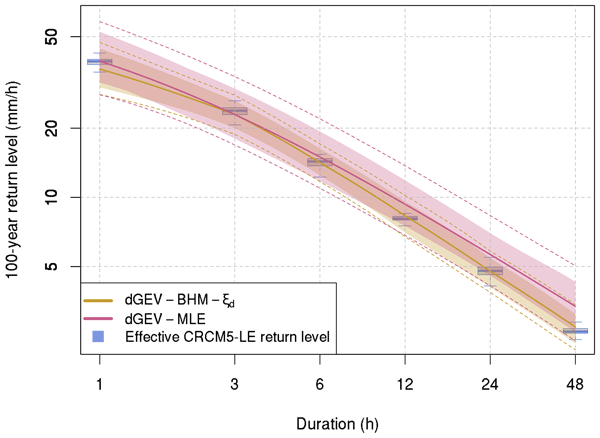
Extreme precipitation probability estimation is vital for hazard protection design but has high uncertainty. We tested six statistical models using 2000 years of climate data. Our Bayesian hierarchical duration-dependent Generalized Extreme Value model shows the highest accuracy and robustness for sample sizes between 30 and 100 years, making it highly promising for use with limited observational records.
Victor Brovkin, Benjamin M. Sanderson, Noel G. Brizuela, Tomohiro Hajima, Tatiana Ilyina, Chris D. Jones, Charles Koven, David Lawrence, Peter Lawrence, Hongmei Li, Spencer Liddcoat, Anastasia Romanou, Roland Séférian, Lori T. Sentman, Abigail L. S. Swann, Jerry Tjiputra, Tilo Ziehn, and Alexander J. Winkler
Earth Syst. Dynam., 16, 2021–2034, https://doi.org/10.5194/esd-16-2021-2025, https://doi.org/10.5194/esd-16-2021-2025, 2025
Short summary
Short summary
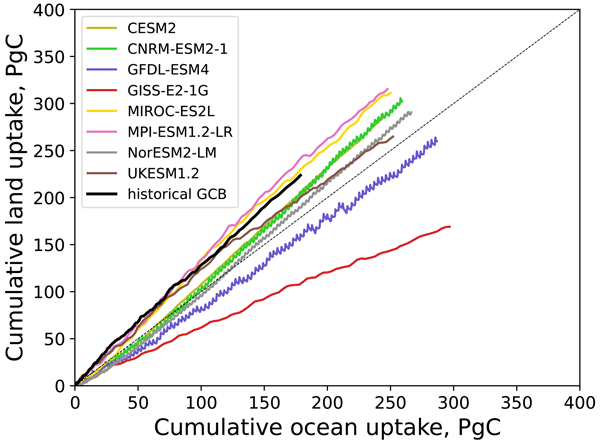
Idealized experiments with Earth system models provide a basis for understanding the response of the carbon cycle to emissions. We show that most models exhibit a quasi-linear relationship between cumulative carbon uptake on land and in the ocean and hypothesize that this relationship does not depend on emission pathways. We reduce the coupled system to only one differential equation, which represents a powerful simplification of the Earth system dynamics as a function of fossil fuel emissions.
Natalia Castillo Bautista, Marco Gaetani, Leonard F. Borchert, Benjamin Poschlod, Lukas Brunner, Jana Sillmann, and Mario L. V. Martina
EGUsphere, https://doi.org/10.5194/egusphere-2025-5073, https://doi.org/10.5194/egusphere-2025-5073, 2025
Short summary
Short summary
When hot temperatures and drought occur together (compound events), they can cause harmful impacts on crops and society. Using six decades of climate data, we show that such compound events repeatedly occurred in three breadbaskets of the Northern Hemisphere. These events are linked to atmospheric circulation patterns that favor heat and dryness, which in turn interact to amplify the impact. Our study contributes to understand the drivers of these events to support climate impact assessment.
Benjamin M. Sanderson, Victor Brovkin, Rosie A. Fisher, David Hohn, Tatiana Ilyina, Chris D. Jones, Torben Koenigk, Charles Koven, Hongmei Li, David M. Lawrence, Peter Lawrence, Spencer Liddicoat, Andrew H. MacDougall, Nadine Mengis, Zebedee Nicholls, Eleanor O'Rourke, Anastasia Romanou, Marit Sandstad, Jörg Schwinger, Roland Séférian, Lori T. Sentman, Isla R. Simpson, Chris Smith, Norman J. Steinert, Abigail L. S. Swann, Jerry Tjiputra, and Tilo Ziehn
Geosci. Model Dev., 18, 5699–5724, https://doi.org/10.5194/gmd-18-5699-2025, https://doi.org/10.5194/gmd-18-5699-2025, 2025
Short summary
Short summary
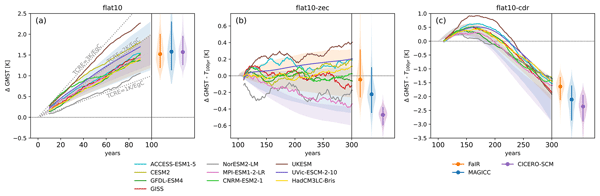
This study investigates how climate models warm in response to simplified carbon emissions trajectories, refining the understanding of climate reversibility and commitment. Metrics are defined for warming response to cumulative emissions and for the cessation of emissions or ramp-down to net-zero and net-negative levels. Results indicate that previous concentration-driven experiments may have overstated the Zero Emissions Commitment due to emissions rates exceeding historical levels.
Gabriella Everett, Øivind Hodnebrog, Madhoolika Agrawal, Durgesh Singh Yadav, Connie O'Neill, Chubamenla Jamir, Jo Cook, Pritha Pande, Sam Bland, and Lisa Emberson
Biogeosciences, 22, 4203–4219, https://doi.org/10.5194/bg-22-4203-2025, https://doi.org/10.5194/bg-22-4203-2025, 2025
Short summary
Short summary
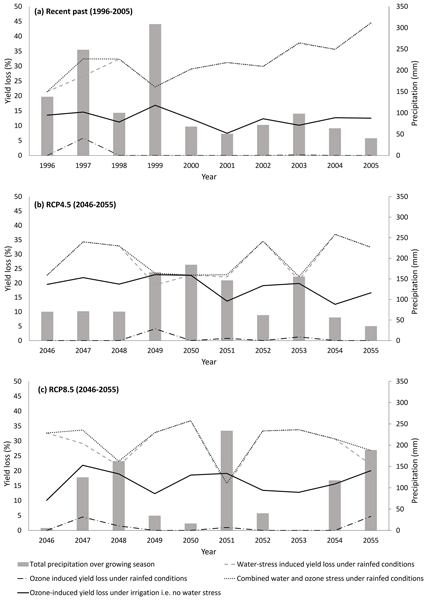
Ground-level ozone (O3), heat, and water stress (WS) reduce wheat yields, threatening food security in India. O3, heat, and WS interact as stressed plants close stomata, limiting O3 entry and damage. This study models O3 uptake under rainfed (WS) and irrigated conditions for current and future climates. Results show little O3-related yield loss under WS but higher losses with irrigation. Both climate scenarios increase O3-related losses, highlighting risks to India’s wheat productivity.
William J. Collins, Fiona M. O'Connor, Rachael E. Byrom, Øivind Hodnebrog, Patrick Jöckel, Mariano Mertens, Gunnar Myhre, Matthias Nützel, Dirk Olivié, Ragnhild Bieltvedt Skeie, Laura Stecher, Larry W. Horowitz, Vaishali Naik, Gregory Faluvegi, Ulas Im, Lee T. Murray, Drew Shindell, Kostas Tsigaridis, Nathan Luke Abraham, and James Keeble
Atmos. Chem. Phys., 25, 9031–9060, https://doi.org/10.5194/acp-25-9031-2025, https://doi.org/10.5194/acp-25-9031-2025, 2025
Short summary
Short summary
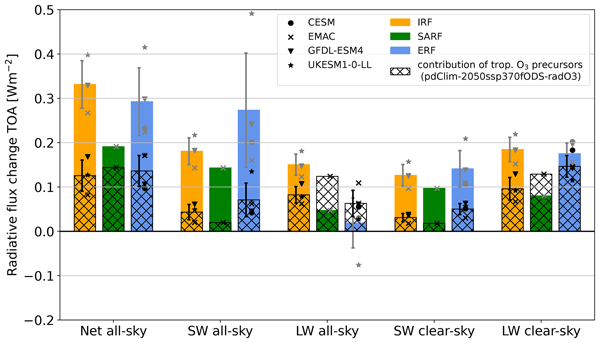
We used 7 climate models that include atmospheric chemistry and find that in a scenario with weak controls on air quality, the warming effects (over 2015 to 2050) of decreases in ozone-depleting substances and increases in air quality pollutants are approximately equal and would make ozone the second highest contributor to warming over this period. We find that for stratospheric ozone recovery, the standard measure of climate effects underestimates a more comprehensive measure.
Amali A. Amali, Clemens Schwingshackl, Akihiko Ito, Alina Barbu, Christine Delire, Daniele Peano, David M. Lawrence, David Wårlind, Eddy Robertson, Edouard L. Davin, Elena Shevliakova, Ian N. Harman, Nicolas Vuichard, Paul A. Miller, Peter J. Lawrence, Tilo Ziehn, Tomohiro Hajima, Victor Brovkin, Yanwu Zhang, Vivek K. Arora, and Julia Pongratz
Earth Syst. Dynam., 16, 803–840, https://doi.org/10.5194/esd-16-803-2025, https://doi.org/10.5194/esd-16-803-2025, 2025
Short summary
Short summary
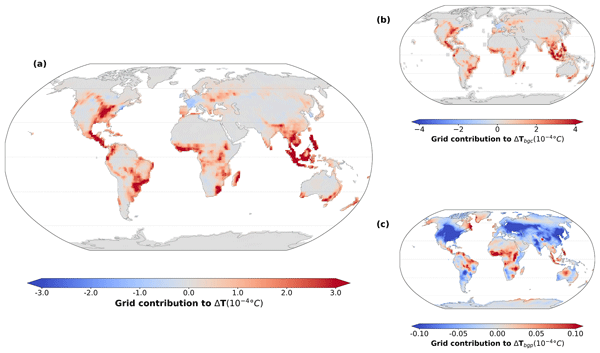
Our study explored the impact of anthropogenic land-use change (LUC) on climate dynamics, focusing on biogeophysical (BGP) and biogeochemical (BGC) effects using data from the Land Use Model Intercomparison Project (LUMIP) and the Coupled Model Intercomparison Project Phase 6 (CMIP6). We found that LUC-induced carbon emissions contribute to a BGC warming of 0.21 °C, with BGC effects dominating globally over BGP effects, which show regional variability. Our findings highlight discrepancies in model simulations and emphasize the need for improved representations of LUC processes.
Rachael E. Byrom, Gunnar Myhre, Øivind Hodnebrog, Dirk Olivié, and Michael Schulz
Atmos. Chem. Phys., 25, 5683–5693, https://doi.org/10.5194/acp-25-5683-2025, https://doi.org/10.5194/acp-25-5683-2025, 2025
Short summary
Short summary
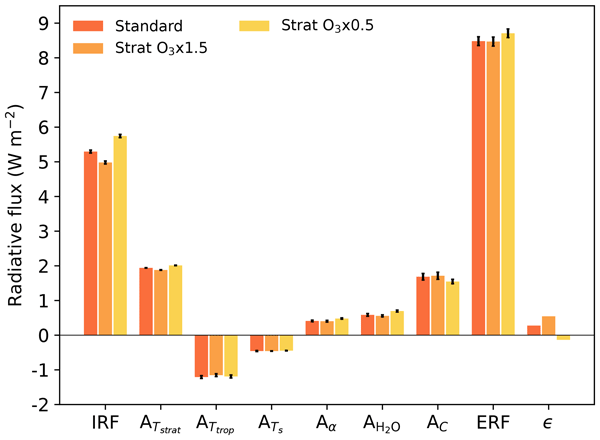
Addressing the cause of model spread in CO2 effective radiative forcing (ERF) is important for reducing uncertainty in climate change. We investigate stratospheric O3 as a driver of this spread by altering its concentration by 50 % and analysing the impact on CO2 forcing. Our experiments show a significant effect on stratospheric temperature that impacts instantaneous radiative forcing, primarily due to the influence on longwave emission. However, the impact on ERF is minimal.
Danny M. Leung, Jasper F. Kok, Longlei Li, David M. Lawrence, Natalie M. Mahowald, Simone Tilmes, and Erik Kluzek
Atmos. Chem. Phys., 25, 2311–2331, https://doi.org/10.5194/acp-25-2311-2025, https://doi.org/10.5194/acp-25-2311-2025, 2025
Short summary
Short summary
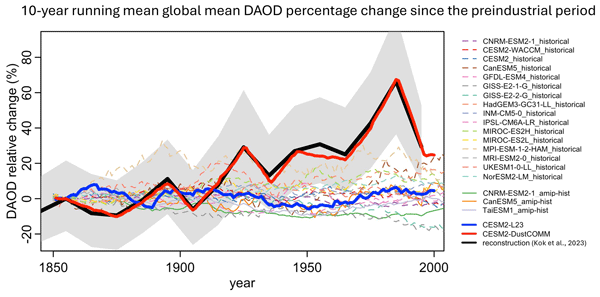
This study derives a gridded dust emission dataset for 1841–2000 by employing a combination of observed dust from core records and reanalyzed global dust cycle constraints. We evaluate the ability of global models to replicate the observed historical dust variability by using the emission dataset to force a historical simulation in an Earth system model. We show that prescribing our emissions forces the model to better match observations than other mechanistic models.
Gab Abramowitz, Anna Ukkola, Sanaa Hobeichi, Jon Cranko Page, Mathew Lipson, Martin G. De Kauwe, Samuel Green, Claire Brenner, Jonathan Frame, Grey Nearing, Martyn Clark, Martin Best, Peter Anthoni, Gabriele Arduini, Souhail Boussetta, Silvia Caldararu, Kyeungwoo Cho, Matthias Cuntz, David Fairbairn, Craig R. Ferguson, Hyungjun Kim, Yeonjoo Kim, Jürgen Knauer, David Lawrence, Xiangzhong Luo, Sergey Malyshev, Tomoko Nitta, Jerome Ogee, Keith Oleson, Catherine Ottlé, Phillipe Peylin, Patricia de Rosnay, Heather Rumbold, Bob Su, Nicolas Vuichard, Anthony P. Walker, Xiaoni Wang-Faivre, Yunfei Wang, and Yijian Zeng
Biogeosciences, 21, 5517–5538, https://doi.org/10.5194/bg-21-5517-2024, https://doi.org/10.5194/bg-21-5517-2024, 2024
Short summary
Short summary
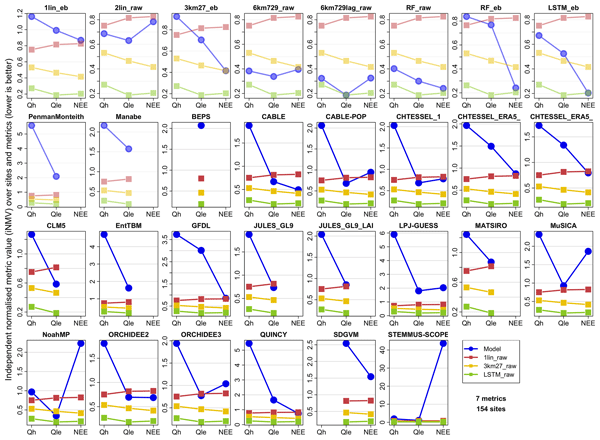
This paper evaluates land models – computer-based models that simulate ecosystem dynamics; land carbon, water, and energy cycles; and the role of land in the climate system. It uses machine learning and AI approaches to show that, despite the complexity of land models, they do not perform nearly as well as they could given the amount of information they are provided with about the prediction problem.
Ragnhild Bieltvedt Skeie, Rachael Byrom, Øivind Hodnebrog, Caroline Jouan, and Gunnar Myhre
Atmos. Chem. Phys., 24, 13361–13370, https://doi.org/10.5194/acp-24-13361-2024, https://doi.org/10.5194/acp-24-13361-2024, 2024
Short summary
Short summary
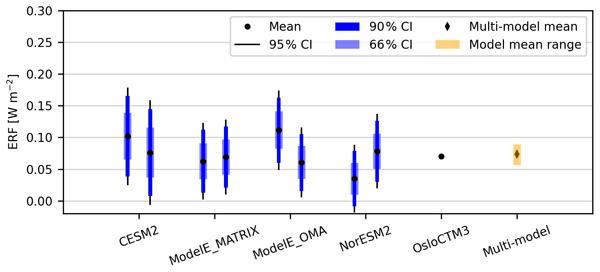
In 2020, new regulations by the International Maritime Organization regarding sulfur emissions came into force, reducing emissions of SO2 from the shipping sector by approximately 80 %. In this study, we use multiple models to calculate how much the Earth energy balance changed due to the emission reduction or the so-called effective radiative forcing. The calculated effective radiative forcing is weak, comparable to the effect of the increase in CO2 over the last 2 to 3 years.
Benjamin M. Sanderson, Ben B. B. Booth, John Dunne, Veronika Eyring, Rosie A. Fisher, Pierre Friedlingstein, Matthew J. Gidden, Tomohiro Hajima, Chris D. Jones, Colin G. Jones, Andrew King, Charles D. Koven, David M. Lawrence, Jason Lowe, Nadine Mengis, Glen P. Peters, Joeri Rogelj, Chris Smith, Abigail C. Snyder, Isla R. Simpson, Abigail L. S. Swann, Claudia Tebaldi, Tatiana Ilyina, Carl-Friedrich Schleussner, Roland Séférian, Bjørn H. Samset, Detlef van Vuuren, and Sönke Zaehle
Geosci. Model Dev., 17, 8141–8172, https://doi.org/10.5194/gmd-17-8141-2024, https://doi.org/10.5194/gmd-17-8141-2024, 2024
Short summary
Short summary
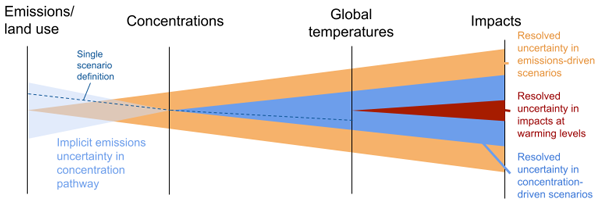
We discuss how, in order to provide more relevant guidance for climate policy, coordinated climate experiments should adopt a greater focus on simulations where Earth system models are provided with carbon emissions from fossil fuels together with land use change instructions, rather than past approaches that have largely focused on experiments with prescribed atmospheric carbon dioxide concentrations. We discuss how these goals might be achieved in coordinated climate modeling experiments.
Ragnhild Bieltvedt Skeie, Magne Aldrin, Terje K. Berntsen, Marit Holden, Ragnar Bang Huseby, Gunnar Myhre, and Trude Storelvmo
Earth Syst. Dynam., 15, 1435–1458, https://doi.org/10.5194/esd-15-1435-2024, https://doi.org/10.5194/esd-15-1435-2024, 2024
Short summary
Short summary
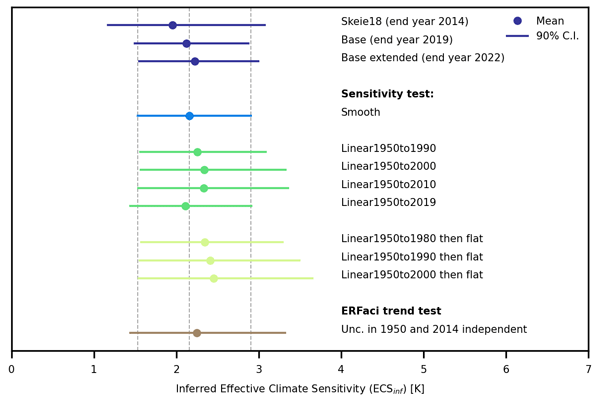
Climate sensitivity and aerosol forcing are central quantities in climate science that are uncertain and contribute to the spread in climate projections. To constrain them, we use observations of temperature and ocean heat content as well as prior knowledge of radiative forcings over the industrialized period. The estimates are sensitive to how aerosol cooling evolved over the latter part of the 20th century, and a strong aerosol forcing trend in the 1960s–1970s is not supported by our analysis.
Sabin I. Taranu, David M. Lawrence, Yoshihide Wada, Ting Tang, Erik Kluzek, Sam Rabin, Yi Yao, Steven J. De Hertog, Inne Vanderkelen, and Wim Thiery
Geosci. Model Dev., 17, 7365–7399, https://doi.org/10.5194/gmd-17-7365-2024, https://doi.org/10.5194/gmd-17-7365-2024, 2024
Short summary
Short summary
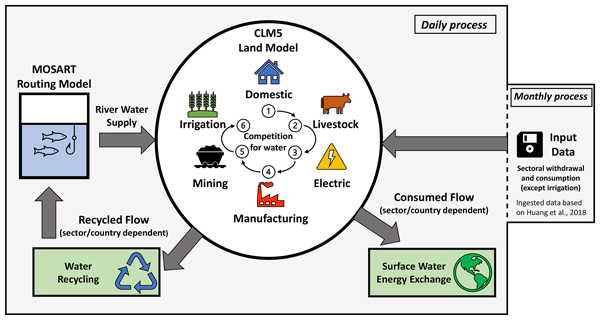
In this study, we improved a climate model by adding the representation of water use sectors such as domestic, industry, and agriculture. This new feature helps us understand how water is used and supplied in various areas. We tested our model from 1971 to 2010 and found that it accurately identifies areas with water scarcity. By modelling the competition between sectors when water availability is limited, the model helps estimate the intensity and extent of individual sectors' water shortages.
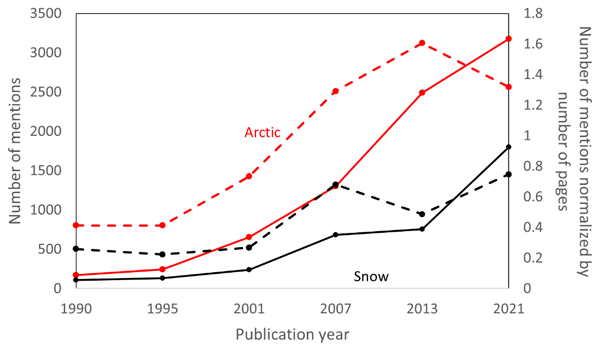
Cecile B. Menard, Sirpa Rasmus, Ioanna Merkouriadi, Gianpaolo Balsamo, Annett Bartsch, Chris Derksen, Florent Domine, Marie Dumont, Dorothee Ehrich, Richard Essery, Bruce C. Forbes, Gerhard Krinner, David Lawrence, Glen Liston, Heidrun Matthes, Nick Rutter, Melody Sandells, Martin Schneebeli, and Sari Stark
The Cryosphere, 18, 4671–4686, https://doi.org/10.5194/tc-18-4671-2024, https://doi.org/10.5194/tc-18-4671-2024, 2024
Short summary
Short summary
Computer models, like those used in climate change studies, are written by modellers who have to decide how best to construct the models in order to satisfy the purpose they serve. Using snow modelling as an example, we examine the process behind the decisions to understand what motivates or limits modellers in their decision-making. We find that the context in which research is undertaken is often more crucial than scientific limitations. We argue for more transparency in our research practice.
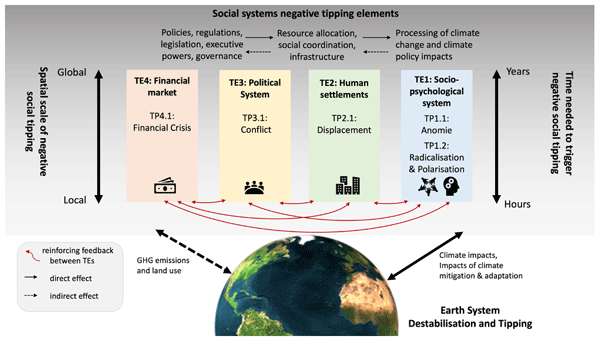
Viktoria Spaiser, Sirkku Juhola, Sara M. Constantino, Weisi Guo, Tabitha Watson, Jana Sillmann, Alessandro Craparo, Ashleigh Basel, John T. Bruun, Krishna Krishnamurthy, Jürgen Scheffran, Patricia Pinho, Uche T. Okpara, Jonathan F. Donges, Avit Bhowmik, Taha Yasseri, Ricardo Safra de Campos, Graeme S. Cumming, Hugues Chenet, Florian Krampe, Jesse F. Abrams, James G. Dyke, Stefanie Rynders, Yevgeny Aksenov, and Bryan M. Spears
Earth Syst. Dynam., 15, 1179–1206, https://doi.org/10.5194/esd-15-1179-2024, https://doi.org/10.5194/esd-15-1179-2024, 2024
Short summary
Short summary
In this paper, we identify potential negative social tipping points linked to Earth system destabilization and draw on related research to understand the drivers and likelihood of these negative social tipping dynamics, their potential effects on human societies and the Earth system, and the potential for cascading interactions and contribution to systemic risks.
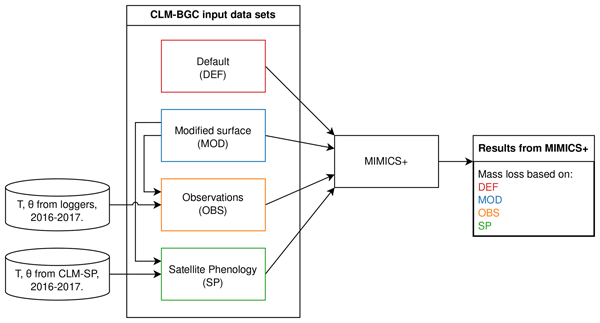
Elin Ristorp Aas, Inge Althuizen, Hui Tang, Sonya Geange, Eva Lieungh, Vigdis Vandvik, and Terje Koren Berntsen
Biogeosciences, 21, 3789–3817, https://doi.org/10.5194/bg-21-3789-2024, https://doi.org/10.5194/bg-21-3789-2024, 2024
Short summary
Short summary
We used a soil model to replicate two litterbag decomposition experiments to examine the implications of climate, litter quality, and soil microclimate representation. We found that macroclimate was more important than litter quality for modeled mass loss. By comparing different representations of soil temperature and moisture we found that using observed data did not improve model results. We discuss causes for this and suggest possible improvements to both the model and experimental design.
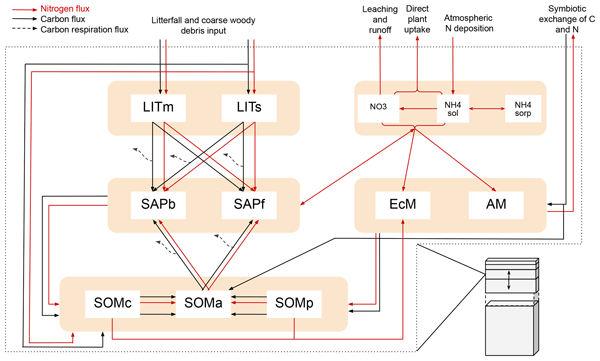
Elin Ristorp Aas, Heleen A. de Wit, and Terje K. Berntsen
Geosci. Model Dev., 17, 2929–2959, https://doi.org/10.5194/gmd-17-2929-2024, https://doi.org/10.5194/gmd-17-2929-2024, 2024
Short summary
Short summary
By including microbial processes in soil models, we learn how the soil system interacts with its environment and responds to climate change. We present a soil process model, MIMICS+, which is able to reproduce carbon stocks found in boreal forest soils better than a conventional land model. With the model we also find that when adding nitrogen, the relationship between soil microbes changes notably. Coupling the model to a vegetation model will allow for further study of these mechanisms.
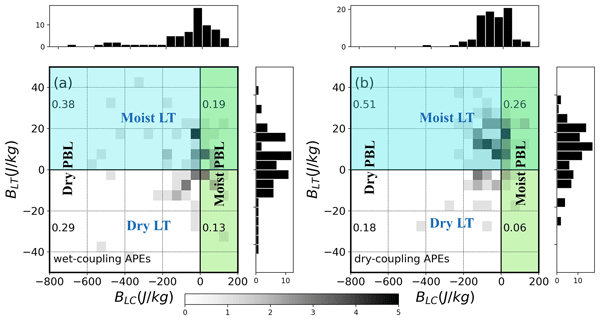
Gaoyun Wang, Rong Fu, Yizhou Zhuang, Paul A. Dirmeyer, Joseph A. Santanello, Guiling Wang, Kun Yang, and Kaighin McColl
Atmos. Chem. Phys., 24, 3857–3868, https://doi.org/10.5194/acp-24-3857-2024, https://doi.org/10.5194/acp-24-3857-2024, 2024
Short summary
Short summary
This study investigates the influence of lower-tropospheric humidity on land–atmosphere coupling (LAC) during warm seasons in the US Southern Great Plains. Using radiosonde data and a buoyancy model, we find that elevated LT humidity is crucial for generating afternoon precipitation events under dry soil conditions not accounted for by conventional LAC indices. This underscores the importance of considering LT humidity in understanding LAC over dry soil during droughts in the SGP.
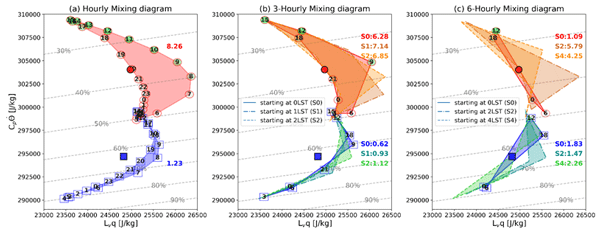
Kirsten L. Findell, Zun Yin, Eunkyo Seo, Paul A. Dirmeyer, Nathan P. Arnold, Nathaniel Chaney, Megan D. Fowler, Meng Huang, David M. Lawrence, Po-Lun Ma, and Joseph A. Santanello Jr.
Geosci. Model Dev., 17, 1869–1883, https://doi.org/10.5194/gmd-17-1869-2024, https://doi.org/10.5194/gmd-17-1869-2024, 2024
Short summary
Short summary
We outline a request for sub-daily data to accurately capture the process-level connections between land states, surface fluxes, and the boundary layer response. This high-frequency model output will allow for more direct comparison with observational field campaigns on process-relevant timescales, enable demonstration of inter-model spread in land–atmosphere coupling processes, and aid in targeted identification of sources of deficiencies and opportunities for improvement of the models.
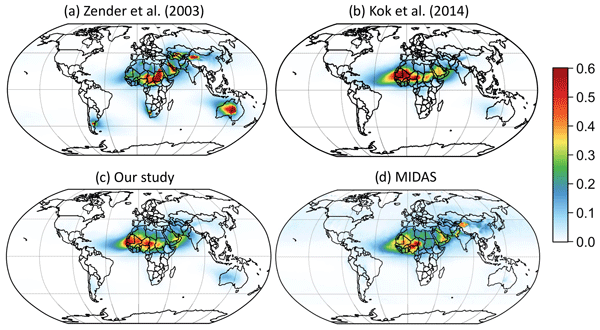
Danny M. Leung, Jasper F. Kok, Longlei Li, Natalie M. Mahowald, David M. Lawrence, Simone Tilmes, Erik Kluzek, Martina Klose, and Carlos Pérez García-Pando
Atmos. Chem. Phys., 24, 2287–2318, https://doi.org/10.5194/acp-24-2287-2024, https://doi.org/10.5194/acp-24-2287-2024, 2024
Short summary
Short summary
This study uses a premier Earth system model to evaluate a new desert dust emission scheme proposed in our companion paper. We show that our scheme accounts for more dust emission physics, hence matching better against observations than other existing dust emission schemes do. Our scheme's dust emissions also couple tightly with meteorology, hence likely improving the modeled dust sensitivity to climate change. We believe this work is vital for improving dust representation in climate models.
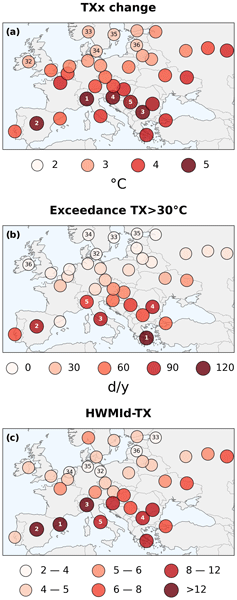
Clemens Schwingshackl, Anne Sophie Daloz, Carley Iles, Kristin Aunan, and Jana Sillmann
Nat. Hazards Earth Syst. Sci., 24, 331–354, https://doi.org/10.5194/nhess-24-331-2024, https://doi.org/10.5194/nhess-24-331-2024, 2024
Short summary
Short summary
Ambient heat in European cities will substantially increase under global warming, as projected by three heat metrics calculated from high-resolution climate model simulations. While the heat metrics consistently project high levels of ambient heat for several cities, in other cities the projected heat levels vary considerably across the three heat metrics. Using complementary heat metrics for projections of ambient heat is thus important for assessments of future risks from heat stress.
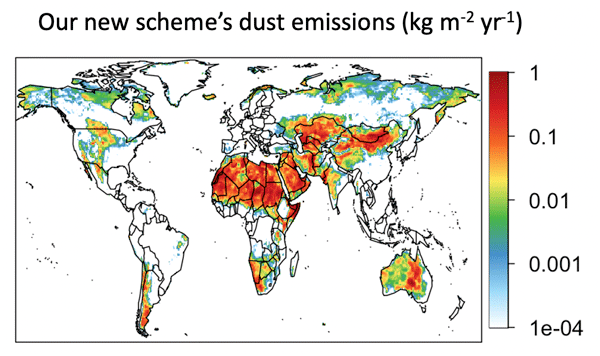
Danny M. Leung, Jasper F. Kok, Longlei Li, Gregory S. Okin, Catherine Prigent, Martina Klose, Carlos Pérez García-Pando, Laurent Menut, Natalie M. Mahowald, David M. Lawrence, and Marcelo Chamecki
Atmos. Chem. Phys., 23, 6487–6523, https://doi.org/10.5194/acp-23-6487-2023, https://doi.org/10.5194/acp-23-6487-2023, 2023
Short summary
Short summary
Desert dust modeling is important for understanding climate change, as dust regulates the atmosphere's greenhouse effect and radiation. This study formulates and proposes a more physical and realistic desert dust emission scheme for global and regional climate models. By considering more aeolian processes in our emission scheme, our simulations match better against dust observations than existing schemes. We believe this work is vital in improving dust representation in climate models.
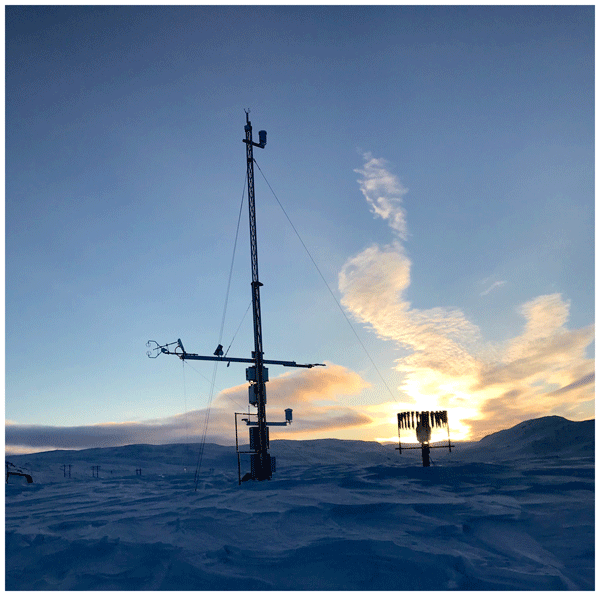
Norbert Pirk, Kristoffer Aalstad, Yeliz A. Yilmaz, Astrid Vatne, Andrea L. Popp, Peter Horvath, Anders Bryn, Ane Victoria Vollsnes, Sebastian Westermann, Terje Koren Berntsen, Frode Stordal, and Lena Merete Tallaksen
Biogeosciences, 20, 2031–2047, https://doi.org/10.5194/bg-20-2031-2023, https://doi.org/10.5194/bg-20-2031-2023, 2023
Short summary
Short summary
We measured the land–atmosphere exchange of CO2 and water vapor in alpine Norway over 3 years. The extremely snow-rich conditions in 2020 reduced the total annual evapotranspiration to 50 % and reduced the growing-season carbon assimilation to turn the ecosystem from a moderate annual carbon sink to an even stronger source. Our analysis suggests that snow cover anomalies are driving the most consequential short-term responses in this ecosystem’s functioning.
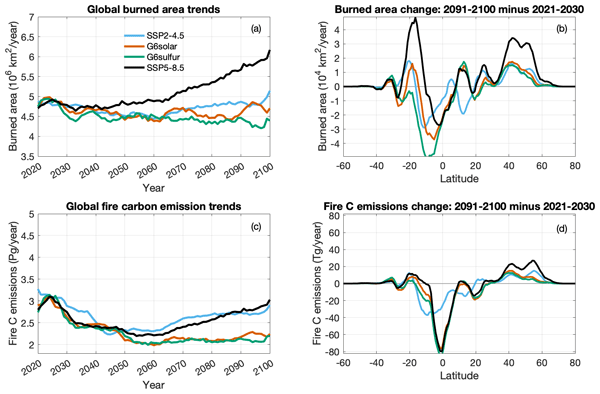
Wenfu Tang, Simone Tilmes, David M. Lawrence, Fang Li, Cenlin He, Louisa K. Emmons, Rebecca R. Buchholz, and Lili Xia
Atmos. Chem. Phys., 23, 5467–5486, https://doi.org/10.5194/acp-23-5467-2023, https://doi.org/10.5194/acp-23-5467-2023, 2023
Short summary
Short summary
Globally, total wildfire burned area is projected to increase over the 21st century under scenarios without geoengineering and decrease under the two geoengineering scenarios. Geoengineering reduces fire by decreasing surface temperature and wind speed and increasing relative humidity and soil water. However, geoengineering also yields reductions in precipitation, which offset some of the fire reduction.
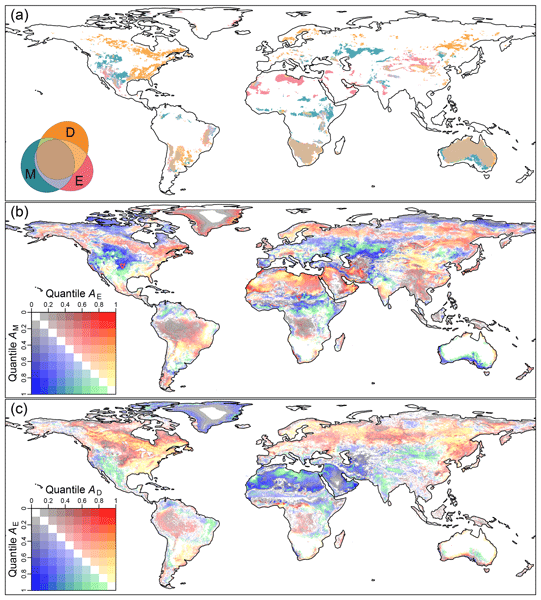
Zun Yin, Kirsten L. Findell, Paul Dirmeyer, Elena Shevliakova, Sergey Malyshev, Khaled Ghannam, Nina Raoult, and Zhihong Tan
Hydrol. Earth Syst. Sci., 27, 861–872, https://doi.org/10.5194/hess-27-861-2023, https://doi.org/10.5194/hess-27-861-2023, 2023
Short summary
Short summary
Land–atmosphere (L–A) interactions typically focus on daytime processes connecting the land state with the overlying atmospheric boundary layer. However, much prior L–A work used monthly or daily means due to the lack of daytime-only data products. Here we show that monthly smoothing can significantly obscure the L–A coupling signal, and including nighttime information can mute or mask the daytime processes of interest. We propose diagnosing L–A coupling within models or archiving subdaily data.
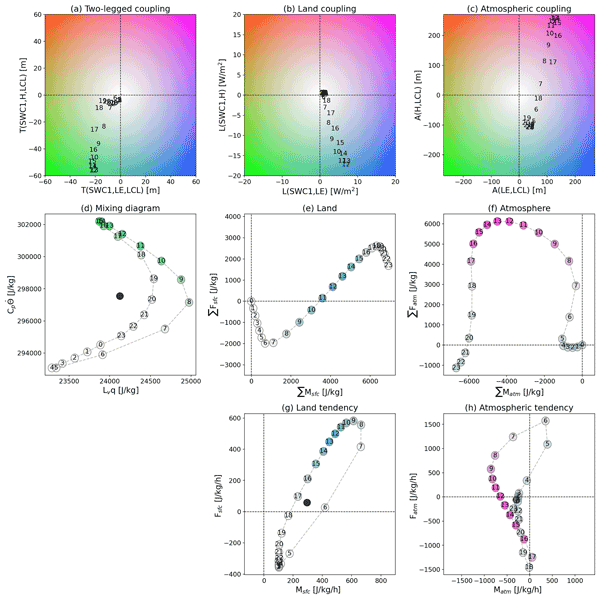
Eunkyo Seo and Paul A. Dirmeyer
Hydrol. Earth Syst. Sci., 26, 5411–5429, https://doi.org/10.5194/hess-26-5411-2022, https://doi.org/10.5194/hess-26-5411-2022, 2022
Short summary
Short summary
This study presents the climatology of the observed land–atmosphere interactions on a subdaily timescale during the warm season from flux site observations. Multivariate metrics are employed to examine the land, atmosphere, and combined couplings, and a mixing diagram is adopted to understand the coevolution of the moist and thermal energy budget within the atmospheric mixed layer. The diurnal cycles of both mixing diagrams and hourly land–atmosphere couplings exhibit hysteresis.

Inne Vanderkelen, Shervan Gharari, Naoki Mizukami, Martyn P. Clark, David M. Lawrence, Sean Swenson, Yadu Pokhrel, Naota Hanasaki, Ann van Griensven, and Wim Thiery
Geosci. Model Dev., 15, 4163–4192, https://doi.org/10.5194/gmd-15-4163-2022, https://doi.org/10.5194/gmd-15-4163-2022, 2022
Short summary
Short summary
Human-controlled reservoirs have a large influence on the global water cycle. However, dam operations are rarely represented in Earth system models. We implement and evaluate a widely used reservoir parametrization in a global river-routing model. Using observations of individual reservoirs, the reservoir scheme outperforms the natural lake scheme. However, both schemes show a similar performance due to biases in runoff timing and magnitude when using simulated runoff.
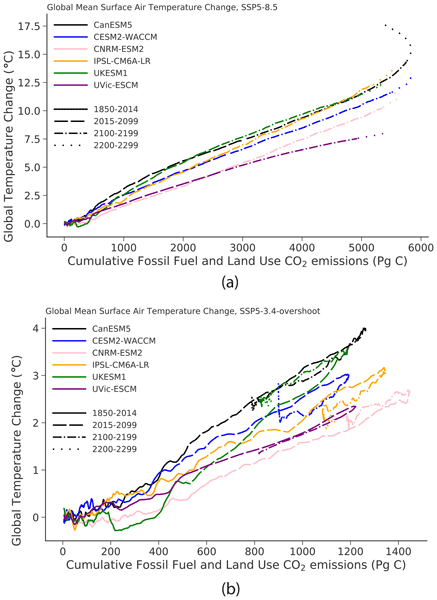
Charles D. Koven, Vivek K. Arora, Patricia Cadule, Rosie A. Fisher, Chris D. Jones, David M. Lawrence, Jared Lewis, Keith Lindsay, Sabine Mathesius, Malte Meinshausen, Michael Mills, Zebedee Nicholls, Benjamin M. Sanderson, Roland Séférian, Neil C. Swart, William R. Wieder, and Kirsten Zickfeld
Earth Syst. Dynam., 13, 885–909, https://doi.org/10.5194/esd-13-885-2022, https://doi.org/10.5194/esd-13-885-2022, 2022
Short summary
Short summary
We explore the long-term dynamics of Earth's climate and carbon cycles under a pair of contrasting scenarios to the year 2300 using six models that include both climate and carbon cycle dynamics. One scenario assumes very high emissions, while the second assumes a peak in emissions, followed by rapid declines to net negative emissions. We show that the models generally agree that warming is roughly proportional to carbon emissions but that many other aspects of the model projections differ.
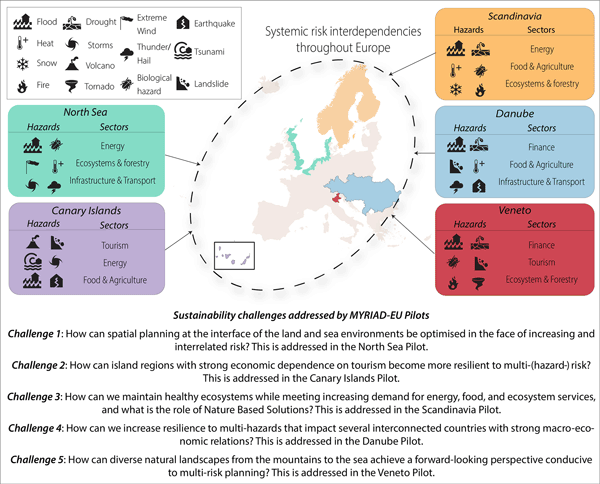
Philip J. Ward, James Daniell, Melanie Duncan, Anna Dunne, Cédric Hananel, Stefan Hochrainer-Stigler, Annegien Tijssen, Silvia Torresan, Roxana Ciurean, Joel C. Gill, Jana Sillmann, Anaïs Couasnon, Elco Koks, Noemi Padrón-Fumero, Sharon Tatman, Marianne Tronstad Lund, Adewole Adesiyun, Jeroen C. J. H. Aerts, Alexander Alabaster, Bernard Bulder, Carlos Campillo Torres, Andrea Critto, Raúl Hernández-Martín, Marta Machado, Jaroslav Mysiak, Rene Orth, Irene Palomino Antolín, Eva-Cristina Petrescu, Markus Reichstein, Timothy Tiggeloven, Anne F. Van Loon, Hung Vuong Pham, and Marleen C. de Ruiter
Nat. Hazards Earth Syst. Sci., 22, 1487–1497, https://doi.org/10.5194/nhess-22-1487-2022, https://doi.org/10.5194/nhess-22-1487-2022, 2022
Short summary
Short summary
The majority of natural-hazard risk research focuses on single hazards (a flood, a drought, a volcanic eruption, an earthquake, etc.). In the international research and policy community it is recognised that risk management could benefit from a more systemic approach. In this perspective paper, we argue for an approach that addresses multi-hazard, multi-risk management through the lens of sustainability challenges that cut across sectors, regions, and hazards.
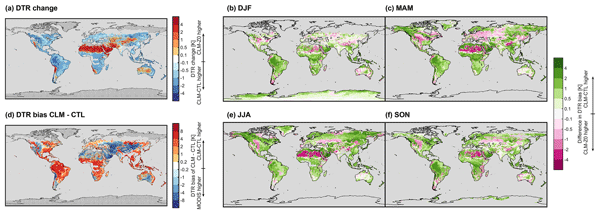
Ronny Meier, Edouard L. Davin, Gordon B. Bonan, David M. Lawrence, Xiaolong Hu, Gregory Duveiller, Catherine Prigent, and Sonia I. Seneviratne
Geosci. Model Dev., 15, 2365–2393, https://doi.org/10.5194/gmd-15-2365-2022, https://doi.org/10.5194/gmd-15-2365-2022, 2022
Short summary
Short summary
We revise the roughness of the land surface in the CESM climate model. Guided by observational data, we increase the surface roughness of forests and decrease that of bare soil, snow, ice, and crops. These modifications alter simulated temperatures and wind speeds at and above the land surface considerably, in particular over desert regions. The revised model represents the diurnal variability of the land surface temperature better compared to satellite observations over most regions.
Sara Marie Blichner, Moa Kristina Sporre, and Terje Koren Berntsen
Atmos. Chem. Phys., 21, 17243–17265, https://doi.org/10.5194/acp-21-17243-2021, https://doi.org/10.5194/acp-21-17243-2021, 2021
Short summary
Short summary
In this study we quantify how a new way of modeling the formation of new particles in the atmosphere affects the estimated cooling from aerosol–cloud interactions since pre-industrial times. Our improved scheme merges two common approaches to aerosol modeling: a sectional scheme for treating early growth and the pre-existing modal scheme in NorESM. We find that the cooling from aerosol–cloud interactions since pre-industrial times is reduced by 10 % when the new scheme is used.
Stefanie Falk, Ane V. Vollsnes, Aud B. Eriksen, Lisa Emberson, Connie O'Neill, Frode Stordal, and Terje Koren Berntsen
Biogeosciences Discuss., https://doi.org/10.5194/bg-2021-260, https://doi.org/10.5194/bg-2021-260, 2021
Revised manuscript not accepted
Short summary
Short summary
Subarctic vegetation is threatened by climate change and ozone. We assess essential climate variables in 2018/19. 2018 was warmer and brighter than usual in Spring with forest fires and elevated ozone in summer. Visible damage was observed on plant species in 2018. We find that generic parameterizations used in modeling ozone dose do not suffice. We propose a method to acclimate these parameterizations and find an ozone-induced biomass loss of 2.5 to 17.4 % (up to 6 % larger than default).
Stefanie Falk, Ane V. Vollsnes, Aud B. Eriksen, Frode Stordal, and Terje Koren Berntsen
Atmos. Chem. Phys., 21, 15647–15661, https://doi.org/10.5194/acp-21-15647-2021, https://doi.org/10.5194/acp-21-15647-2021, 2021
Short summary
Short summary
We evaluate regional and global models for ozone modeling and damage risk mapping of vegetation over subarctic Europe. Our analysis suggests that low-resolution global models do not reproduce the observed ozone seasonal cycle at ground level, underestimating ozone by 30–50 %. High-resolution regional models capture the seasonal cycle well, still underestimating ozone by up to 20 %. Our proposed gap-filling method for site observations shows a 76 % accuracy compared to the regional model (80 %).
Cited articles
Bakke, S. J., Ionita, M., and Tallaksen, L. M.: The 2018 northern European hydrological drought and its drivers in a historical perspective, Hydrol. Earth Syst. Sci., 24, 5621–5653, https://doi.org/10.5194/hess-24-5621-2020, 2020.
Barriopedro, D., García-Herrera, R., Ordóñez, C., Miralles, D. G., and Salcedo-Sanz, S.: Heat Waves: Physical Understanding and Scientific Challenges, Reviews of Geophysics, 61, e2022RG000780, https://doi.org/10.1029/2022RG000780, 2023.
Bastos, A., Ciais, P., Friedlingstein, P., Sitch, S., Pongratz, J., Fan, L., Wigneron, J. P., Weber, U., Reichstein, M., Fu, Z., Anthoni, P., Arneth, A., Haverd, V., Jain, A. K., Joetzjer, E., Knauer, J., Lienert, S., Loughran, T., McGuire, P. C., Tian, H., Viovy, N., and Zaehle, S.: Direct and seasonal legacy effects of the 2018 heat wave and drought on European ecosystem productivity, Science Advances, 6, eaba2724, https://doi.org/10.1126/sciadv.aba2724, 2020.
Calvin, K., Dasgupta, D., Krinner, G., Mukherji, A., Thorne, P. W., Trisos, C., Romero, J., Aldunce, P., Barrett, K., Blanco, G., Cheung, W. W. L., Connors, S., Denton, F., Diongue-Niang, A., Dodman, D., Garschagen, M., Geden, O., Hayward, B., Jones, C., Jotzo, F., Krug, T., Lasco, R., Lee, Y.-Y., Masson-Delmotte, V., Meinshausen, M., Mintenbeck, K., Mokssit, A., Otto, F. E. L., Pathak, M., Pirani, A., Poloczanska, E., Pörtner, H.-O., Revi, A., Roberts, D. C., Roy, J., Ruane, A. C., Skea, J., Shukla, P. R., Slade, R., Slangen, A., Sokona, Y., Sörensson, A. A., Tignor, M., Van Vuuren, D., Wei, Y.-M., Winkler, H., Zhai, P., Zommers, Z., Hourcade, J.-C., Johnson, F. X., Pachauri, S., Simpson, N. P., Singh, C., Thomas, A., Totin, E., Arias, P., Bustamante, M., Elgizouli, I., Flato, G., Howden, M., Méndez-Vallejo, C., Pereira, J. J., Pichs-Madruga, R., Rose, S. K., Saheb, Y., Sánchez Rodríguez, R., Ürge-Vorsatz, D., Xiao, C., Yassaa, N., Alegría, A., Armour, K., Bednar-Friedl, B., Blok, K., Cissé, G., Dentener, F., Eriksen, S., Fischer, E., Garner, G., Guivarch, C., Haasnoot, M., Hansen, G., Hauser, M., Hawkins, E., Hermans, T., Kopp, R., Leprince-Ringuet, N., Lewis, J., Ley, D., Ludden, C., Niamir, L., Nicholls, Z., Some, S., Szopa, S., Trewin, B., Van Der Wijst, K.-I., Winter, G., Witting, M., Birt, A., Ha, M.: IPCC, 2023: Climate Change 2023: Synthesis Report. Contribution of Working Groups I, II and III to the Sixth Assessment Report of the Intergovernmental Panel on Climate Change, edited by: Core Writing Team, Lee, H. and Romero, J., IPCC, Geneva, Switzerland, Intergovernmental Panel on Climate Change (IPCC), https://doi.org/10.59327/IPCC/AR6-9789291691647, 2023.
Copernicus Climate Change Service (C3S): https://climate.copernicus.eu/dry-and-warm-spring-and-summer, last access: 1 August 2024.
Cornes, R. C., Van Der Schrier, G., Van Den Besselaar, E. J. M., and Jones, P. D.: An Ensemble Version of the E-OBS Temperature and Precipitation Data Sets, J. Geophys. Res. Atmos., 123, 9391–9409, https://doi.org/10.1029/2017JD028200, 2018.
Dagon, K., Sanderson, B. M., Fisher, R. A., and Lawrence, D. M.: A machine learning approach to emulation and biophysical parameter estimation with the Community Land Model, version 5, Advances in Statistical Climatology, Meteorology and Oceanography, 6, 223–244, https://doi.org/10.5194/ascmo-6-223-2020, 2020.
Denissen, J. M. C., Teuling, A. J., Pitman, A. J., Koirala, S., Migliavacca, M., Li, W., Reichstein, M., Winkler, A. J., Zhan, C., and Orth, R.: Widespread shift from ecosystem energy to water limitation with climate change, Nat. Clim. Chang., 12, 677–684, https://doi.org/10.1038/s41558-022-01403-8, 2022.
Dirmeyer, P. A.: The terrestrial segment of soil moisture–climate coupling, Geophysical Research Letters, 38, https://doi.org/10.1029/2011GL048268, 2011.
Dirmeyer, P. A., Schlosser, C. A., and Brubaker, K. L.: Precipitation, Recycling, and Land Memory: An Integrated Analysis, Journal of Hydrometeorology, 10, 278–288, https://doi.org/10.1175/2008JHM1016.1, 2009.
Dirmeyer, P. A., Balsamo, G., Blyth, E., Morrison, R., and Cooper, H. M.: Land-Atmosphere Interactions Exacerbated the Drought and Heatwave over Northern Europe during Summer 2018, AGU Advances, 2, e2020AV000283, https://doi.org/10.1029/2020AV000283, 2021.
Dorigo, W., Wagner, W., Albergel, C., Albrecht, F., Balsamo, G., Brocca, L., Chung, D., Ertl, M., Forkel, M., Gruber, A., Haas, E., Hamer, P. D., Hirschi, M., Ikonen, J., de Jeu, R., Kidd, R., Lahoz, W., Liu, Y. Y., Miralles, D., Mistelbauer, T., Nicolai-Shaw, N., Parinussa, R., Pratola, C., Reimer, C., van der Schalie, R., Seneviratne, S. I., Smolander, T., and Lecomte, P.: ESA CCI Soil Moisture for improved Earth system understanding: State-of-the art and future directions, Remote Sensing of Environment, 203, 185–215, https://doi.org/10.1016/j.rse.2017.07.001, 2017.
Drought 2018 Team and ICOS Ecosystem Thematic Centre: Drought-2018 ecosystem eddy covariance flux product for 52 stations in FLUXNET-Archive format, https://doi.org/10.18160/YVR0-4898, 2020.
Findell, K. L., Gentine, P., Lintner, B. R., and Guillod, B. P.: Data Length Requirements for Observational Estimates of Land–Atmosphere Coupling Strength, Journal of Hydrometeorology, 16, 1615–1635, https://doi.org/10.1175/JHM-D-14-0131.1, 2015.
Findell, K. L., Yin, Z., Seo, E., Dirmeyer, P. A., Arnold, N. P., Chaney, N., Fowler, M. D., Huang, M., Lawrence, D. M., Ma, P.-L., and Santanello Jr., J. A.: Accurate assessment of land–atmosphere coupling in climate models requires high-frequency data output, Geosci. Model Dev., 17, 1869–1883, https://doi.org/10.5194/gmd-17-1869-2024, 2024.
Fu, Z., Ciais, P., Prentice, I. C., Gentine, P., Makowski, D., Bastos, A., Luo, X., Green, J. K., Stoy, P. C., Yang, H., and Hajima, T.: Atmospheric dryness reduces photosynthesis along a large range of soil water deficits, Nat. Commun., 13, 989, https://doi.org/10.1038/s41467-022-28652-7, 2022.
Fu, Z., Ciais, P., Wigneron, J.-P., Gentine, P., Feldman, A. F., Makowski, D., Viovy, N., Kemanian, A. R., Goll, D. S., Stoy, P. C., Prentice, I. C., Yakir, D., Liu, L., Ma, H., Li, X., Huang, Y., Yu, K., Zhu, P., Li, X., Zhu, Z., Lian, J., and Smith, W. K.: Global critical soil moisture thresholds of plant water stress, Nat. Commun., 15, 4826, https://doi.org/10.1038/s41467-024-49244-7, 2024.
Gao, X., Avramov, A., Saikawa, E., and Schlosser, C. A.: Emulation of Community Land Model Version 5 (CLM5) to Quantify Sensitivity of Soil Moisture to Uncertain Parameters, Journal of Hydrometeorology, 22, 259–278, https://doi.org/10.1175/JHM-D-20-0043.1, 2021.
Gevaert, A. I., Miralles, D. G., de Jeu, R. a. M., Schellekens, J., and Dolman, A. J.: Soil Moisture-Temperature Coupling in a Set of Land Surface Models, Journal of Geophysical Research: Atmospheres, 123, 1481–1498, https://doi.org/10.1002/2017JD027346, 2018.
Grossiord, C., Buckley, T. N., Cernusak, L. A., Novick, K. A., Poulter, B., Siegwolf, R. T. W., Sperry, J. S., and McDowell, N. G.: Plant responses to rising vapor pressure deficit, New Phytologist, 226, 1550–1566, https://doi.org/10.1111/nph.16485, 2020.
Gruber, A., Scanlon, T., van der Schalie, R., Wagner, W., and Dorigo, W.: Evolution of the ESA CCI Soil Moisture climate data records and their underlying merging methodology, Earth Syst. Sci. Data, 11, 717–739, https://doi.org/10.5194/essd-11-717-2019, 2019.
Hersbach, H., Bell, B., Berrisford, P., Hirahara, S., Horányi, A., Muñoz-Sabater, J., Nicolas, J., Peubey, C., Radu, R., Schepers, D., Simmons, A., Soci, C., Abdalla, S., Abellan, X., Balsamo, G., Bechtold, P., Biavati, G., Bidlot, J., Bonavita, M., De Chiara, G., Dahlgren, P., Dee, D., Diamantakis, M., Dragani, R., Flemming, J., Forbes, R., Fuentes, M., Geer, A., Haimberger, L., Healy, S., Hogan, R. J., Hólm, E., Janisková, M., Keeley, S., Laloyaux, P., Lopez, P., Lupu, C., Radnoti, G., de Rosnay, P., Rozum, I., Vamborg, F., Villaume, S., and Thépaut, J.-N.: The ERA5 global reanalysis, Quarterly Journal of the Royal Meteorological Society, 146, 1999–2049, https://doi.org/10.1002/qj.3803, 2020.
Hong, S.-Y. and Lim, J.-O. J.: The WRF Single-Moment 6-Class Microphysics Scheme (WSM6), Journal of the Korean Meteorological Society, 42, 129–151, 2006.
Hong, S.-Y., Noh, Y., and Dudhia, J.: A New Vertical Diffusion Package with an Explicit Treatment of Entrainment Processes, Monthly Weather Review, 134, 2318–2341, https://doi.org/10.1175/MWR3199.1, 2006.
Hoy, A., Hänsel, S., and Maugeri, M.: An endless summer: 2018 heat episodes in Europe in the context of secular temperature variability and change, International Journal of Climatology, 40, 6315–6336, https://doi.org/10.1002/joc.6582, 2020.
Hsu, H. and Dirmeyer, P. A.: Deconstructing the Soil Moisture–Latent Heat Flux Relationship: The Range of Coupling Regimes Experienced and the Presence of Nonlinearity within the Sensitive Regime, Journal of Hydrometeorology, 23, 1041–1057, https://doi.org/10.1175/JHM-D-21-0224.1, 2022.
Hsu, H. and Dirmeyer, P. A.: Soil moisture-evaporation coupling shifts into new gears under increasing CO2, Nat. Commun., 14, 1162, https://doi.org/10.1038/s41467-023-36794-5, 2023a.
Hsu, H. and Dirmeyer, P. A.: Uncertainty in Projected Critical Soil Moisture Values in CMIP6 Affects the Interpretation of a More Moisture-Limited World, Earth's Future, 11, e2023EF003511, https://doi.org/10.1029/2023EF003511, 2023b.
Hulsman, P., Keune, J., Koppa, A., Schellekens, J., and Miralles, D. G.: Incorporating Plant Access to Groundwater in Existing Global, Satellite-Based Evaporation Estimates, Water Resources Research, 59, e2022WR033731, https://doi.org/10.1029/2022WR033731, 2023.
Iacono, M. J., Delamere, J. S., Mlawer, E. J., Shephard, M. W., Clough, S. A., and Collins, W. D.: Radiative forcing by long-lived greenhouse gases: Calculations with the AER radiative transfer models, Journal of Geophysical Research: Atmospheres, 113, https://doi.org/10.1029/2008JD009944, 2008.
ICOS Sweden: https://www.icos-sweden.se/, last access: 26 February 2025.
Jiménez-Rodríguez, C. D., Fabiani, G., Schoppach, R., Mallick, K., Schymanski, S. J., and Sulis, M.: Detecting Vegetation Stress in Mixed Forest Ecosystems Through the Joint Use of Tree-Water Monitoring and Land Surface Modeling, Water Resources Research, 60, e2024WR037194, https://doi.org/10.1029/2024WR037194, 2024.
Kain, J. S.: The Kain–Fritsch Convective Parameterization: An Update, Journal of Applied Meteorology and Climatology, 43, 170–181, https://doi.org/10.1175/1520-0450(2004)043<0170:TKCPAU>2.0.CO;2, 2004.
Kennedy, D., Swenson, S., Oleson, K. W., Lawrence, D. M., Fisher, R., Lola da Costa, A. C., and Gentine, P.: Implementing Plant Hydraulics in the Community Land Model, Version 5, Journal of Advances in Modeling Earth Systems, 11, 485–513, https://doi.org/10.1029/2018MS001500, 2019.
Knist, S., Goergen, K., Buonomo, E., Christensen, O. B., Colette, A., Cardoso, R. M., Fealy, R., Fernández, J., García-Díez, M., Jacob, D., Kartsios, S., Katragkou, E., Keuler, K., Mayer, S., van Meijgaard, E., Nikulin, G., Soares, P. M. M., Sobolowski, S., Szepszo, G., Teichmann, C., Vautard, R., Warrach-Sagi, K., Wulfmeyer, V., and Simmer, C.: Land-atmosphere coupling in EURO-CORDEX evaluation experiments, Journal of Geophysical Research: Atmospheres, 122, 79–103, https://doi.org/10.1002/2016JD025476, 2017.
Koppa, A., Rains, D., Hulsman, P., Poyatos, R., and Miralles, D. G.: A deep learning-based hybrid model of global terrestrial evaporation, Nat. Commun., 13, 1912, https://doi.org/10.1038/s41467-022-29543-7, 2022.
Koster, R. D., Schubert, S. D., and Suarez, M. J.: Analyzing the Concurrence of Meteorological Droughts and Warm Periods, with Implications for the Determination of Evaporative Regime, Journal of Climate, 22, 3331–3341, https://doi.org/10.1175/2008JCLI2718.1, 2009.
Kueh, M.-T. and Lin, C.-Y.: The 2018 summer heatwaves over northwestern Europe and its extended-range prediction, Sci. Rep., 10, 19283, https://doi.org/10.1038/s41598-020-76181-4, 2020.
Lawrence, D. M., Fisher, R. A., Koven, C. D., Oleson, K. W., Swenson, S. C., Bonan, G., Collier, N., Ghimire, B., Kampenhout, L., Kennedy, D., Kluzek, E., Lawrence, P. J., Li, F., Li, H., Lombardozzi, D., Riley, W. J., Sacks, W. J., Shi, M., Vertenstein, M., Wieder, W. R., Xu, C., Ali, A. A., Badger, A. M., Bisht, G., Broeke, M., Brunke, M. A., Burns, S. P., Buzan, J., Clark, M., Craig, A., Dahlin, K., Drewniak, B., Fisher, J. B., Flanner, M., Fox, A. M., Gentine, P., Hoffman, F., Keppel-Aleks, G., Knox, R., Kumar, S., Lenaerts, J., Leung, L. R., Lipscomb, W. H., Lu, Y., Pandey, A., Pelletier, J. D., Perket, J., Randerson, J. T., Ricciuto, D. M., Sanderson, B. M., Slater, A., Subin, Z. M., Tang, J., Thomas, R. Q., Val Martin, M., and Zeng, X.: The Community Land Model Version 5: Description of New Features, Benchmarking, and Impact of Forcing Uncertainty, J. Adv. Model. Earth Syst., 11, 4245–4287, https://doi.org/10.1029/2018MS001583, 2019.
Lawrence, D. M., Fisher, R., Koven, C., Oleson, K., Swenson, S., and Verteinstein, M.: CLM5 Documentation, The National Center for Atmospheric Research (NCAR), Boulder, Colorado, https://www.cesm.ucar.edu/models/clm/docs (last access: 1 November 2024), 2020.
Li, M., Wu, P., and Ma, Z.: A comprehensive evaluation of soil moisture and soil temperature from third-generation atmospheric and land reanalysis data sets, International Journal of Climatology, 40, 5744–5766, https://doi.org/10.1002/joc.6549, 2020.
Lindroth, A., Holst, J., Linderson, M.-L., Aurela, M., Biermann, T., Heliasz, M., Chi, J., Ibrom, A., Kolari, P., Klemedtsson, L., Krasnova, A., Laurila, T., Lehner, I., Lohila, A., Mammarella, I., Mölder, M., Löfvenius, M. O., Peichl, M., Pilegaard, K., Soosaar, K., Vesala, T., Vestin, P., Weslien, P., and Nilsson, M.: Effects of drought and meteorological forcing on carbon and water fluxes in Nordic forests during the dry summer of 2018, Phil. Trans. R. Soc. B, 375, 20190516, https://doi.org/10.1098/rstb.2019.0516, 2020.
Maraun, D., Schiemann, R., Ossó, A., and Jury, M.: Changes in event soil moisture-temperature coupling can intensify very extreme heat beyond expectations, Nat. Commun., 16, 734, https://doi.org/10.1038/s41467-025-56109-0, 2025.
Medlyn, B. E., Duursma, R. A., Eamus, D., Ellsworth, D. S., Prentice, I. C., Barton, C. V. M., Crous, K. Y., De Angelis, P., Freeman, M., and Wingate, L.: Reconciling the optimal and empirical approaches to modelling stomatal conductance, Global Change Biology, 17, 2134–2144, https://doi.org/10.1111/j.1365-2486.2010.02375.x, 2011.
Meier, R., Davin, E. L., Swenson, S. C., Lawrence, D. M., and Schwaab, J.: Biomass heat storage dampens diurnal temperature variations in forests, Environ. Res. Lett., 14, 084026, https://doi.org/10.1088/1748-9326/ab2b4e, 2019.
Miralles, D. G., Holmes, T. R. H., De Jeu, R. A. M., Gash, J. H., Meesters, A. G. C. A., and Dolman, A. J.: Global land-surface evaporation estimated from satellite-based observations, Hydrol. Earth Syst. Sci., 15, 453–469, https://doi.org/10.5194/hess-15-453-2011, 2011.
Miralles, D. G., Gentine, P., Seneviratne, S. I., and Teuling, A. J.: Land–atmospheric feedbacks during droughts and heatwaves: state of the science and current challenges, Annals of the New York Academy of Sciences, 1436, 19–35, https://doi.org/10.1111/nyas.13912, 2019.
Miralles, D. G., Brutsaert, W., Dolman, A. J., and Gash, J. H.: On the Use of the Term “Evapotranspiration”, Water Resources Research, 56, e2020WR028055, https://doi.org/10.1029/2020WR028055, 2020.
Miralles, D. G., Bonte, O., Koppa, A., Baez-Villanueva, O. M., Tronquo, E., Zhong, F., Beck, H. E., Hulsman, P., Dorigo, W., Verhoest, N. E. C., and Haghdoost, S.: GLEAM4: global land evaporation and soil moisture dataset at 0.1° resolution from 1980 to near present, Sci. Data, 12, 416, https://doi.org/10.1038/s41597-025-04610-y, 2025.
Mužić, I.: WRF-CTSM model output for “Soil Moisture–Temperature Coupling During a 2018 Heatwave in Sweden: A Case Study with WRF-CTSM”, sigma2 [data set], https://doi.org/10.11582/2025.00057, 2025.
Mužić, I., Hodnebrog, Ø., Yilmaz, Y. A., Berntsen, T. K., Lawrence, D. M., and Sobhani, N.: The Evaluation of Hydroclimatic Variables Over Nordic Fennoscandia Using WRF-CTSM, Journal of Geophysical Research: Atmospheres, 130, e2024JD043103, https://doi.org/10.1029/2024JD043103, 2025.
Pastorello, G., Trotta, C., Canfora, E., Chu, H., Christianson, D., Cheah, Y.-W., Poindexter, C., Chen, J., Elbashandy, A., Humphrey, M., Isaac, P., Polidori, D., Reichstein, M., Ribeca, A., van Ingen, C., Vuichard, N., Zhang, L., Amiro, B., Ammann, C., Arain, M. A., Ardö, J., Arkebauer, T., Arndt, S. K., Arriga, N., Aubinet, M., Aurela, M., Baldocchi, D., Barr, A., Beamesderfer, E., Marchesini, L. B., Bergeron, O., Beringer, J., Bernhofer, C., Berveiller, D., Billesbach, D., Black, T. A., Blanken, P. D., Bohrer, G., Boike, J., Bolstad, P. V., Bonal, D., Bonnefond, J.-M., Bowling, D. R., Bracho, R., Brodeur, J., Brümmer, C., Buchmann, N., Burban, B., Burns, S. P., Buysse, P., Cale, P., Cavagna, M., Cellier, P., Chen, S., Chini, I., Christensen, T. R., Cleverly, J., Collalti, A., Consalvo, C., Cook, B. D., Cook, D., Coursolle, C., Cremonese, E., Curtis, P. S., D'Andrea, E., da Rocha, H., Dai, X., Davis, K. J., Cinti, B. D., Grandcourt, A. de, Ligne, A. D., De Oliveira, R. C., Delpierre, N., Desai, A. R., Di Bella, C. M., Tommasi, P. di, Dolman, H., Domingo, F., Dong, G., Dore, S., Duce, P., Dufrêne, E., Dunn, A., Dušek, J., Eamus, D., Eichelmann, U., ElKhidir, H. A. M., Eugster, W., Ewenz, C. M., Ewers, B., Famulari, D., Fares, S., Feigenwinter, I., Feitz, A., Fensholt, R., Filippa, G., Fischer, M., Frank, J., Galvagno, M.: The FLUXNET2015 dataset and the ONEFlux processing pipeline for eddy covariance data, Scientific Data, 7, 225, https://doi.org/10.1038/s41597-020-0534-3, 2020.
Petch, J. C., Short, C. J., Best, M. J., McCarthy, M., Lewis, H. W., Vosper, S. B., and Weeks, M.: Sensitivity of the 2018 UK summer heatwave to local sea temperatures and soil moisture, Atmospheric Science Letters, 21, e948, https://doi.org/10.1002/asl.948, 2020.
Peters, W., Bastos, A., Ciais, P., and Vermeulen, A.: A historical, geographical and ecological perspective on the 2018 European summer drought, Philosophical Transactions of the Royal Society B: Biological Sciences, 375, 20190505, https://doi.org/10.1098/rstb.2019.0505, 2020.
Preimesberger, W., Scanlon, T., Su, C.-H., Gruber, A., and Dorigo, W.: Homogenization of Structural Breaks in the Global ESA CCI Soil Moisture Multisatellite Climate Data Record, IEEE Transactions on Geoscience and Remote Sensing, 59, 2845–2862, https://doi.org/10.1109/TGRS.2020.3012896, 2021.
Qiao, L., Zuo, Z., Zhang, R., Piao, S., Xiao, D., and Zhang, K.: Soil moisture–atmosphere coupling accelerates global warming, Nat. Commun., 14, 4908, https://doi.org/10.1038/s41467-023-40641-y, 2023.
Qiu, J., Crow, W. T., Dong, J., and Nearing, G. S.: Model representation of the coupling between evapotranspiration and soil water content at different depths, Hydrol. Earth Syst. Sci., 24, 581–594, https://doi.org/10.5194/hess-24-581-2020, 2020.
Rousi, E., Fink, A. H., Andersen, L. S., Becker, F. N., Beobide-Arsuaga, G., Breil, M., Cozzi, G., Heinke, J., Jach, L., Niermann, D., Petrovic, D., Richling, A., Riebold, J., Steidl, S., Suarez-Gutierrez, L., Tradowsky, J. S., Coumou, D., Düsterhus, A., Ellsäßer, F., Fragkoulidis, G., Gliksman, D., Handorf, D., Haustein, K., Kornhuber, K., Kunstmann, H., Pinto, J. G., Warrach-Sagi, K., and Xoplaki, E.: The extremely hot and dry 2018 summer in central and northern Europe from a multi-faceted weather and climate perspective, Nat. Hazards Earth Syst. Sci., 23, 1699–1718, https://doi.org/10.5194/nhess-23-1699-2023, 2023.
Salomón, R. L., Peters, R. L., Zweifel, R., Sass-Klaassen, U. G. W., Stegehuis, A. I., Smiljanic, M., Poyatos, R., Babst, F., Cienciala, E., Fonti, P., Lerink, B. J. W., Lindner, M., Martinez-Vilalta, J., Mencuccini, M., Nabuurs, G.-J., van der Maaten, E., von Arx, G., Bär, A., Akhmetzyanov, L., Balanzategui, D., Bellan, M., Bendix, J., Berveiller, D., Blaženec, M., Èada, V., Carraro, V., Cecchini, S., Chan, T., Conedera, M., Delpierre, N., Delzon, S., Ditmarová, Ľ., Dolezal, J., Dufrêne, E., Edvardsson, J., Ehekircher, S., Forner, A., Frouz, J., Ganthaler, A., Gryc, V., Güney, A., Heinrich, I., Hentschel, R., Janda, P., Ježík, M., Kahle, H.-P., Knüsel, S., Krejza, J., Kuberski, £., Kuèera, J., Lebourgeois, F., Mikoláš, M., Matula, R., Mayr, S., Oberhuber, W., Obojes, N., Osborne, B., Paljakka, T., Plichta, R., Rabbel, I., Rathgeber, C. B. K., Salmon, Y., Saunders, M., Scharnweber, T., Sitková, Z., Stangler, D. F., Stereñczak, K., Stojanoviæ, M., Støelcová, K., Svìtlík, J., Svoboda, M., Tobin, B., Trotsiuk, V., Urban, J., Valladares, F., Vavrèík, H., Vejpustková, M., Walthert, L., Wilmking, M., Zin, E., Zou, J., and Steppe, K.: The 2018 European heatwave led to stem dehydration but not to consistent growth reductions in forests, Nat. Commun., 13, 28, https://doi.org/10.1038/s41467-021-27579-9, 2022.
Schönbeck, L. C., Schuler, P., Lehmann, M. M., Mas, E., Mekarni, L., Pivovaroff, A. L., Turberg, P., and Grossiord, C.: Increasing temperature and vapour pressure deficit lead to hydraulic damages in the absence of soil drought, Plant Cell Environ., 45, 3275–3289, https://doi.org/10.1111/pce.14425, 2022.
Schwingshackl, C., Hirschi, M., and Seneviratne, S. I.: Quantifying Spatiotemporal Variations of Soil Moisture Control on Surface Energy Balance and Near-Surface Air Temperature, Journal of Climate, 30, 7105–7124, https://doi.org/10.1175/JCLI-D-16-0727.1, 2017.
Schwitalla, T., Jach, L., Wulfmeyer, V., and Warrach-Sagi, K.: Soil moisture–atmosphere coupling strength over central Europe in the recent warming climate, Nat. Hazards Earth Syst. Sci., 25, 1405–1424, https://doi.org/10.5194/nhess-25-1405-2025, 2025.
Seneviratne, S. I., Corti, T., Davin, E. L., Hirschi, M., Jaeger, E. B., Lehner, I., Orlowsky, B., and Teuling, A. J.: Investigating soil moisture–climate interactions in a changing climate: A review, Earth-Science Reviews, 99, 125–161, https://doi.org/10.1016/j.earscirev.2010.02.004, 2010.
Shuttleworth, W., Gurney, R., Hsu, A., and Ormsby, J.: FIFE: the variation in energy partition at surface flux sites, Remote Sens. Large-Scale Glob. Porc. (IAHS Publ.), 186, 67–74, 1989.
Sjökvist, E., Abdoush, D., and Axén, J.: Sommaren 2018 – en glimt av framtiden?, SMHI, https://www.smhi.se/download/18.18f5a56618fc9f08e832d106/1717805236853/Klimatologi_52 Sommaren 2018 - en glimt av framtiden.pdf (last access: 12 December 2024), 2019.
Skamarock, C., Klemp, B., Dudhia, J., Gill, O., Liu, Z., Berner, J., Wang, W., Powers, G., Duda, G., Barker, D., and Huang, X.: A Description of the Advanced Research WRF Model Version 4.3, National Center for Atmospheric Research (NCAR), https://opensky.ucar.edu/islandora/object/technotes:588/ (last access: 14 February 2025), 2021.
Sulman, B. N., Roman, D. T., Yi, K., Wang, L., Phillips, R. P., and Novick, K. A.: High atmospheric demand for water can limit forest carbon uptake and transpiration as severely as dry soil, Geophysical Research Letters, 43, 9686–9695, https://doi.org/10.1002/2016GL069416, 2016.
Tak, S., Seo, E., Dirmeyer, P. A., and Lee, M.-I.: The role of soil moisture-temperature coupling for the 2018 Northern European heatwave in a subseasonal forecast, Weather and Climate Extremes, 44, 100670, https://doi.org/10.1016/j.wace.2024.100670, 2024.
UCAR: Using CTSM with WRF — CTSM documentation: https://escomp.github.io/ctsm-docs/versions/master/html/lilac/specific-atm-models/wrf.html, last access: 20 February 2021.
Ukkola, A. M., Pitman, A. J., Donat, M. G., De Kauwe, M. G., and Angélil, O.: Evaluating the Contribution of Land-Atmosphere Coupling to Heat Extremes in CMIP5 Models, Geophysical Research Letters, 45, 9003–9012, https://doi.org/10.1029/2018GL079102, 2018.
Wang, C., Qian, Y., Duan, Q., Huang, M., Yang, Z., Berg, L. K., Gustafson, W. I., Feng, Z., Liu, J., and Quan, J.: Quantifying physical parameterization uncertainties associated with land-atmosphere interactions in the WRF model over Amazon, Atmospheric Research, 262, 105761, https://doi.org/10.1016/j.atmosres.2021.105761, 2021a.
Wang, P., Li, D., Liao, W., Rigden, A., and Wang, W.: Contrasting Evaporative Responses of Ecosystems to Heatwaves Traced to the Opposing Roles of Vapor Pressure Deficit and Surface Resistance, Water Resources Research, 55, 4550–4563, https://doi.org/10.1029/2019WR024771, 2019.
Wang, Y., Li, R., Hu, J., Fu, Y., Duan, J., Cheng, Y., and Song, B.: Understanding the Non-Linear Response of Summer Evapotranspiration to Clouds in a Temperate Forest Under the Impact of Vegetation Water Content, Journal of Geophysical Research: Atmospheres, 126, e2021JD035239, https://doi.org/10.1029/2021JD035239, 2021b.
Warm Winter 2020 Team and ICOS Ecosystem Thematic Centre: Warm Winter 2020 ecosystem eddy covariance flux product for 73 stations in FLUXNET-Archive format – release 2022-1 (Version 1.0), https://doi.org/10.18160/2G60-ZHAK, 2022.
Wilcke, R. A. I., Kjellström, E., Lin, C., Matei, D., Moberg, A., and Tyrlis, E.: The extremely warm summer of 2018 in Sweden – set in a historical context, Earth Syst. Dynam., 11, 1107–1121, https://doi.org/10.5194/esd-11-1107-2020, 2020.
Xu, C., Christoffersen, B., Robbins, Z., Knox, R., Fisher, R. A., Chitra-Tarak, R., Slot, M., Solander, K., Kueppers, L., Koven, C., and McDowell, N.: Quantification of hydraulic trait control on plant hydrodynamics and risk of hydraulic failure within a demographic structured vegetation model in a tropical forest (FATES–HYDRO V1.0), Geosci. Model Dev., 16, 6267–6283, https://doi.org/10.5194/gmd-16-6267-2023, 2023.
Yuan, R., Li, F., and Ye, R.: Global diagnosis of land–atmosphere coupling based on water isotopes, Sci. Rep., 13, 21319, https://doi.org/10.1038/s41598-023-48694-1, 2023.
Zarakas, C. M., Kennedy, D., Dagon, K., Lawrence, D. M., Liu, A., Bonan, G., Koven, C., Lombardozzi, D., and Swann, A. L. S.: Land Processes Can Substantially Impact the Mean Climate State, Geophysical Research Letters, 51, e2024GL108372, https://doi.org/10.1029/2024GL108372, 2024.
Zhong, F., Jiang, S., van Dijk, A. I. J. M., Ren, L., Schellekens, J., and Miralles, D. G.: Revisiting large-scale interception patterns constrained by a synthesis of global experimental data, Hydrol. Earth Syst. Sci., 26, 5647–5667, https://doi.org/10.5194/hess-26-5647-2022, 2022.
Short summary
This study investigates soil moisture–temperature coupling during the extreme warm conditions in May–August 2018 in southern and central Sweden using the merged GLEAM-E-OBS dataset and four simulations from the Weather Research and Forecasting model coupled with the Community Terrestrial Systems Model (WRF-CTSM). Based on changes in surface soil moisture, evaporative fraction, and daily maximum 2 m temperature, on average across the region and five datasets, the coupling lasted for 22 d.
This study investigates soil moisture–temperature coupling during the extreme warm conditions in...


