Articles | Volume 12, issue 2
https://doi.org/10.5194/ascmo-12-243-2026
© Author(s) 2026. This work is distributed under
the Creative Commons Attribution 4.0 License.
https://doi.org/10.5194/ascmo-12-243-2026
© Author(s) 2026. This work is distributed under
the Creative Commons Attribution 4.0 License.
Non-stationary time series attribution for heatwaves over Europe

Institute of Geosciences, University of Bonn, Auf dem Hügel 20, 53121 Bonn, Germany
Sebastian Buschow
Institute of Geosciences, University of Bonn, Auf dem Hügel 20, 53121 Bonn, Germany
Svenja Szemkus
Institute of Geosciences, University of Bonn, Auf dem Hügel 20, 53121 Bonn, Germany
Related authors
No articles found.
Svenja Szemkus, Sebastian Buschow, and Petra Friederichs
Nat. Hazards Earth Syst. Sci., 26, 3863–3879, https://doi.org/10.5194/nhess-26-3863-2026, https://doi.org/10.5194/nhess-26-3863-2026, 2026
Short summary
Short summary
The impact of heavy rainfall is determined not only by the total amount of precipitation, but also by its spatial and temporal characteristics. We develop a statistical framework that extracts key event characteristics, including their time, length and speed from radar-based observations. The results reveal systematic patterns in heavy precipitation events and provide new insights for risk assessment and future climate studies.
Andreas Hense, Christoph Kottmeier, Petra Friederichs, Sebastian Buschow, Svenja Szemkus, Uwe Ulbrich, Jens Grieger, Joaquim G. Pinto, Hendrik Feldmann, Frank Kaspar, Deborah Niermann, Rike Lorenz, Florian Ruff, and Etor E. Lucio Eceiza
EGUsphere, https://doi.org/10.5194/egusphere-2026-2697, https://doi.org/10.5194/egusphere-2026-2697, 2026
Short summary
Short summary
The extreme events heatwaves, droughts, heavy precipitation, floods and wind storms affect socio-economic systems and generate strong public attention. They are embedded into atmospheric dynamics and are statistically rare events. Here we compile the contributions of twenty one articles of the inter-journal NHESS/ASCMO/WCD special issue by project ClimXtreme parallel to results from thirty three more publication. The conclusions underline the complexity of the results.
Till Fohrmann, Svenja Szemkus, Oliver Heuser, Arianna Valmassoi, and Petra Friederichs
EGUsphere, https://doi.org/10.5194/egusphere-2026-2424, https://doi.org/10.5194/egusphere-2026-2424, 2026
Short summary
Short summary
The heavy rain over Western Europe in mid July 2021 caused destructive flash floods. Previous research shows that soil moisture played an important role in amplifying the impacts. But how important is soil moisture as a water source for the rain itself? We investigated this question by simulating scenarios with especially wet and dry European soils. We find that soils were integral in supplying water to the event and in strengthening the low pressure system “Bernd” important to the event.
Ines Dillerup, Alexander Lemburg, Sebastian Buschow, and Joaquim G. Pinto
Earth Syst. Dynam., 17, 265–289, https://doi.org/10.5194/esd-17-265-2026, https://doi.org/10.5194/esd-17-265-2026, 2026
Short summary
Short summary
We analyze the duration of large-scale weather patterns and their link to near-surface temperatures during heatwaves in Central Europe for 1950–2023. Compared to non-heatwave days, a stronger link between them is found on heatwave days from May to September. We relate our results to typical long-lasting weather patterns known as weather regimes. In July and August, weather patterns last longer as west winds are often blocked by Scandinavian and European blocking regimes, inducing hot extremes.
Philipp Ertz and Petra Friederichs
Adv. Stat. Clim. Meteorol. Oceanogr., 11, 229–256, https://doi.org/10.5194/ascmo-11-229-2025, https://doi.org/10.5194/ascmo-11-229-2025, 2025
Short summary
Short summary
We develop a spatial statistical calibration of wind gust observations for the region of Germany with an interpolation to unobserved locations. Furthermore, the model is spatially adaptive and includes the station altitude both as explanatory variable and as offset to increase the distance between stations. This offset allows us to include mountain stations into the training data. Compared to a spatially constant model, the adaptive model improves the representation of extreme wind gusts.
Elena Xoplaki, Florian Ellsäßer, Jens Grieger, Katrin M. Nissen, Joaquim G. Pinto, Markus Augenstein, Ting-Chen Chen, Hendrik Feldmann, Petra Friederichs, Daniel Gliksman, Laura Goulier, Karsten Haustein, Jens Heinke, Lisa Jach, Florian Knutzen, Stefan Kollet, Jürg Luterbacher, Niklas Luther, Susanna Mohr, Christoph Mudersbach, Christoph Müller, Efi Rousi, Felix Simon, Laura Suarez-Gutierrez, Svenja Szemkus, Sara M. Vallejo-Bernal, Odysseas Vlachopoulos, and Frederik Wolf
Nat. Hazards Earth Syst. Sci., 25, 541–564, https://doi.org/10.5194/nhess-25-541-2025, https://doi.org/10.5194/nhess-25-541-2025, 2025
Short summary
Short summary
Europe frequently experiences compound events, with major impacts. We investigate these events’ interactions, characteristics, and changes over time, focusing on socio-economic impacts in Germany and central Europe. Highlighting 2018’s extreme events, this study reveals impacts on water, agriculture, and forests and stresses the need for impact-focused definitions and better future risk quantification to support adaptation planning.
Svenja Szemkus and Petra Friederichs
Adv. Stat. Clim. Meteorol. Oceanogr., 10, 29–49, https://doi.org/10.5194/ascmo-10-29-2024, https://doi.org/10.5194/ascmo-10-29-2024, 2024
Short summary
Short summary
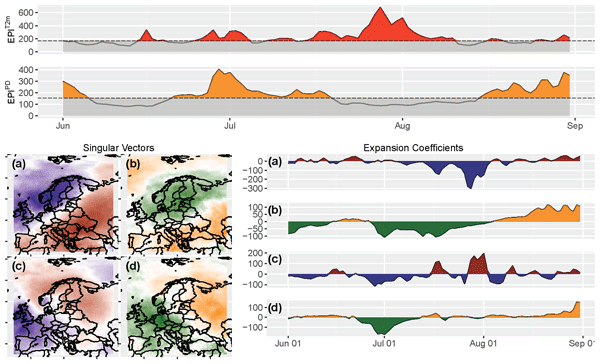
This paper uses the tail pairwise dependence matrix (TPDM) proposed by Cooley and Thibaud (2019), which we extend to the description of common extremes in two variables. We develop an extreme pattern index (EPI), a pattern-based aggregation to describe spatially extended weather extremes. Our results show that the EPI is suitable for describing heat waves. We extend the EPI to describe extremes in two variables and obtain an index to describe compound precipitation deficits and heat waves.
Julian Steinheuer, Carola Detring, Frank Beyrich, Ulrich Löhnert, Petra Friederichs, and Stephanie Fiedler
Atmos. Meas. Tech., 15, 3243–3260, https://doi.org/10.5194/amt-15-3243-2022, https://doi.org/10.5194/amt-15-3243-2022, 2022
Short summary
Short summary
Doppler wind lidars (DWLs) allow the determination of wind profiles with high vertical resolution and thus provide an alternative to meteorological towers. We address the question of whether wind gusts can be derived since they are short-lived phenomena. Therefore, we compare different DWL configurations and develop a new method applicable to all of them. A fast continuous scanning mode that completes a full observation cycle within 3.4 s is found to be the best-performing configuration.
Sebastian Buschow and Petra Friederichs
Geosci. Model Dev., 14, 6765–6780, https://doi.org/10.5194/gmd-14-6765-2021, https://doi.org/10.5194/gmd-14-6765-2021, 2021
Short summary
Short summary
When insects fill the lower kilometers of the atmosphere, they get caught in the convergent parts of the wind field. Their concentration visualizes the otherwise invisible circulation on radar images. This study shows how clear-air radar data can be compared to simulated wind fields in terms of scale, anisotropy, and direction. Despite known difficulties with simulating these near-surface wind systems, we find decent agreement between a long-term simulation and the German radar mosaic.
Cited articles
Barnes, C., Clarke, B., Rantanen, M., Skålevåg, A., Ødemark, K., Kjellström, E., Vahlberg, M., Singh, R., Otto, F., Zachariah, M., Kew, S., Bergin, C., Vrkic, D., Hansson, L. B., Vikström, T., Hodgson, P., Norberg, L., Holten, T., Virkkunen, S., Kuusterä, K., Aura, S., Haro, P., Drobina, D., and Sjölund, H.: Intense two-week heatwave in Fennoscandia hotter and more likely due to climate change, Centre for Environmental Policy, https://doi.org/10.25560/122924, 2025. a, b, c
Bortot, P. and Tawn, J. A.: Models for the extremes of Markov chains, Biometrika, 85, 851–867, https://doi.org/10.1093/biomet/85.4.851, 1998. a
Chavez-Demoulin, V. and Davison, A.: Modelling Time Series Extremes, REVSTAT-Stat. J., 10, 109–133, https://doi.org/10.57805/revstat.v10i1.113, 2012. a
Cooley, D. and Thibaud, E.: Decompositions of dependence for high-dimensional extremes, Biometrika, 106, 587–604, https://doi.org/10.1093/biomet/asz028, 2019. a, b, c
Copernicus Climate Change Service: Heatwaves contribute to the warmest June on record in western Europe, https://climate.copernicus.eu/heatwaves-contribute-warmest-june-record-western-europe (last access: 8 October 2025), 2025. a
Eastoe, E. F. and Tawn, J. A.: Modelling Non-Stationary Extremes with Application to Surface Level Ozone, J. Roy. Stat. Soc. Ser. C, 58, 25–45, https://doi.org/10.1111/j.1467-9876.2008.00638.x, 2009. a, b, c, d
Faranda, D., Guinaldo, T., Pastor, J. F., Alberti, T., and Khodayar, S.: Attribution of the 2025 Mediterranean Marine Heatwave to Climate Change Using Analogues, HAL open science [preprint], https://hal.science/hal-05289765 (last access: 9 January 2026), 2025. a
Fawcett, L. and Walshaw, D.: Markov chain models for extreme wind speeds, Environmetrics, 17, 795–809, https://doi.org/10.1002/env.794, 2006. a
Friederichs, P.: Statistical downscaling of extreme precipitation events using extreme value theory, Extremes, 13, 109–132, https://doi.org/10.1007/s10687-010-0107-5, 2010. a, b
Friederichs, P., Göber, M., Bentzien, S., Lenz, A., and Krampitz, R.: A probabilistic analysis of wind gusts using extreme value statistics, Meteorol. Z., 18, 615–629, https://doi.org/10.1127/0941-2948/2009/0413, 2009. a
Gillett, N. P., Shiogama, H., Funke, B., Hegerl, G., Knutti, R., Matthes, K., Santer, B. D., Stone, D., and Tebaldi, C.: The Detection and Attribution Model Intercomparison Project (DAMIP v1.0) contribution to CMIP6, Geosci. Model Dev., 9, 3685–3697, https://doi.org/10.5194/gmd-9-3685-2016, 2016. a
Gulev, S., Thorne, P., Ahn, J., Dentener, F., Domingues, C., Gerland, S., Gong, D., Kaufman, D., Nnamchi, H., Quaas, J., Rivera, J., Sathyendranath, S., Smith, S., Trewin, B., von Schuckmann, K., and Vose, R.: Changing State of the Climate System, in: Climate Change 2021: The Physical Science Basis. Contribution of Working Group I to the Sixth Assessment Report of the Intergovernmental Panel on Climate Change, edited by: Masson-Delmotte, V., Zhai, P., Pirani, A., Connors, S. L., Péan, C., Berger, S., Caud, N., Chen, Y., Goldfarb, L., Gomis, M. I., Huang, M., Leitzell, K., Lonnoy, E., Matthews, J. B. R., Maycock, T. K., Waterfield, T., Yelekçi, O., Yu, R., and Zhou, B., Cambridge University Press, Cambridge, UK and New York, NY, USA, https://doi.org/10.1017/9781009157896.004, 2021. a, b
Hannart, A. and Naveau, P.: Probabilities of Causation of Climate Changes, J. Climate, 31, 5507–5524, https://doi.org/10.1175/JCLI-D-17-0304.1, 2018. a
Hannart, A., Pearl, J., Otto, F. E. L., Naveau, P., and Ghil, M.: Causal Counterfactual Theory for the Attribution of Weather and Climate-Related Events, B. Am. Meteorol. Soc., 97, 99–110, https://doi.org/10.1175/BAMS-D-14-00034.1, 2016. a, b
Hegerl, G. C., Karl, T. R., Allen, M., Bindoff, N. L., Gillett, N., Karoly, D., Zhang, X., and Zwiers, F.: Climate Change Detection and Attribution: Beyond Mean Temperature Signals, J. Climate, 19, 5058–5077, https://doi.org/10.1175/JCLI3900.1, 2006. a
Hersbach, H., Bell, B., Berrisford, P., Hirahara, S., Horányi, A., Muñoz-Sabater, J., Nicolas, J., Peubey, C., Radu, R., Schepers, D., Simmons, A., Soci, C., Abdalla, S., Abellan, X., Balsamo, G., Bechtold, P., Biavati, G., Bidlot, J., Bonavita, M., De Chiara, G., Dahlgren, P., Dee, D., Diamantakis, M., Dragani, R., Flemming, J., Forbes, R., Fuentes, M., Geer, A., Haimberger, L., Healy, S., Hogan, R. J., Hólm, E., Janisková, M., Keeley, S., Laloyaux, P., Lopez, P., Lupu, C., Radnoti, G., de Rosnay, P., Rozum, I., Vamborg, F., Villaume, S., and Thépaut, J.-N.: The ERA5 global reanalysis, Q. J. Roy. Meteor. Soc., 146, 1999–2049, https://doi.org/10.1002/qj.3803, 2020. a
Hulme, M.: Attributing weather extremes to “climate change”: A review, Prog. Phys. Geogr., 38, 499–511, https://doi.org/10.1177/0309133314538644, 2014. a
Huser, R., Opitz, T., and Thibaud, E.: Max-infinitely divisible models and inference for spatial extremes, Scand. J. Stat., 48, 321–348, https://doi.org/10.1111/sjos.12491, 2021. a
IEA: Global Energy Review: CO2 Emissions in 2021 Global emissions rebound sharply to highest ever level, https://www.iea.org/reports/global-energy-review-co2-emissions-in-2021-2(last access: 30 July 2025), 2021. a
Iturbide, M., Gutiérrez, J. M., Alves, L. M., Bedia, J., Cerezo-Mota, R., Cimadevilla, E., Cofiño, A. S., Di Luca, A., Faria, S. H., Gorodetskaya, I. V., Hauser, M., Herrera, S., Hennessy, K., Hewitt, H. T., Jones, R. G., Krakovska, S., Manzanas, R., Martínez-Castro, D., Narisma, G. T., Nurhati, I. S., Pinto, I., Seneviratne, S. I., van den Hurk, B., and Vera, C. S.: An update of IPCC climate reference regions for subcontinental analysis of climate model data: definition and aggregated datasets, Earth Syst. Sci. Data, 12, 2959–2970, https://doi.org/10.5194/essd-12-2959-2020, 2020. a, b
Jeon, S., Paciorek, C. J., and Wehner, M. F.: Quantile-based bias correction and uncertainty quantification of extreme event attribution statements, Weather Clim. Extremes, 12, 24–32, https://doi.org/10.1016/j.wace.2016.02.001, 2016. a
Jiang, Y., Cooley, D., and Wehner, M. F.: Principal Component Analysis for Extremes and Application to U.S. Precipitation, J. Climate, 33, 6441–6451, https://doi.org/10.1175/JCLI-D-19-0413.1, 2020. a, b
Kass, R. E. and Raftery, A. E.: Bayes Factors, J. Am. Stat. Assoc., 90, 773–795, https://doi.org/10.1080/01621459.1995.10476572, 1995. a, b
Koenker, R.: Quantile regression, vol. 38 of Econometric Society Monographs, Cambridge University Press, ISBN 978-0-521-84573-1, 2005. a
Koenker, R. and Machado, J. A. F.: Goodness of fit and related inference processes for quantile regression, J. Am. Stat. Assoc., 94, 1296–1310, 1999. a
Ledford, A. W. and Tawn, J. A.: Modelling Dependence within Joint Tail Regions, J. Roy. Stat. Soc. Ser. B, 59, 475–499, https://doi.org/10.1111/1467-9868.00080, 1997. a, b
Lemburg, A., Buschow, S., Dietz, V., Dillerup, I., Fischer-Frenzel, P., Friederichs, P., Grieger, J., Kraulich, F., Pfleiderer, P., Pinto, J. G., Reuter, L., Schröter, J., Szemkus, S., Ulbrich, U., and Vlachopoulos, O.: Analyse des europäischen Sommers 2025 mit Fokus auf Hitzeereignisse, Bericht des Forschungsnetzwerkes ClimXtreme, https://doi.org/10.17169/refubium-51330, 2026. a
Meurer, P., Buschow, S., Szemkus, S., and Friederichs, P.: Non-stationary time series attribution for heatwaves over Europe, Zenodo [code and data set], https://doi.org/10.5281/zenodo.20084246, 2026. a, b
Min, S.-K. and Hense, A.: A Bayesian Assessment of Climate Change Using Multimodel Ensembles. Part I: Global Mean Surface Temperature, J. Climate, 19, 3237–3256, https://doi.org/10.1175/JCLI3784.1, 2006. a
Min, S.-K., Hense, A., Paeth, H., and Kwon, W. T.: A Bayesian decision method for climate change signal analysis, Meteorol. Z., 13, 421–436, https://doi.org/10.1127/0941-2948/2004/0013-0421, 2004. a
Nelder, J. A. and Wedderburn, R. W.: Generalized linear models, J. Roy. Stat. Soc. Ser. A, 135, 370–384, 1972. a
Otto, F. E. L., Barnes, C., Philip, S., Kew, S., van Oldenborgh, G. J., and Vautard, R.: Formally combining different lines of evidence in extreme-event attribution, Adv. Stat. Clim. Meteorol. Oceanogr., 10, 159–171, https://doi.org/10.5194/ascmo-10-159-2024, 2024. a
Paciorek, C. J., Stone, D. A., and Wehner, M. F.: Quantifying statistical uncertainty in the attribution of human influence on severe weather, Weather Clim. Extremes, 20, 69–80, https://doi.org/10.1016/j.wace.2018.01.002, 2018. a
Paule, R. C. and Mandel, J.: Consensus Values and Weighting Factors, J. Res. Nat. Bur. Stand., 87, 377–385, https://doi.org/10.6028/jres.087.022, 1982. a, b
Perkins-Kirkpatrick, S., Alexander, L., King, A., Kew, S., Philip, S., Barnes, C., Maraun, D., Stuart-Smith, R., Jézéquel, A., Bevacqua, E., Burgess, S., Fischer, E., Hegerl, G., Kimutai, J., Koren, G., Lawal, K., Min, S.-K., New, M., Odoulami, R., Patricola, C., Pinto, I., Ribes, A., Shaw, T., Thiery, W., Trewin, B., Vautard, R., Wehner, M., and Zscheischler, J.: Frontiers in attributing climate extremes and associated impacts, Front. Clim., 6, https://doi.org/10.3389/fclim.2024.1455023, 2024. a
Philip, S., Kew, S., van Oldenborgh, G. J., Otto, F., Vautard, R., van der Wiel, K., King, A., Lott, F., Arrighi, J., Singh, R., and van Aalst, M.: A protocol for probabilistic extreme event attribution analyses, Adv. Stat. Clim. Meteorol. Oceanogr., 6, 177–203, https://doi.org/10.5194/ascmo-6-177-2020, 2020. a, b, c
Pickands, J.: Multivariate extreme value distributions, in: Proceedings of the 43rd Session, vol. 49 of Bulletin of the International Statistical Institute, Buenos Aires, 859–879, 1981. a
Ramos, A. and Ledford, A.: A new class of models for bivariate joint tails, J. Roy. Stat. Soc. Ser. B, 71, 219–241, https://doi.org/10.1111/j.1467-9868.2008.00684.x, 2009. a, b, c
Ramos, A. and Ledford, A.: Estimation of the Extremal Index Function in Case of Asymptotically Independent Markov Chains and Its Application to Stock Market Indices, Springer Berlin Heidelberg, Berlin, Heidelberg, 89–96, ISBN 978-3-642-32419-2, https://doi.org/10.1007/978-3-642-32419-2_10, 2013. a
Seabold, S. and Perktold, J.: statsmodels: Econometric and statistical modeling with python, in: 9th Python in Science Conference, https://doi.org/10.25080/Majora-92bf1922-011, 2010. a
Seneviratne, S., Zhang, X., Adnan, M., Badi, W., Dereczynski, C., Di Luca, A., Ghosh, S., Iskandar, I., Kossin, J., Lewis, S., Otto, F., Pinto, I., Satoh, M., Vicente-Serrano, S., Wehner, M., and Zhou, B.: Weather and Climate Extreme Events in a Changing Climate, in: Climate Change 2021: The Physical Science Basis. Contribution of Working Group I to the Sixth Assessment Report of the Intergovernmental Panel on Climate Change, edited by: Masson-Delmotte, V., Zhai, P., Pirani, A., Connors, S. L., Péan, C., Berger, S., Caud, N., Chen, Y., Goldfarb, L., Gomis, M. I., Huang, M., Leitzell, K., Lonnoy, E., Matthews, J. B. R., Maycock, T. K., Waterfield, T., Yelekçi, O., Yu, R., and Zhou, B., Cambridge University Press, Cambridge, UK and New York, NY, USA, 1513–1765, https://doi.org/10.1017/9781009157896.013, 2021. a
Seong, M.-G., Min, S.-K., and Zhang, X.: A Bayesian Attribution Analysis of Extreme Temperature Changes at Global and Regional Scales, J. Climate, 35, 8189–8203, https://doi.org/10.1175/JCLI-D-22-0104.1, 2022. a, b, c
Sippel, S., Mitchell, D., Black, M. T., Dittus, A. J., Harrington, L., Schaller, N., and Otto, F. E.: Combining large model ensembles with extreme value statistics to improve attribution statements of rare events, Weather Clim. Extremes, 9, 25–35, https://doi.org/10.1016/j.wace.2015.06.004, 2015. a
Smith, R. L., Tawn, J. A., and Coles, S. G.: Markov chain models for threshold exceedances, Biometrika, 84, 249–268, https://doi.org/10.1093/biomet/84.2.249, 1997. a, b, c, d
Stott, P. A., Stone, D. A., and Allen, M. R.: Human contribution to the European heatwave of 2003, Nature, 432, 610–614, https://doi.org/10.1038/nature03089, 2004. a
Wadsworth, J. L., Tawn, J. A., Davison, A. C., and Elton, D. M.: Modelling Across Extremal Dependence Classes, J. Roy. Stat. Soc. Ser. B, 79, 149–175, https://doi.org/10.1111/rssb.12157, 2017. a, b
Wehner, M., Stone, D., Krishnan, H., AchutaRao, K., and Castillo, F.: The Deadly Combination of Heat and Humidity in India and Pakistan in Summer 2015, B. Am. Meteorol. Soc., 97, S81–S86, https://doi.org/10.1175/BAMS-D-16-0145.1, 2016. a
Xoplaki, E., Ellsäßer, F., Grieger, J., Nissen, K. M., Pinto, J. G., Augenstein, M., Chen, T.-C., Feldmann, H., Friederichs, P., Gliksman, D., Goulier, L., Haustein, K., Heinke, J., Jach, L., Knutzen, F., Kollet, S., Luterbacher, J., Luther, N., Mohr, S., Mudersbach, C., Müller, C., Rousi, E., Simon, F., Suarez-Gutierrez, L., Szemkus, S., Vallejo-Bernal, S. M., Vlachopoulos, O., and Wolf, F.: Compound events in Germany in 2018: drivers and case studies, Nat. Hazards Earth Syst. Sci., 25, 541–564, https://doi.org/10.5194/nhess-25-541-2025, 2025. a
Short summary
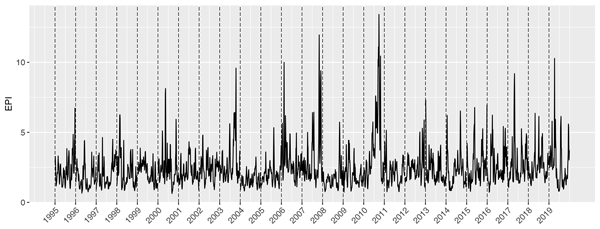
The attribution of extreme events typically focuses on individual events, such as heatwaves. In our study, we extend this approach to include complete time series during such events in order to capture their temporal dependence. Using today's knowledge, we find that the influence of anthropogenic greenhouse gas emissions on heatwaves could already have been proven in the 1960s. It is very likely that 21st-century heatwaves over Europe would be impossible without these emissions.
The attribution of extreme events typically focuses on individual events, such as heatwaves. In...