Articles | Volume 12, issue 1
https://doi.org/10.5194/ascmo-12-87-2026
© Author(s) 2026. This work is distributed under
the Creative Commons Attribution 4.0 License.
the Creative Commons Attribution 4.0 License.
https://doi.org/10.5194/ascmo-12-87-2026
© Author(s) 2026. This work is distributed under
the Creative Commons Attribution 4.0 License.
the Creative Commons Attribution 4.0 License.

24 Mar 2026
| 24 Mar 2026
Selecting the best distribution for modeling trends in low, medium, and extreme daily precipitation under climate change
Abubakar Haruna
CORRESPONDING AUTHOR

Univ. Grenoble Alpes, CNRS, INRAE, IRD, Grenoble Institute of Engineering and Management, IGE, 38000 Grenoble, France
Juliette Blanchet
Univ. Grenoble Alpes, CNRS, INRAE, IRD, Grenoble Institute of Engineering and Management, IGE, 38000 Grenoble, France
Guillaume Evin
Univ. Grenoble Alpes, CNRS, INRAE, IRD, Grenoble Institute of Engineering and Management, IGE, 38000 Grenoble, France
Emmanuel Paquet
EDF-DTG, 38000 Grenoble, France
Related authors
Abubakar Haruna, Juliette Blanchet, and Anne-Catherine Favre
Hydrol. Earth Syst. Sci., 26, 2797–2811, https://doi.org/10.5194/hess-26-2797-2022, https://doi.org/10.5194/hess-26-2797-2022, 2022
Short summary
Short summary
Reliable prediction of floods depends on the quality of the input data such as precipitation. However, estimation of precipitation from the local measurements is known to be difficult, especially for extremes. Regionalization improves the estimates by increasing the quantity of data available for estimation. Here, we compare three regionalization methods based on their robustness and reliability. We apply the comparison to a dense network of daily stations within and outside Switzerland.
Abubakar Haruna, Pierre-Andre Garambois, Helene Roux, Pierre Javelle, and Maxime Jay-Allemand
Hydrol. Earth Syst. Sci. Discuss., https://doi.org/10.5194/hess-2021-414, https://doi.org/10.5194/hess-2021-414, 2021
Manuscript not accepted for further review
Short summary
Short summary
We compared three hydrological models in a flash flood modelling framework. We first identified the sensitive parameters of each model, then compared their performances in terms of outlet discharge and soil moisture simulation. We found out that resulting from the differences in their complexities/process representation, performance depends on the aspect/measure used. The study then highlights and proposed some future investigations/modifications to improve the models.
Nicolas Decoopman, Juliette Blanchet, Antoine Blanc, and Cécile Caillaud
Hydrol. Earth Syst. Sci., 30, 5833–5855, https://doi.org/10.5194/hess-30-5833-2026, https://doi.org/10.5194/hess-30-5833-2026, 2026
Short summary
Short summary
This study evaluates the ability of the convection-permitting regional climate model AROME (Applications of Research to Operations at Mesoscale) to reproduce precipitation extremes and their trends, at daily and hourly scales in France, over 1959–2022. Overall, the results highlight the value of the explicit-convection model for extreme precipitation studies, while also highlighting its limitations for convective extremes.
Thomas Skaugen, Deborah Lawrence, Matthew Lee Newell, Tiia Pedusaar, Anne Kristine Fleig, and Emmanuel Paquet
EGUsphere, https://doi.org/10.5194/egusphere-2026-4900, https://doi.org/10.5194/egusphere-2026-4900, 2026
This preprint is open for discussion and under review for Natural Hazards and Earth System Sciences (NHESS).
Short summary
Short summary
This study demonstrates a new method for estimating design floods for urban and natural catchments. Using hydrological models instead of classical flood frequency analysis, we obtain more understanding on the generation floods, for example on the relative contribution to the total flow of precipitation and subsurface flow. The method performs comparably for rainfall dominated catchments with established, and more complex methods, and the method can also be used for ungauged basins.
Paul Fournier, Antoine Blanc, Juliette Blanchet, and Matthieu Lafaysse
EGUsphere, https://doi.org/10.5194/egusphere-2026-2497, https://doi.org/10.5194/egusphere-2026-2497, 2026
Short summary
Short summary
When rain falls on snow, the combined effect of rainfall and snowmelt can generate flooding. Using hourly weather data across the French Alps over 1958–2024, we identified and characterized such rain-on-snow events and linked them to documented natural hazard events. While these events have become less frequent overall due to shorter snow seasons, the most intense ones have shifted toward lower, more populated elevations, meaning they are increasingly likely to impact communities.
Gerhard Krinner, Aude Champouillon, Juliette Blanchet, and Frédérique Chéruy
Geosci. Model Dev., 19, 4961–4975, https://doi.org/10.5194/gmd-19-4961-2026, https://doi.org/10.5194/gmd-19-4961-2026, 2026
Short summary
Short summary
Although the scientific community has made much progress over the last decades, climate models still do not perfectly simulate the present climate. Therefore, the model outputs are usually corrected for these errors. This article presents a method to apply successive stages of repeated error correction that lead to a better simulation of the present climate than in previous studies, in which the same correction method had been applied only once.
Aude Champouillon, Gerhard Krinner, and Juliette Blanchet
EGUsphere, https://doi.org/10.5194/egusphere-2026-1380, https://doi.org/10.5194/egusphere-2026-1380, 2026
Short summary
Short summary
Climate models are essential to quantify future climate change. Despite constant progress, they still exhibit errors in long-term statistics of key variables. Impact studies require using bias correction, typically applied on model outputs. Empirical run-time bias correction (ERBC), however, consist in adding empirical corrective terms to the equations of key variables. Here, we propose an intercomparison of ERBC methods, evaluated on a broad range of criteria, from global to regional scale.
Ian Castellanos, Martin Ménégoz, Juliette Blanchet, Julien Beaumet, Hubert Gallée, Eduardo Moreno-Chamarro, Chantal Staquet, and Xavier Fettweis
Earth Syst. Dynam., 17, 581–605, https://doi.org/10.5194/esd-17-581-2026, https://doi.org/10.5194/esd-17-581-2026, 2026
Short summary
Short summary
The Alps host glaciers, distinct ecosystems, socio-economic interests and water resources that are being impacted by climate change. In this study, we aim at understanding how warming occurs in the Alps in projected scenarios and what physical processes drive it. We find under these scenarios that elevations around the snowline will warm faster than elsewhere, because snow retreats to higher elevations. Indeed, snow slows down warming due to its high albedo and the energy consumed to melt it.
Valentin Dura, Guillaume Evin, Anne-Catherine Favre, and David Penot
Hydrol. Earth Syst. Sci., 30, 2953–2971, https://doi.org/10.5194/hess-30-2953-2026, https://doi.org/10.5194/hess-30-2953-2026, 2026
Short summary
Short summary
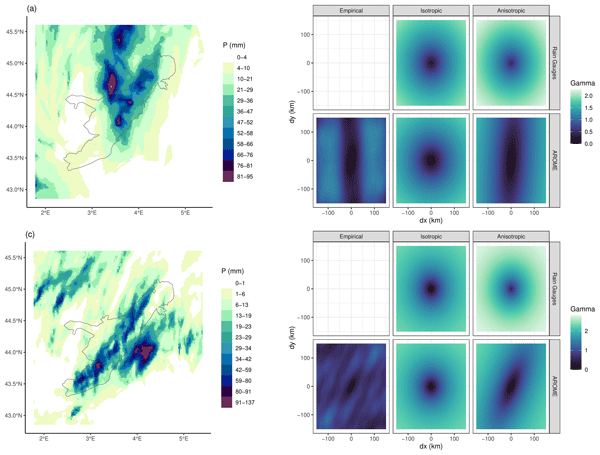
Traditional precipitation analyses often misrepresent intense rainfall's spatial variability. This study evaluates different spatial covariances to capture this variability in a geostatistical framework. The best covariance includes anisotropy derived from daily climate model simulations, offering a reliable alternative to anisotropy estimation using rain gauges. These findings highlight the importance of including anisotropy when generating precipitation inputs for hydrological modeling.
Eleni Kritidou, Martina Kauzlaric, Maria Staudinger, Guillaume Evin, Marc Vis, and Daniel Viviroli
EGUsphere, https://doi.org/10.5194/egusphere-2026-2338, https://doi.org/10.5194/egusphere-2026-2338, 2026
Short summary
Short summary
In mountain regions, precipitation varies with elevation, but models often simplify this relationship. We used simulations combining a weather generator and a hydrological model to explore how different precipitation different lapse rates affect runoff and floods in Switzerland. We found that they impact yearly and seasonal river flow and flood behavior. Higher-elevation catchments were less sensitive, and higher lapse rates increased summer floods, while lower rates increased winter floods.
Eric Sauquet, Guillaume Evin, Sonia Siauve, Ryma Aissat, Patrick Arnaud, Maud Bérel, Jérémie Bonneau, Flora Branger, Yvan Caballero, François Colléoni, Agnès Ducharne, Joël Gailhard, Florence Habets, Frédéric Hendrickx, Louis Héraut, Benoît Hingray, Peng Huang, Tristan Jaouen, Alexis Jeantet, Sandra Lanini, Matthieu Le Lay, Claire Magand, Louise Mimeau, Céline Monteil, Simon Munier, Charles Perrin, Olivier Robelin, Fabienne Rousset, Jean-Michel Soubeyroux, Laurent Strohmenger, Guillaume Thirel, Flore Tocquer, Yves Tramblay, Jean-Pierre Vergnes, and Jean-Philippe Vidal
Hydrol. Earth Syst. Sci., 30, 2277–2300, https://doi.org/10.5194/hess-30-2277-2026, https://doi.org/10.5194/hess-30-2277-2026, 2026
Short summary
Short summary
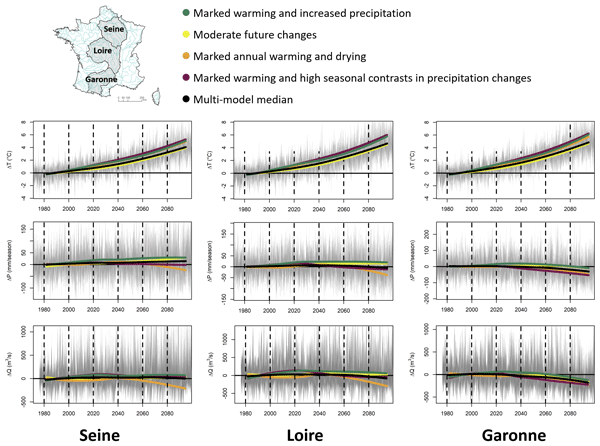
The Explore2 project has provided an unprecedented set of hydrological projections in terms of the number of hydrological models used and the spatial and temporal resolution. The results have been made available through various media. Under the high-emission scenario, the hydrological models mostly agree on the decrease in seasonal flows in the south of France, confirming its hotspot status, and on the decrease in summer flows throughout France, with the exception of the northern part of France.
Gabrielle Sorini, Juliette Blanchet, Gérémy Panthou, Théo Vischel, and Yves Tramblay
EGUsphere, https://doi.org/10.5194/egusphere-2026-1176, https://doi.org/10.5194/egusphere-2026-1176, 2026
Short summary
Short summary
This study investigates regional flood trends across West Africa using time-varying extreme-value distributions. While most catchments show declining flood magnitudes up to the 1970s–1990s, recent trends diverge, ranging from decrease to intensification, revealing an original typology of regional hydrosystems. These results refine the narrative of hydrological changes in West Africa and provide clues to their attribution.
Simon Filhol, Clément Misset, Noélie Bontemps, Diego Cusicanqui, Emmanuel Paquet, Marie Dumont, Olivier Gagliardini, Pascal Lacroix, Simon Gascoin, Guillaume Thirel, Julien Brondex, Pascal Hagenmuller, Eric Larose, Philipp Schoeneich, Denis Roy, Emmanuel Thibert, Nicolas Eckert, Félix de Montety, Robin Mainieri, Alexandre Hauet, Frédéric Gottardi, Johan Berthet, Alexandre Baratier, Frédéric Liébault, Małgorzata Chmiel, Guillaume Piton, Guillaume Chambon, Guillaume James, Philippe Frey, Philip Deline, Laurent Astrade, Christian Vincent, Dominique Laigle, Alain Recking, Fatima Karbou, Adrien Mauss, Mylène Bonnefoy-Demongeot, Firmin Fontaine, Mickael Langlais, Etienne Berthier, and Antoine Blanc
EGUsphere, https://doi.org/10.5194/egusphere-2026-971, https://doi.org/10.5194/egusphere-2026-971, 2026
Short summary
Short summary
On June 21 2024, the village of La Bérarde, in the French Alps, was devastated by a flood destroying centuries old buildings. This study is an interdisciplinary work to decipher the causes and chronology of the event. The flood started with decadal rain falling on a thick snowpack. A lake observed on top of a glacier few days prior, had drained post event. With climate change, should we expect more similar compound events for alpine communities?
Guillaume Evin, Benoit Hingray, Guillaume Thirel, Agnès Ducharne, Laurent Strohmenger, Lola Corre, Yves Tramblay, Jean-Philippe Vidal, Jérémie Bonneau, François Colleoni, Joël Gailhard, Florence Habets, Frédéric Hendrickx, Louis Héraut, Peng Huang, Matthieu Le Lay, Claire Magand, Paola Marson, Céline Monteil, Simon Munier, Alix Reverdy, Jean-Michel Soubeyroux, Yoann Robin, Jean-Pierre Vergnes, Mathieu Vrac, and Eric Sauquet
Hydrol. Earth Syst. Sci., 30, 1023–1051, https://doi.org/10.5194/hess-30-1023-2026, https://doi.org/10.5194/hess-30-1023-2026, 2026
Short summary
Short summary
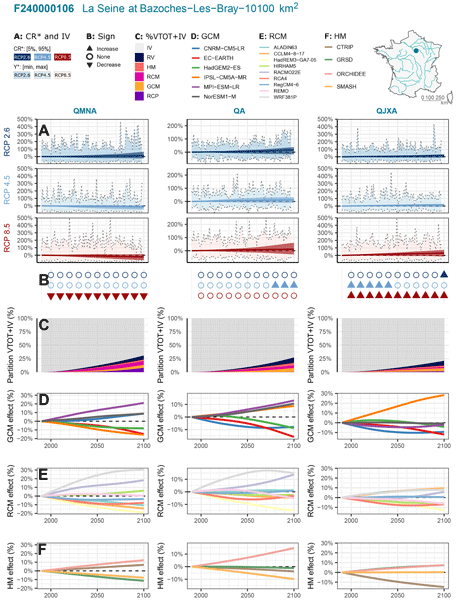
Explore2 provides hydrological projections for 1,735 French catchments. Using QUALYPSO (Quasi-Ergodic Analysis of Climate Projections Using Data Augmentation), this study assesses uncertainties, including internal variability. By the end of the century, low flows are projected to decline in southern France under high emissions, while other indicators remain uncertain. Emission scenarios and regional climate models are key uncertainty sources. Internal variability is often as large as climate-driven changes.
Camille Crapart, Sandrine Anquetin, Juliette Blanchet, and Arona Diedhiou
Hydrol. Earth Syst. Sci., 30, 163–181, https://doi.org/10.5194/hess-30-163-2026, https://doi.org/10.5194/hess-30-163-2026, 2026
Short summary
Short summary
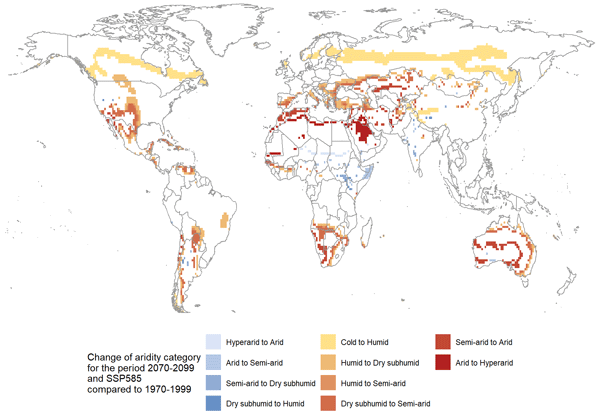
Our study investigates global dryland dynamics and aridification under future climate scenarios. By employing the Food and Agriculture Organisation Aridity Index and an ensemble of 13 models from the 6th Coupled Model Intercomparison Project, we provide projections for dryland distribution and aridity index across three shared socio-economic pathways (2-4.5, 3-7.0, and 5-8.5) for the near-term (2030–2059) and for the long-term (2070–2099) future.

Elisa Kamir, Samuel Morin, Guillaume Evin, Penelope Gehring, Bodo Wichura, and Ali Nadir Arslan
Earth Syst. Sci. Data, 18, 17–32, https://doi.org/10.5194/essd-18-17-2026, https://doi.org/10.5194/essd-18-17-2026, 2026
Short summary
Short summary
This article describes a dataset of annual snow depth maximum across Europe, from 1961 to 2015, based on a regional reanalysis. It evaluates the performance of the dataset, against in-situ snow depth observations. This dataset is found to perform well in most environments, with challenges at high elevation and some coastal areas. Assessing the quality of this dataset is necessary in order to use it as a baseline to infer future changes of extreme snow loads under climate change.
Yves Tramblay, Guillaume Thirel, Laurent Strohmenger, Guillaume Evin, Lola Corre, Louis Heraut, and Eric Sauquet
Hydrol. Earth Syst. Sci., 29, 7023–7039, https://doi.org/10.5194/hess-29-7023-2025, https://doi.org/10.5194/hess-29-7023-2025, 2025
Short summary
Short summary
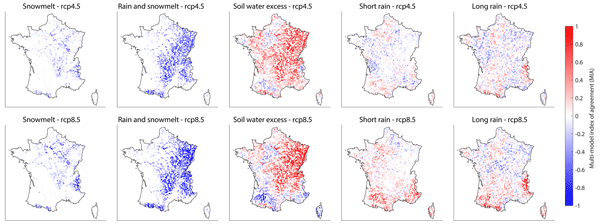
How does climate change impact floods in France? Using simulations for 3727 rivers with climate projections, results show that flood trends vary depending on the region. In the north, floods may become more severe, but in the south, the trends are mixed. Floods from intense rainfall are becoming more frequent, while snowmelt floods are strongly decreasing. Overall, the study shows that understanding what causes floods is key to predicting how they are likely to change with the climate.
Valentin Dura, Guillaume Evin, Anne-Catherine Favre, and David Penot
EGUsphere, https://doi.org/10.5194/egusphere-2025-5679, https://doi.org/10.5194/egusphere-2025-5679, 2025
Preprint archived
Short summary
Short summary
Traditional precipitation analysis often misrepresent seasonal totals and spatial variability of intense rainfall in mountains. This study introduces a reproducible workflow to generate a daily precipitation ensembles, conditioned on rain gauges. It outperforms standard products by better capturing seasonal totals. It also quantifies interpolation uncertainty, improving flood modeling. The open-source workflow is transferable to regions with sparse rain-gauge networks or limited radar coverage.
Serigne Bassirou Diop, Job Ekolu, Yves Tramblay, Bastien Dieppois, Stefania Grimaldi, Ansoumana Bodian, Juliette Blanchet, Ponnambalam Rameshwaran, Peter Salamon, and Benjamin Sultan
Nat. Hazards Earth Syst. Sci., 25, 3161–3184, https://doi.org/10.5194/nhess-25-3161-2025, https://doi.org/10.5194/nhess-25-3161-2025, 2025
Short summary
Short summary
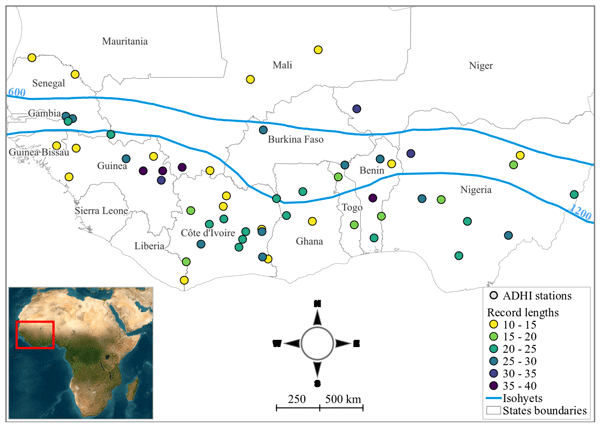
West Africa is very vulnerable to river floods. Current flood hazards are poorly understood due to limited data. This study is filling this knowledge gap using recent databases and two regional hydrological models to analyze changes in flood risk under two climate scenarios. Results show that most areas will see more frequent and severe floods, with some increasing by over 45 %. These findings stress the urgent need for climate-resilient strategies to protect communities and infrastructure.
Sebastian Berghald, Juliette Blanchet, Antoine Blanc, and David Penot
EGUsphere, https://doi.org/10.5194/egusphere-2025-3073, https://doi.org/10.5194/egusphere-2025-3073, 2025
Short summary
Short summary
Our study analyses extreme precipitation in the French Alps using extreme value theory on long-term observations. We compare daily and hourly observations and find regionally and seasonally different trends. On annual resolution, daily extremes show positive trends in the south and negative trends in the north, while trends in hourly extremes are noisier with an appearing east-west divide between increases in the high Alps and decreases in the pre-Alps.
Maria Staudinger, Martina Kauzlaric, Alexandre Mas, Guillaume Evin, Benoit Hingray, and Daniel Viviroli
Nat. Hazards Earth Syst. Sci., 25, 247–265, https://doi.org/10.5194/nhess-25-247-2025, https://doi.org/10.5194/nhess-25-247-2025, 2025
Short summary
Short summary
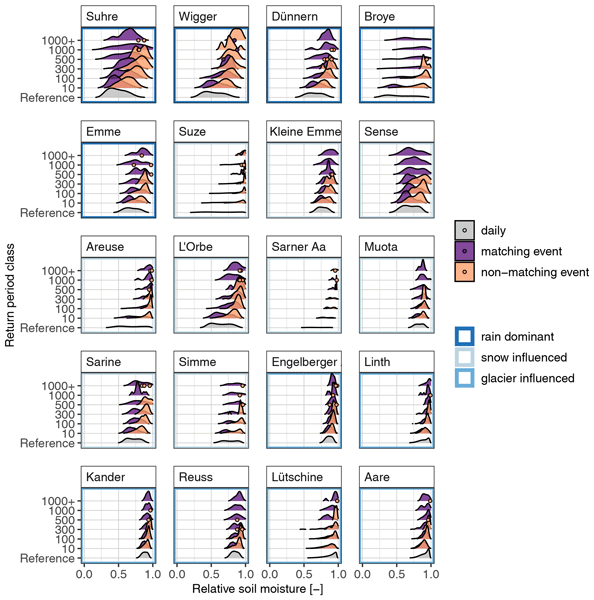
Various combinations of antecedent conditions and precipitation result in floods of varying degrees. Antecedent conditions played a crucial role in generating even large ones. The key predictors and spatial patterns of antecedent conditions leading to flooding at the basin's outlet were distinct. Precipitation and soil moisture from almost all sub-catchments were important for more frequent floods. For rarer events, only the predictors of specific sub-catchments were important.
Valentin Dura, Guillaume Evin, Anne-Catherine Favre, and David Penot
Hydrol. Earth Syst. Sci., 28, 2579–2601, https://doi.org/10.5194/hess-28-2579-2024, https://doi.org/10.5194/hess-28-2579-2024, 2024
Short summary
Short summary
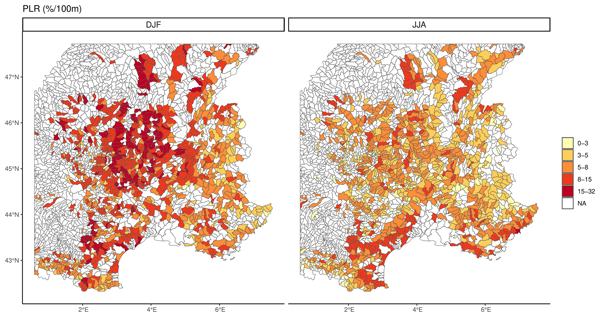
The increase in precipitation as a function of elevation is poorly understood in areas with complex topography. In this article, the reproduction of these orographic gradients is assessed with several precipitation products. The best product is a simulation from a convection-permitting regional climate model. The corresponding seasonal gradients vary significantly in space, with higher values for the first topographical barriers exposed to the dominant air mass circulations.
Guillaume Evin, Matthieu Le Lay, Catherine Fouchier, David Penot, Francois Colleoni, Alexandre Mas, Pierre-André Garambois, and Olivier Laurantin
Hydrol. Earth Syst. Sci., 28, 261–281, https://doi.org/10.5194/hess-28-261-2024, https://doi.org/10.5194/hess-28-261-2024, 2024
Short summary
Short summary
Hydrological modelling of mountainous catchments is challenging for many reasons, the main one being the temporal and spatial representation of precipitation forcings. This study presents an evaluation of the hydrological modelling of 55 small mountainous catchments of the northern French Alps, focusing on the influence of the type of precipitation reanalyses used as inputs. These evaluations emphasize the added value of radar measurements, in particular for the reproduction of flood events.
Isabelle Ousset, Guillaume Evin, Damien Raynaud, and Thierry Faug
Nat. Hazards Earth Syst. Sci., 23, 3509–3523, https://doi.org/10.5194/nhess-23-3509-2023, https://doi.org/10.5194/nhess-23-3509-2023, 2023
Short summary
Short summary
This paper deals with an exceptional snow and rain event in a Mediterranean region of France which is usually not prone to heavy snowfall and its consequences on a particular building that collapsed completely. Independent analyses of the meteorological episode are carried out, and the response of the building to different snow and rain loads is confronted to identify the main critical factors that led to the collapse.
Erwan Le Roux, Guillaume Evin, Raphaëlle Samacoïts, Nicolas Eckert, Juliette Blanchet, and Samuel Morin
The Cryosphere, 17, 4691–4704, https://doi.org/10.5194/tc-17-4691-2023, https://doi.org/10.5194/tc-17-4691-2023, 2023
Short summary
Short summary
We assess projected changes in snowfall extremes in the French Alps as a function of elevation and global warming level for a high-emission scenario. On average, heavy snowfall is projected to decrease below 3000 m and increase above 3600 m, while extreme snowfall is projected to decrease below 2400 m and increase above 3300 m. At elevations in between, an increase is projected until +3 °C of global warming and then a decrease. These results have implications for the management of risks.
Kaltrina Maloku, Benoit Hingray, and Guillaume Evin
Hydrol. Earth Syst. Sci., 27, 3643–3661, https://doi.org/10.5194/hess-27-3643-2023, https://doi.org/10.5194/hess-27-3643-2023, 2023
Short summary
Short summary
High-resolution precipitation data, needed for many applications in hydrology, are typically rare. Such data can be simulated from daily precipitation with stochastic disaggregation. In this work, multiplicative random cascades are used to disaggregate time series of 40 min precipitation from daily precipitation for 81 Swiss stations. We show that very relevant statistics of precipitation are obtained when precipitation asymmetry is accounted for in a continuous way in the cascade generator.
Juliette Blanchet, Alix Reverdy, Antoine Blanc, Jean-Dominique Creutin, Périne Kiennemann, and Guillaume Evin
Hydrol. Earth Syst. Sci. Discuss., https://doi.org/10.5194/hess-2023-197, https://doi.org/10.5194/hess-2023-197, 2023
Revised manuscript not accepted
Short summary
Short summary
The Alpine region is strongly affected by torrential floods, sometimes leading to severe negative impacts on society, economy, and the environment. Understanding such natural hazards and their drivers is essential to mitigate related risks. In this article we study the atmospheric conditions at the origin of damaging torrential events in the Northern French Alps over the long run, using a database of reported occurrence of damaging torrential flooding in the Grenoble conurbation since 1851.
Laurent Strohmenger, Eric Sauquet, Claire Bernard, Jérémie Bonneau, Flora Branger, Amélie Bresson, Pierre Brigode, Rémy Buzier, Olivier Delaigue, Alexandre Devers, Guillaume Evin, Maïté Fournier, Shu-Chen Hsu, Sandra Lanini, Alban de Lavenne, Thibault Lemaitre-Basset, Claire Magand, Guilherme Mendoza Guimarães, Max Mentha, Simon Munier, Charles Perrin, Tristan Podechard, Léo Rouchy, Malak Sadki, Myriam Soutif-Bellenger, François Tilmant, Yves Tramblay, Anne-Lise Véron, Jean-Philippe Vidal, and Guillaume Thirel
Hydrol. Earth Syst. Sci., 27, 3375–3391, https://doi.org/10.5194/hess-27-3375-2023, https://doi.org/10.5194/hess-27-3375-2023, 2023
Short summary
Short summary
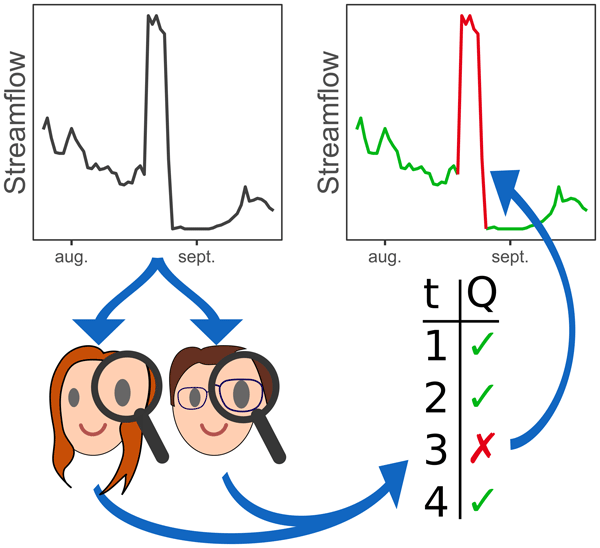
We present the results of a large visual inspection campaign of 674 streamflow time series in France. The objective was to detect non-natural records resulting from instrument failure or anthropogenic influences, such as hydroelectric power generation or reservoir management. We conclude that the identification of flaws in flow time series is highly dependent on the objectives and skills of individual evaluators, and we raise the need for better practices for data cleaning.
Yves Tramblay, Patrick Arnaud, Guillaume Artigue, Michel Lang, Emmanuel Paquet, Luc Neppel, and Eric Sauquet
Hydrol. Earth Syst. Sci., 27, 2973–2987, https://doi.org/10.5194/hess-27-2973-2023, https://doi.org/10.5194/hess-27-2973-2023, 2023
Short summary
Short summary
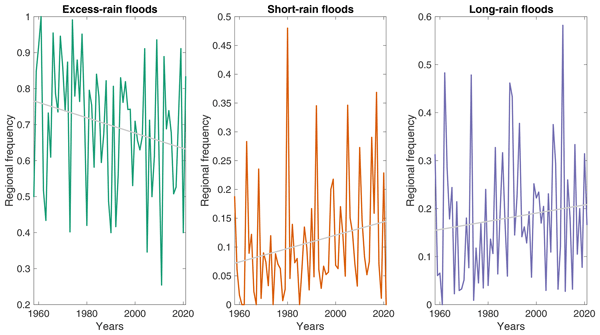
Mediterranean floods are causing major damage, and recent studies have shown that, despite the increase in intense rainfall, there has been no increase in river floods. This study reveals that the seasonality of floods changed in the Mediterranean Basin during 1959–2021. There was also an increased frequency of floods linked to short episodes of intense rain, associated with a decrease in soil moisture. These changes need to be taken into consideration to adapt flood warning systems.
Maxime Morel, Guillaume Piton, Damien Kuss, Guillaume Evin, and Caroline Le Bouteiller
Nat. Hazards Earth Syst. Sci., 23, 1769–1787, https://doi.org/10.5194/nhess-23-1769-2023, https://doi.org/10.5194/nhess-23-1769-2023, 2023
Short summary
Short summary
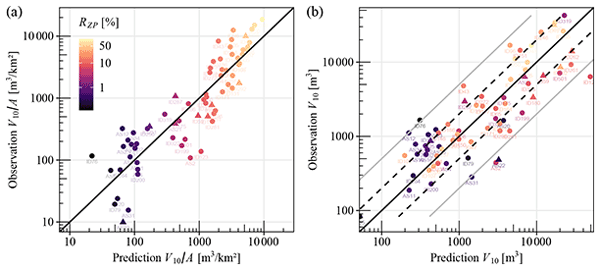
In mountain catchments, damage during floods is generally primarily driven by the supply of a massive amount of sediment. Predicting how much sediment can be delivered by frequent and infrequent events is thus important in hazard studies. This paper uses data gathered during the maintenance operation of about 100 debris retention basins to build simple equations aiming at predicting sediment supply from simple parameters describing the upstream catchment.
Cécile Duvillier, Nicolas Eckert, Guillaume Evin, and Michael Deschâtres
Nat. Hazards Earth Syst. Sci., 23, 1383–1408, https://doi.org/10.5194/nhess-23-1383-2023, https://doi.org/10.5194/nhess-23-1383-2023, 2023
Short summary
Short summary
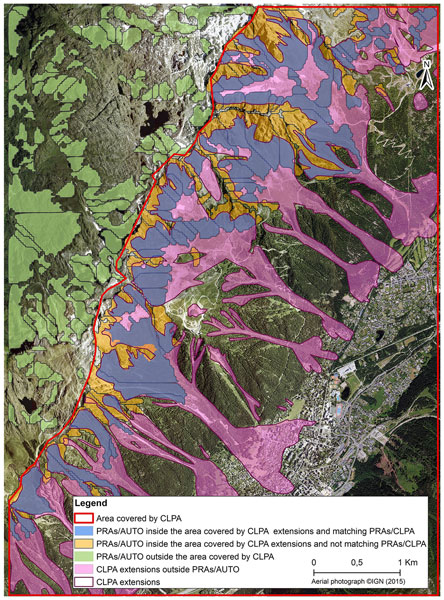
This study develops a method that identifies individual potential release areas (PRAs) of snow avalanches based on terrain analysis and watershed delineation and demonstrates its efficiency in the French Alps context using an extensive cadastre of past avalanche limits. Results may contribute to better understanding local avalanche hazard. The work may also foster the development of more efficient PRA detection methods based on a rigorous evaluation scheme.
Juliette Blanchet, Alix Reverdy, Antoine Blanc, Jean-Dominique Creutin, Périne Kiennemann, and Guillaume Evin
Nat. Hazards Earth Syst. Sci. Discuss., https://doi.org/10.5194/nhess-2022-276, https://doi.org/10.5194/nhess-2022-276, 2023
Manuscript not accepted for further review
Short summary
Short summary
We study the atmospheric conditions at the origin of damaging torrential events in the Northern French Alps over the long run. We consider seven atmospheric variables that describe the nature of the air masses involved and the possible triggers of precipitation and we try to isolate the most discriminating variables. The results show that humidity and particularly humidity transport plays the greatest role under westerly flows while instability potential is mostly at play under southerly flows.
Daniel Viviroli, Anna E. Sikorska-Senoner, Guillaume Evin, Maria Staudinger, Martina Kauzlaric, Jérémy Chardon, Anne-Catherine Favre, Benoit Hingray, Gilles Nicolet, Damien Raynaud, Jan Seibert, Rolf Weingartner, and Calvin Whealton
Nat. Hazards Earth Syst. Sci., 22, 2891–2920, https://doi.org/10.5194/nhess-22-2891-2022, https://doi.org/10.5194/nhess-22-2891-2022, 2022
Short summary
Short summary
Estimating the magnitude of rare to very rare floods is a challenging task due to a lack of sufficiently long observations. The challenge is even greater in large river basins, where precipitation patterns and amounts differ considerably between individual events and floods from different parts of the basin coincide. We show that a hydrometeorological model chain can provide plausible estimates in this setting and can thus inform flood risk and safety assessments for critical infrastructure.
Erwan Le Roux, Guillaume Evin, Nicolas Eckert, Juliette Blanchet, and Samuel Morin
Earth Syst. Dynam., 13, 1059–1075, https://doi.org/10.5194/esd-13-1059-2022, https://doi.org/10.5194/esd-13-1059-2022, 2022
Short summary
Short summary
Anticipating risks related to climate extremes is critical for societal adaptation to climate change. In this study, we propose a statistical method in order to estimate future climate extremes from past observations and an ensemble of climate change simulations. We apply this approach to snow load data available in the French Alps at 1500 m elevation and find that extreme snow load is projected to decrease by −2.9 kN m−2 (−50 %) between 1986–2005 and 2080–2099 for a high-emission scenario.
Abubakar Haruna, Juliette Blanchet, and Anne-Catherine Favre
Hydrol. Earth Syst. Sci., 26, 2797–2811, https://doi.org/10.5194/hess-26-2797-2022, https://doi.org/10.5194/hess-26-2797-2022, 2022
Short summary
Short summary
Reliable prediction of floods depends on the quality of the input data such as precipitation. However, estimation of precipitation from the local measurements is known to be difficult, especially for extremes. Regionalization improves the estimates by increasing the quantity of data available for estimation. Here, we compare three regionalization methods based on their robustness and reliability. We apply the comparison to a dense network of daily stations within and outside Switzerland.
Antoine Blanc, Juliette Blanchet, and Jean-Dominique Creutin
Weather Clim. Dynam., 3, 231–250, https://doi.org/10.5194/wcd-3-231-2022, https://doi.org/10.5194/wcd-3-231-2022, 2022
Short summary
Short summary
Precipitation variability and extremes in the northern French Alps are governed by the atmospheric circulation over western Europe. In this work, we study the past evolution of western Europe large-scale circulation using atmospheric descriptors. We show some discrepancies in the trends obtained from different reanalyses before 1950. After 1950, we find trends in Mediterranean circulations that appear to be linked with trends in seasonal and extreme precipitation in the northern French Alps.
Guillaume Evin, Samuel Somot, and Benoit Hingray
Earth Syst. Dynam., 12, 1543–1569, https://doi.org/10.5194/esd-12-1543-2021, https://doi.org/10.5194/esd-12-1543-2021, 2021
Short summary
Short summary
This research paper proposes an assessment of mean climate change responses and related uncertainties over Europe for mean seasonal temperature and total seasonal precipitation. An advanced statistical approach is applied to a large ensemble of 87 high-resolution EURO-CORDEX projections. For the first time, we provide a comprehensive estimation of the relative contribution of GCMs and RCMs, RCP scenarios, and internal variability to the total variance of a very large ensemble.
Abubakar Haruna, Pierre-Andre Garambois, Helene Roux, Pierre Javelle, and Maxime Jay-Allemand
Hydrol. Earth Syst. Sci. Discuss., https://doi.org/10.5194/hess-2021-414, https://doi.org/10.5194/hess-2021-414, 2021
Manuscript not accepted for further review
Short summary
Short summary
We compared three hydrological models in a flash flood modelling framework. We first identified the sensitive parameters of each model, then compared their performances in terms of outlet discharge and soil moisture simulation. We found out that resulting from the differences in their complexities/process representation, performance depends on the aspect/measure used. The study then highlights and proposed some future investigations/modifications to improve the models.
Cited articles
Abbas, A., Ahmad, T., and Ahmad, I.: Modeling zero-inflated precipitation extremes, Commun. Stat., 1–17, https://doi.org/10.1080/03610918.2025.2585398, 2025. a
Akaike, H.: A new look at the statistical model identification, IEEE T. Automat. Contr., 19, 716–723, https://doi.org/10.1109/TAC.1974.1100705, 1974. a
Alexandersson, H.: A homogeneity test applied to precipitation data, J. Climatol., 6, 661–675, https://doi.org/10.1002/joc.3370060607, 1986. a
Ayar, P. V., Blanchet, J., Paquet, E., and Penot, D.: Space-time simulation of precipitation based on weather pattern sub-sampling and meta-Gaussian model, J. Hydrol., 581, 124451, https://doi.org/10.1016/j.jhydrol.2019.124451, 2020. a
Bauer, V. M. and Scherrer, S. C.: The observed evolution of sub‐daily to multi‐day heavy precipitation in Switzerland, Atmos. Sci. Lett., 25, e1240, https://doi.org/10.1002/asl.1240, 2024. a
Beneyto, C., Ángel Aranda, J., Salazar-Galán, S., Garcia-Bartual, R., Albentosa, E., and Francés, F.: Expanding information for flood frequency analysis using a weather generator: Application in a Spanish Mediterranean catchment, J. Hydrol., 53, 101826, https://doi.org/10.1016/j.ejrh.2024.101826, 2024. a
Blanchet, J. and Creutin, J.-D.: Instrumental agreement and retrospective analysis of trends in precipitation extremes in the French Mediterranean Region, Environ. Res. Lett., 17, 074011, https://doi.org/10.1088/1748-9326/ac7734, 2022. a
Blanchet, J., Molinié, G., and Touati, J.: Spatial analysis of trend in extreme daily rainfall in southern France, Clim. Dynam., 51, 799–812, https://doi.org/10.1007/s00382-016-3122-7, 2018. a
Blanchet, J., Paquet, E., Vaittinada Ayar, P., and Penot, D.: Mapping rainfall hazard based on rain gauge data: an objective cross-validation framework for model selection, Hydrol. Earth Syst. Sci., 23, 829–849, https://doi.org/10.5194/hess-23-829-2019, 2019. a
Blanchet, J., Blanc, A., and Creutin, J.-D.: Explaining recent trends in extreme precipitation in the Southwestern Alps by changes in atmospheric influences, Weather and Climate Extremes, 33, 100356, https://doi.org/10.1016/j.wace.2021.100356, 2021a. a
Blanchet, J., Creutin, J.-D., and Blanc, A.: Retreating winter and strengthening autumn Mediterranean influence on extreme precipitation in the Southwestern Alps over the last 60 years, Environ. Res. Lett., 16, 034056, https://doi.org/10.1088/1748-9326/abb5cd, 2021b. a, b
Bois, P.: Contrôle de séries chronologiques corrélées par étude du cumul des résidus de la corrélation, Colloques et séminaires, 2èmes journées hydrologiques de l’ORSTOM, à Montpellier, 2, Montpellier (FRA), 16–17 September 1986, ISBN 2-7099-0865-4,1986. a
Cavanaugh, N. R., Gershunov, A., Panorska, A. K., and Kozubowski, T. J.: The probability distribution of intense daily precipitation, Geophys. Res. Lett., 42, 1560–1567, https://doi.org/10.1002/2015GL063238, 2015. a, b
Chakrabarti, A. and Ghosh, J. K.: AIC, BIC and recent advances in model selection, Philosophy of Statistics, 583–605, https://doi.org/10.1016/b978-0-444-51862-0.50018-6, 2011. a
Cisneros, D., Richards, J., Dahal, A., Lombardo, L., and Huser, R.: Deep graphical regression for jointly moderate and extreme Australian wildfires, Spat. Stat.-Neth., 59, 100811, https://doi.org/10.1016/j.spasta.2024.100811, 2024. a
Coles, S., Bawa, J., Trenner, L., and Dorazio, P.: An introduction to statistical modeling of extreme values, Vol. 208, Springer, https://doi.org/10.1007/978-1-4471-3675-0_2, 2001. a
Cunnane, C.: Unbiased plotting positions – a review, J. Hydrol., 37, 205–222, https://doi.org/10.1016/0022-1694(78)90017-3, 1978. a
Evin, G., Favre, A.-C., and Hingray, B.: Stochastic generation of multi-site daily precipitation focusing on extreme events, Hydrol. Earth Syst. Sci., 22, 655–672, https://doi.org/10.5194/hess-22-655-2018, 2018. a
Evin, G., Le Roux, E., Kamir, E., and Morin, S.: Estimating changes in extreme snow load in Europe as a function of global warming levels, Cold Reg. Sci. Technol., 231, 104424, https://doi.org/10.1016/j.coldregions.2025.104424, 2025. a, b
Funatsu, B. M., Claud, C., and Chaboureau, J.-P.: Comparison between the large-scale environments of moderate and intense precipitating systems in the Mediterranean region, Mon. Weather Rev., 137, 3933–3959, https://doi.org/10.1175/2009mwr2922.1, 2009. a
Groisman, P. Y., Karl, T. R., Easterling, D. R., Knight, R. W., Jamason, P. F., Hennessy, K. J., Suppiah, R., Page, C. M., Wibig, J., Fortuniak, K., Razuvaev, V. N., Douglas, A., Førland, E., and Zhai, P.-M.: Changes in the probability of heavy precipitation: important indicators of climatic change, Weather and Climate Extremes, 243–283, https://doi.org/10.1023/a:1005432803188, 1999. a
Haruna, A.: Enhancing Precipitation Hazard Estimation through Intensity-Duration-Area-Frequency (IDAF) Relationships, Application to a Topographically Complex Area, PhD thesis, Université Grenoble Alpes, https://hal.science/tel-04632742 (last access: 15 February 2026), 2024. a
Haruna, A., Blanchet, J., and Favre, A.-C.: Performance-based comparison of regionalization methods to improve the at-site estimates of daily precipitation, Hydrol. Earth Syst. Sci., 26, 2797–2811, https://doi.org/10.5194/hess-26-2797-2022, 2022. a
Haruna, A., Blanchet, J., and Favre, A.-C.: Modeling Intensity-Duration-Frequency Curves for the Whole Range of Non-Zero Precipitation: A Comparison of Models, Water Resour. Res., 59, e2022WR033362, https://doi.org/10.1029/2022WR033362, 2023. a
Haruna, A., Blanchet, J., and Favre, A.-C.: Estimation of Intensity-Duration-Area-Frequency Relationships Based on the Full Range of Non-Zero Precipitation From Radar-Reanalysis Data, Water Resour. Res., 60, e2023WR035902, https://doi.org/10.1029/2023WR035902, 2024. a
Haruna, A., Blanchet, J., and Favre, A.-C.: Joint estimation of trend in bulk and extreme daily precipitation in Switzerland, Weather and Climate Extremes, 48, 100769, https://doi.org/10.1016/j.wace.2025.100769, 2025. a, b, c
Huang, B., Thorne, P. W., Banzon, V. F., Boyer, T., Chepurin, G., Lawrimore, J. H., Menne, M. J., Smith, T. M., Vose, R. S., and Zhang, H.-M.: NOAA extended reconstructed sea surface temperature (ERSST), version 5, NOAA National Centers for Environmental Information [data set], https://doi.org/10.7289/V5T72FNM, 2017. a
IPCC: Climate Change 2023: Synthesis Report. Contribution of Working Groups I, II and III to the Sixth Assessment Report of the Intergovernmental Panel on Climate Change, 1st edn., edited by: Core Writing Team, Lee H., and Romero, J., IPCC, Geneva, Switzerland, Tech. rep., Intergovernmental Panel on Climate Change (IPCC), https://doi.org/10.59327/IPCC/AR6-9789291691647, 2023. a
Jayaweera, L., Wasko, C., and Nathan, R.: Modelling non-stationarity in extreme rainfall using large-scale climate drivers, J. Hydrol., 636, 131309, https://doi.org/10.1016/j.jhydrol.2024.131309, 2024. a, b
Kedem, B., Chiu, L. S., and North, G. R.: Estimation of mean rain rate: Application to satellite observations, J. Geophys. Res.-Atmos., 95, 1965–1972, https://doi.org/10.1029/jd095id02p01965, 1990. a
Kendall, M. G.: Rank correlation methods, Griffin, https://doi.org/10.2307/2333282, 1975. a
Kim, H., Kim, S., Shin, H., and Heo, J.-H.: Appropriate model selection methods for nonstationary generalized extreme value models, J. Hydrol., 547, 557–574, https://doi.org/10.1016/j.jhydrol.2017.02.005, 2017. a
Koenker, R. and Mizera, I.: Penalized triograms: Total variation regularization for bivariate smoothing, J. R. Stat. Soc. B, 66, 145–163, https://doi.org/10.1111/j.1467-9868.2004.00437.x, 2004. a
Le Gall, P., Favre, A.-C., Naveau, P., and Prieur, C.: Improved regional frequency analysis of rainfall data, Weather and Climate Extremes, 36, 100456, https://doi.org/10.1016/j.wace.2022.100456, 2022. a
Legrand, J., Ailliot, P., Naveau, P., and Raillard, N.: Joint stochastic simulation of extreme coastal and offshore significant wave heights, Ann. Appl. Stat., 17, 3363–3383, https://doi.org/10.1214/23-aoas1766, 2023. a
Mann, H. B.: Nonparametric tests against trend, Econometrica, 245–259, https://doi.org/10.2307/1907187, 1945. a
Milojevic, T., Blanchet, J., and Lehning, M.: Determining return levels of extreme daily precipitation, reservoir inflow, and dry spells, Frontiers in Water, 5, 1141786, https://doi.org/10.3389/frwa.2023.1141786, 2023. a
Ménégoz, M., Valla, E., Jourdain, N. C., Blanchet, J., Beaumet, J., Wilhelm, B., Gallée, H., Fettweis, X., Morin, S., and Anquetin, S.: Contrasting seasonal changes in total and intense precipitation in the European Alps from 1903 to 2010, Hydrol. Earth Syst. Sci., 24, 5355–5377, https://doi.org/10.5194/hess-24-5355-2020, 2020. a
Nanditha, J., Villarini, G., and Naveau, P.: Assessing future changes in daily precipitation extremes across the contiguous United States with the extended Generalized Pareto distribution, J. Hydrol., 659, 133212, https://doi.org/10.2139/ssrn.5085534, 2025. a
Naveau, P., Huser, R., Ribereau, P., and Hannart, A.: Modeling jointly low, moderate, and heavy rainfall intensities without a threshold selection, Water Resour. Res., 52, 2753–2769, https://doi.org/10.1002/2015WR018552, 2016. a
Nguyen, V. D., Vorogushyn, S., Nissen, K., Brunner, L., and Merz, B.: A non-stationary climate-informed weather generator for assessing future flood risks, Advances in Statistical Climatology, Meteorology and Oceanography, 10, 195–216, https://doi.org/10.5194/ascmo-10-195-2024, 2024. a
Papalexiou, S. M.: Unified theory for stochastic modelling of hydroclimatic processes: Preserving marginal distributions, correlation structures, and intermittency, Adv. Water Resour., 115, 234–252, https://doi.org/10.1016/j.advwatres.2018.02.013, 2018. a
Papalexiou, S. M. and Koutsoyiannis, D.: Entropy based derivation of probability distributions: A case study to daily rainfall, Adv. Water Resour., 45, 51–57, https://doi.org/10.1016/j.advwatres.2011.11.007, 2012. a, b
Papalexiou, S. M. and Koutsoyiannis, D.: Battle of extreme value distributions: A global survey on extreme daily rainfall, Water Resour. Res., 49, 187–201, https://doi.org/10.1029/2012WR012557, 2013. a, b, c
Papalexiou, S. M. and Koutsoyiannis, D.: A global survey on the seasonal variation of the marginal distribution of daily precipitation, Adv. Water Resour., 94, 131–145, https://doi.org/10.1016/j.advwatres.2016.05.005, 2016. a, b, c
Papastathopoulos, I. and Tawn, J. A.: Extended generalised Pareto models for tail estimation, J. Stat. Plan. Infer., 143, 131–143, https://doi.org/10.1016/j.jspi.2012.07.001, 2013. a
Paquet, E.: A Detailed Stationarity Analysis and Trend Modelling of French Daily Precipitations, in: Proceedings of the International Meeting on Statistical Climatology (IMSC 2024), Meteo France, Toulouse, https://doi.org/10.13140/RG.2.2.22302.34884, 2024. a
Rivoire, P., Martius, O., and Naveau, P.: A Comparison of Moderate and Extreme ERA-5 Daily Precipitation With Two Observational Data Sets, Earth and Space Science, 8, e2020EA001633, https://doi.org/10.1029/2020EA001633, 2021. a
Rivoire, P., Le Gall, P., Favre, A.-C., Naveau, P., and Martius, O.: High return level estimates of daily ERA-5 precipitation in Europe estimated using regionalized extreme value distributions, Weather and Climate Extremes, 38, 100500, https://doi.org/10.1016/j.wace.2022.100500, 2022. a
Schoof, J. T., Pryor, S., and Surprenant, J.: Development of daily precipitation projections for the United States based on probabilistic downscaling, J. Geophys. Res.-Atmos., 115, https://doi.org/10.1029/2009jd013030, 2010. a
Sen, P. K.: Estimates of the regression coefficient based on Kendall's tau, J. Am. Stat. Assoc., 63, 1379–1389, https://doi.org/10.1080/01621459.1968.10480934, 1968. a, b
Senatore, A., Furnari, L., and Mendicino, G.: Impact of high-resolution sea surface temperature representation on the forecast of small Mediterranean catchments' hydrological responses to heavy precipitation, Hydrol. Earth Syst. Sci., 24, 269–291, https://doi.org/10.5194/hess-24-269-2020, 2020. a
Stacy, E. W.: A generalization of the gamma distribution, Ann. Math. Stat., 1187–1192, https://doi.org/10.1214/aoms/1177704481, 1962. a
Stasinopoulos, D. M. and Rigby, R. A.: Generalized additive models for location scale and shape (GAMLSS) in R, J. Stat. Softw., 23, 1–46, https://doi.org/10.32614/cran.package.gamlss, 2008. a
Theil, H.: A rank-invariant method of linear and polynomial regression analysis, Indagat. Math.-New Ser., 12, 173, https://doi.org/10.1007/978-94-011-2546-8_20, 1950. a, b
Tramblay, Y., Neppel, L., and Carreau, J.: Brief communication “Climatic covariates for the frequency analysis of heavy rainfall in the Mediterranean region”, Nat. Hazards Earth Syst. Sci., 11, 2463–2468, https://doi.org/10.5194/nhess-11-2463-2011, 2011. a
Tramblay, Y., Neppel, L., Carreau, J., and Najib, K.: Non-stationary frequency analysis of heavy rainfall events in southern France, Hydrolog. Sci. J., 58, 280–294, https://doi.org/10.1080/02626667.2012.754988, 2013. a, b, c
Vaittinada Ayar, P., Vrac, M., Bastin, S., Carreau, J., Déqué, M., and Gallardo, C.: Intercomparison of statistical and dynamical downscaling models under the EURO-and MED-CORDEX initiative framework: present climate evaluations, Clim. Dynam., 46, 1301–1329, https://doi.org/10.1023/a:1005432803188, 2016. a
Ye, L., Hanson, L. S., Ding, P., Wang, D., and Vogel, R. M.: The probability distribution of daily precipitation at the point and catchment scales in the United States, Hydrol. Earth Syst. Sci., 22, 6519–6531, https://doi.org/10.5194/hess-22-6519-2018, 2018. a, b, c
Yoo, C., Jung, K.-S., and Kim, T.-W.: Rainfall frequency analysis using a mixed Gamma distribution: evaluation of the global warming effect on daily rainfall, Hydrol. Process., 19, 3851–3861, https://doi.org/10.1002/hyp.5985, 2005. a
Short summary
This study advances nonstationary precipitation modeling by using single, flexible distributions to analyze trends across the full daily spectrum. We demonstrate that evolving shape parameters are critical for accurately capturing observed differential changes in low, medium, and extreme quantiles. This method ensures statistical consistency, providing reliable trend assessments over the two-component framework common in climate impact analysis.
This study advances nonstationary precipitation modeling by using single, flexible distributions...


