Articles | Volume 1, issue 1
https://doi.org/10.5194/ascmo-1-1-2015
© Author(s) 2015. This work is distributed under
the Creative Commons Attribution 3.0 License.
the Creative Commons Attribution 3.0 License.
https://doi.org/10.5194/ascmo-1-1-2015
© Author(s) 2015. This work is distributed under
the Creative Commons Attribution 3.0 License.
the Creative Commons Attribution 3.0 License.
26 Feb 2015
Simulation of future climate under changing temporal covariance structures
W. B. Leeds
CORRESPONDING AUTHOR
Quantitative Researcher, The Climate Corporation, San Francisco, CA, USA
E. J. Moyer
Dept. of the Geophysical Sciences, The University of Chicago, Chicago, IL, USA
M. L. Stein
Department of Statistics, University of Chicago, Chicago, IL, USA
Related authors
No articles found.
Benjamin Wade Clouser, Carly Cyd KleinStern, Adrien Desmoulin, Clare E. Singer, Jason M. St. Clair, Thomas F. Hanisco, David S. Sayres, and Elisabeth J. Moyer
EGUsphere, https://doi.org/10.5194/egusphere-2025-1190, https://doi.org/10.5194/egusphere-2025-1190, 2025
Short summary
Short summary
Water molecules comes in several varieties, of which H216O is the most common. These varieties behave differently enough under freezing to create strong changes in the ratio of heavy to light water molecules. Here we compare observations of these ratios from satellites and high-altitude airborne instruments. These observations provide information about how air reaches the upper parts of the atmosphere, so it is important to reconcile difference between different modes of observations.
Benjamin W. Clouser, Laszlo C. Sarkozy, Clare E. Singer, Carly C. KleinStern, Adrien Desmoulin, Dylan Gaeta, Sergey Khaykin, Stephen Gabbard, Stephen Shertz, and Elisabeth J. Moyer
Atmos. Meas. Tech. Discuss., https://doi.org/10.5194/amt-2024-98, https://doi.org/10.5194/amt-2024-98, 2024
Revised manuscript under review for AMT
Short summary
Short summary
The water molecule comes in several different varieties, which are nearly indistinguishable in daily life. However, slight differences between the water molecule types can be exploited to achieve better scientific understanding of parts of Earth's atmosphere. In this work we describe the design, construction, and operation of an instrument meant to measure these molecules aboard research aircraft up to altitudes of 20 kilometers.
Paul Konopka, Christian Rolf, Marc von Hobe, Sergey M. Khaykin, Benjamin Clouser, Elisabeth Moyer, Fabrizio Ravegnani, Francesco D'Amato, Silvia Viciani, Nicole Spelten, Armin Afchine, Martina Krämer, Fred Stroh, and Felix Ploeger
Atmos. Chem. Phys., 23, 12935–12947, https://doi.org/10.5194/acp-23-12935-2023, https://doi.org/10.5194/acp-23-12935-2023, 2023
Short summary
Short summary
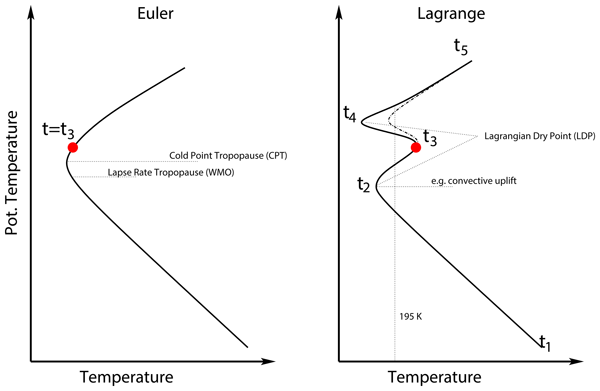
We studied water vapor in a critical region of the atmosphere, the Asian summer monsoon anticyclone, using rare in situ observations. Our study shows that extremely high water vapor values observed in the stratosphere within the Asian monsoon anticyclone still undergo significant freeze-drying and that water vapor concentrations set by the Lagrangian dry point are a better proxy for the stratospheric water vapor budget than rare observations of enhanced water mixing ratios.
Kara D. Lamb, Jerry Y. Harrington, Benjamin W. Clouser, Elisabeth J. Moyer, Laszlo Sarkozy, Volker Ebert, Ottmar Möhler, and Harald Saathoff
Atmos. Chem. Phys., 23, 6043–6064, https://doi.org/10.5194/acp-23-6043-2023, https://doi.org/10.5194/acp-23-6043-2023, 2023
Short summary
Short summary
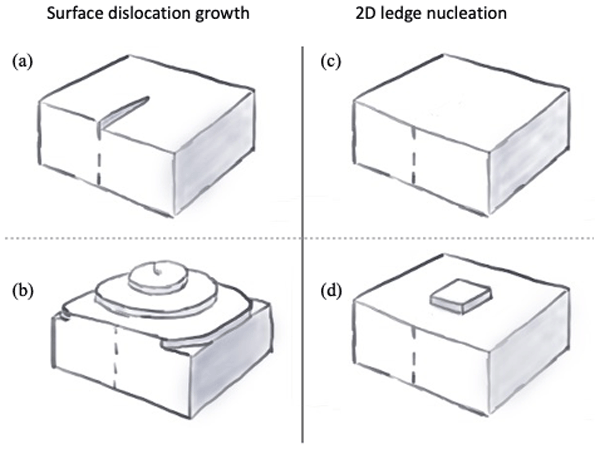
This study investigates how ice grows directly from vapor in cirrus clouds by comparing observations of populations of ice crystals growing in a cloud chamber against models developed in the context of single-crystal laboratory studies. We demonstrate that previous discrepancies between different experimental measurements do not necessarily point to different physical interpretations but are rather due to assumptions that were made in terms of how experiments were modeled in previous studies.
Clare E. Singer, Benjamin W. Clouser, Sergey M. Khaykin, Martina Krämer, Francesco Cairo, Thomas Peter, Alexey Lykov, Christian Rolf, Nicole Spelten, Armin Afchine, Simone Brunamonti, and Elisabeth J. Moyer
Atmos. Meas. Tech., 15, 4767–4783, https://doi.org/10.5194/amt-15-4767-2022, https://doi.org/10.5194/amt-15-4767-2022, 2022
Short summary
Short summary
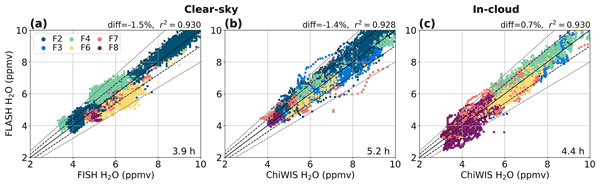
In situ measurements of water vapor in the upper troposphere are necessary to study cloud formation and hydration of the stratosphere but challenging due to cold–dry conditions. We compare measurements from three water vapor instruments from the StratoClim campaign in 2017. In clear sky (clouds), point-by-point differences were <1.5±8 % (<1±8 %). This excellent agreement allows detection of fine-scale structures required to understand the impact of convection on stratospheric water vapor.
Sergey M. Khaykin, Elizabeth Moyer, Martina Krämer, Benjamin Clouser, Silvia Bucci, Bernard Legras, Alexey Lykov, Armin Afchine, Francesco Cairo, Ivan Formanyuk, Valentin Mitev, Renaud Matthey, Christian Rolf, Clare E. Singer, Nicole Spelten, Vasiliy Volkov, Vladimir Yushkov, and Fred Stroh
Atmos. Chem. Phys., 22, 3169–3189, https://doi.org/10.5194/acp-22-3169-2022, https://doi.org/10.5194/acp-22-3169-2022, 2022
Short summary
Short summary
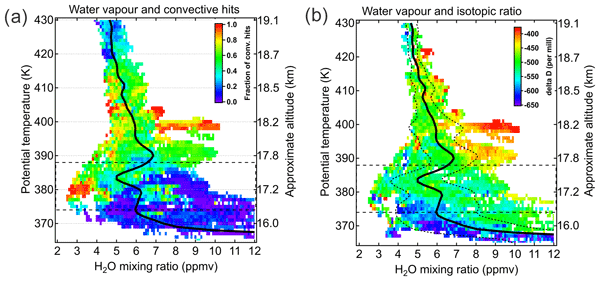
The Asian monsoon anticyclone is the key contributor to the global annual maximum in lower stratospheric water vapour. We investigate the impact of deep convection on the lower stratospheric water using a unique set of observations aboard the high-altitude M55-Geophysica aircraft deployed in Nepal in summer 2017 within the EU StratoClim project. We find that convective plumes of wet air can persist within the Asian anticyclone for weeks, thereby enhancing the occurrence of high-level clouds.
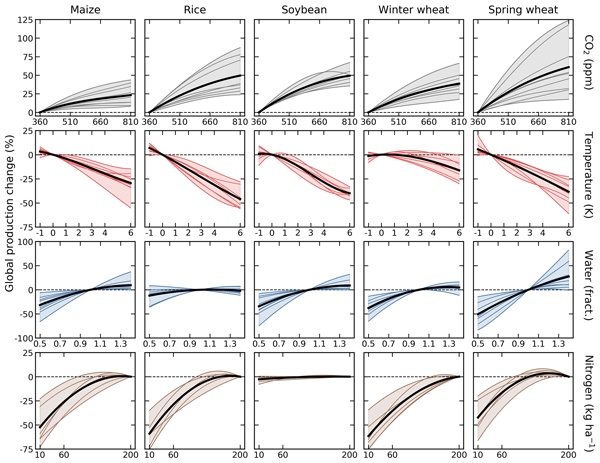
James A. Franke, Christoph Müller, Joshua Elliott, Alex C. Ruane, Jonas Jägermeyr, Abigail Snyder, Marie Dury, Pete D. Falloon, Christian Folberth, Louis François, Tobias Hank, R. Cesar Izaurralde, Ingrid Jacquemin, Curtis Jones, Michelle Li, Wenfeng Liu, Stefan Olin, Meridel Phillips, Thomas A. M. Pugh, Ashwan Reddy, Karina Williams, Ziwei Wang, Florian Zabel, and Elisabeth J. Moyer
Geosci. Model Dev., 13, 3995–4018, https://doi.org/10.5194/gmd-13-3995-2020, https://doi.org/10.5194/gmd-13-3995-2020, 2020
Short summary
Short summary
Improving our understanding of the impacts of climate change on crop yields will be critical for global food security in the next century. The models often used to study the how climate change may impact agriculture are complex and costly to run. In this work, we describe a set of global crop model emulators (simplified models) developed under the Agricultural Model Intercomparison Project. Crop model emulators make agricultural simulations more accessible to policy or decision makers.
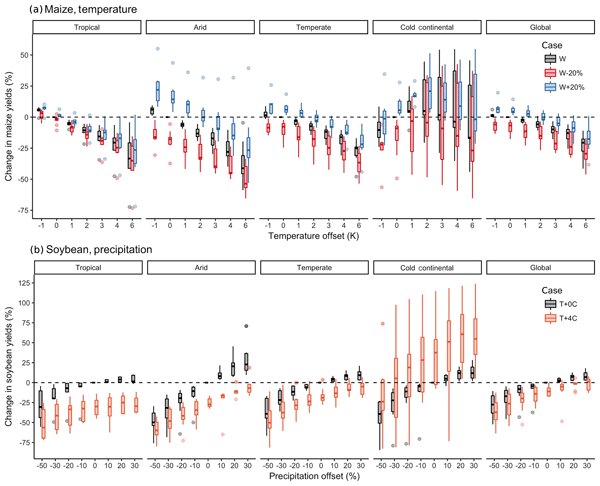
James A. Franke, Christoph Müller, Joshua Elliott, Alex C. Ruane, Jonas Jägermeyr, Juraj Balkovic, Philippe Ciais, Marie Dury, Pete D. Falloon, Christian Folberth, Louis François, Tobias Hank, Munir Hoffmann, R. Cesar Izaurralde, Ingrid Jacquemin, Curtis Jones, Nikolay Khabarov, Marian Koch, Michelle Li, Wenfeng Liu, Stefan Olin, Meridel Phillips, Thomas A. M. Pugh, Ashwan Reddy, Xuhui Wang, Karina Williams, Florian Zabel, and Elisabeth J. Moyer
Geosci. Model Dev., 13, 2315–2336, https://doi.org/10.5194/gmd-13-2315-2020, https://doi.org/10.5194/gmd-13-2315-2020, 2020
Short summary
Short summary
Concerns about food security under climate change motivate efforts to better understand future changes in crop yields. Crop models, which represent plant biology, are necessary tools for this purpose since they allow representing future climate, farmer choices, and new agricultural geographies. The Global Gridded Crop Model Intercomparison (GGCMI) Phase 2 experiment, under the Agricultural Model Intercomparison and Improvement Project (AgMIP), is designed to evaluate and improve crop models.

Benjamin W. Clouser, Kara D. Lamb, Laszlo C. Sarkozy, Jan Habig, Volker Ebert, Harald Saathoff, Ottmar Möhler, and Elisabeth J. Moyer
Atmos. Chem. Phys., 20, 1089–1103, https://doi.org/10.5194/acp-20-1089-2020, https://doi.org/10.5194/acp-20-1089-2020, 2020
Short summary
Short summary
Previous measurements of water vapor in the upper troposphere and lower stratosphere (UT/LS) have shown unexpectedly high concentrations of water vapor in ice clouds, which may be due to an incomplete understanding of the structure of ice and the behavior of ice growth in this part of the atmosphere. Water vapor measurements during the 2013 IsoCloud campaign at the AIDA cloud chamber show no evidence of this
anomalous supersaturationin conditions similar to the real atmosphere.
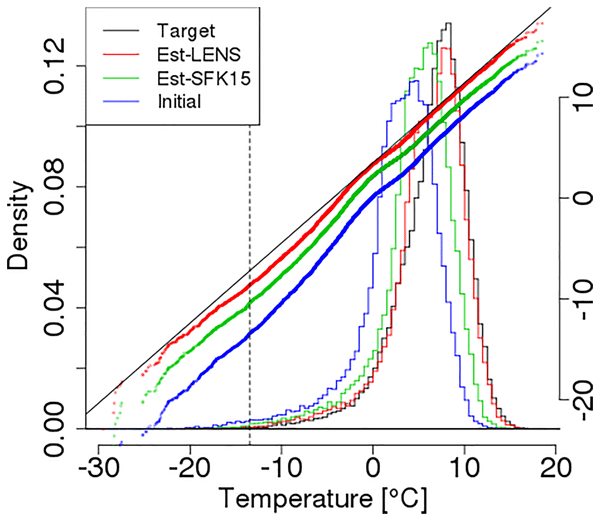
Matz A. Haugen, Michael L. Stein, Ryan L. Sriver, and Elisabeth J. Moyer
Adv. Stat. Clim. Meteorol. Oceanogr., 5, 37–55, https://doi.org/10.5194/ascmo-5-37-2019, https://doi.org/10.5194/ascmo-5-37-2019, 2019
Short summary
Short summary
This work uses current temperature observations combined with climate models to project future temperature estimates, e.g., 100 years into the future. We accomplish this by modeling temperature as a smooth function of time both in the seasonal variation as well as in the annual trend. These smooth functions are estimated at multiple quantiles that are all projected into the future. We hope that this work can be used as a template for how other climate variables can be projected into the future.
Andrew Poppick, Elisabeth J. Moyer, and Michael L. Stein
Adv. Stat. Clim. Meteorol. Oceanogr., 3, 33–53, https://doi.org/10.5194/ascmo-3-33-2017, https://doi.org/10.5194/ascmo-3-33-2017, 2017
Short summary
Short summary
We show that ostensibly empirical methods of analyzing trends in the global mean temperature record, which appear to de-emphasize assumptions, can nevertheless produce misleading inferences about trends and associated uncertainty. We illustrate how a simple but physically motivated trend model can provide better-fitting and more broadly applicable results, and show the importance of adequately characterizing internal variability for estimating trend uncertainty.
Whitney K. Huang, Michael L. Stein, David J. McInerney, Shanshan Sun, and Elisabeth J. Moyer
Adv. Stat. Clim. Meteorol. Oceanogr., 2, 79–103, https://doi.org/10.5194/ascmo-2-79-2016, https://doi.org/10.5194/ascmo-2-79-2016, 2016
Ann M. Fridlind, Rachel Atlas, Bastiaan van Diedenhoven, Junshik Um, Greg M. McFarquhar, Andrew S. Ackerman, Elisabeth J. Moyer, and R. Paul Lawson
Atmos. Chem. Phys., 16, 7251–7283, https://doi.org/10.5194/acp-16-7251-2016, https://doi.org/10.5194/acp-16-7251-2016, 2016
Short summary
Short summary
Images of crystals within mid-latitude cirrus clouds are used to derive consistent ice physical and optical properties for a detailed cloud microphysics model, including size-dependent mass, projected area, and fall speed. Based on habits found, properties are derived for bullet rosettes, their aggregates, and crystals with irregular shapes. Derived bullet rosette fall speeds are substantially greater than reported in past studies, owing to differences in mass, area, or diameter representation.
M. Bolot, B. Legras, and E. J. Moyer
Atmos. Chem. Phys., 13, 7903–7935, https://doi.org/10.5194/acp-13-7903-2013, https://doi.org/10.5194/acp-13-7903-2013, 2013
Related subject area
Statistics
 On inference of boxplot symbolic data: applications in climatology
 Proper scoring rules for multivariate probabilistic forecasts based on aggregation and transformation
 Reducing reliability bias in assessments of extreme weather risk using calibrating priors
 A non-stationary climate-informed weather generator for assessing future flood risks
 A robust approach to Gaussian process implementation
 Spatiotemporal functional permutation tests for comparing observed climate behavior to climate model projections
 Parametric model for post-processing visibility ensemble forecasts
 Spatiotemporal methods for estimating subsurface ocean thermal response to tropical cyclones
 Applying different methods to model dry and wet spells at daily scale in a large range of rainfall regimes across Europe
 Comparison of climate time series – Part 5: Multivariate annual cycles
 Regridding uncertainty for statistical downscaling of solar radiation
 Quantifying the statistical dependence of mid-latitude heatwave intensity and likelihood on prevalent physical drivers and climate change
 Statistical modeling of the space–time relation between wind and significant wave height
 Modeling general circulation model bias via a combination of localized regression and quantile mapping methods
 Evaluation of simulated responses to climate forcings: a flexible statistical framework using confirmatory factor analysis and structural equation modelling – Part 1: Theory
 Evaluation of simulated responses to climate forcings: a flexible statistical framework using confirmatory factor analysis and structural equation modelling – Part 2: Numerical experiment
 A conditional approach for joint estimation of wind speed and direction under future climates
 Comparing climate time series – Part 2: A multivariate test
 Forecast score distributions with imperfect observations
 Novel measures for summarizing high-resolution forecast performance
 Copula approach for simulated damages caused by landfalling US hurricanes
 Nonstationary extreme value analysis for event attribution combining climate models and observations
 Comparing climate time series – Part 1: Univariate test
 A statistical approach to fast nowcasting of lightning potential fields
 Spatial trend analysis of gridded temperature data at varying spatial scales
 An improved projection of climate observations for detection and attribution
 Bivariate Gaussian models for wind vectors in a distributional regression framework
 Fitting a stochastic fire spread model to data
 Influence of initial ocean conditions on temperature and precipitation in a coupled climate model's solution
 NWP-based lightning prediction using flexible count data regression
 An integration and assessment of multiple covariates of nonstationary storm surge statistical behavior by Bayesian model averaging
Probabilistic evaluation of competing climate models
Assessing NARCCAP climate model effects using spatial confidence regions
Generalised block bootstrap and its use in meteorology
Estimating trends in the global mean temperature record
Reconstruction of spatio-temporal temperature from sparse historical records using robust probabilistic principal component regression
Analysis of variability of tropical Pacific sea surface temperatures
Evaluating NARCCAP model performance for frequencies of severe-storm environments
Estimating changes in temperature extremes from millennial-scale climate simulations using generalized extreme value (GEV) distributions
A comparison of two methods for detecting abrupt changes in the variance of climatic time series
Calibrating regionally downscaled precipitation over Norway through quantile-based approaches
Comparison of hidden and observed regime-switching autoregressive models for (u, v)-components of wind fields in the northeastern Atlantic
Autoregressive spatially varying coefficients model for predicting daily PM2.5 using VIIRS satellite AOT
Bivariate spatial analysis of temperature and precipitation from general circulation models and observation proxies
Joint inference of misaligned irregular time series with application to Greenland ice core data
An integration and assessment of multiple covariates of nonstationary storm surge statistical behavior by Bayesian model averaging
Probabilistic evaluation of competing climate models
Assessing NARCCAP climate model effects using spatial confidence regions
Generalised block bootstrap and its use in meteorology
Estimating trends in the global mean temperature record
Reconstruction of spatio-temporal temperature from sparse historical records using robust probabilistic principal component regression
Analysis of variability of tropical Pacific sea surface temperatures
Evaluating NARCCAP model performance for frequencies of severe-storm environments
Estimating changes in temperature extremes from millennial-scale climate simulations using generalized extreme value (GEV) distributions
A comparison of two methods for detecting abrupt changes in the variance of climatic time series
Calibrating regionally downscaled precipitation over Norway through quantile-based approaches
Comparison of hidden and observed regime-switching autoregressive models for (u, v)-components of wind fields in the northeastern Atlantic
Autoregressive spatially varying coefficients model for predicting daily PM2.5 using VIIRS satellite AOT
Bivariate spatial analysis of temperature and precipitation from general circulation models and observation proxies
Joint inference of misaligned irregular time series with application to Greenland ice core data
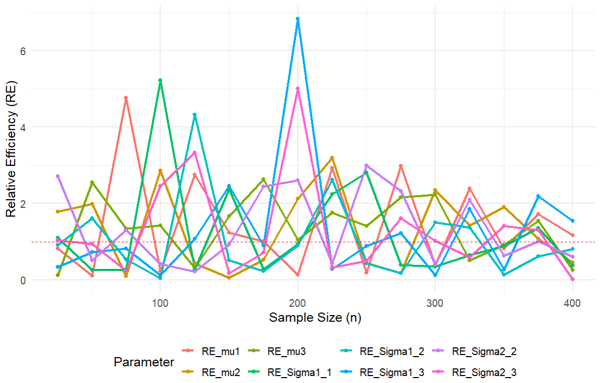
Abdolnasser Sadeghkhani and Ali Sadeghkhani
Adv. Stat. Clim. Meteorol. Oceanogr., 11, 73–87, https://doi.org/10.5194/ascmo-11-73-2025, https://doi.org/10.5194/ascmo-11-73-2025, 2025
Short summary
Short summary
This paper presents a novel study on boxplot-valued data in climatological applications. Our methodologies are applied to the Berkeley Earth Surface Temperature Study. We validate our approaches through comprehensive simulations, comparing Bayesian and frequentist estimators for efficiency and accuracy. The results provide robust insights into climatic trends, particularly summer average temperatures across European countries.
Romain Pic, Clément Dombry, Philippe Naveau, and Maxime Taillardat
Adv. Stat. Clim. Meteorol. Oceanogr., 11, 23–58, https://doi.org/10.5194/ascmo-11-23-2025, https://doi.org/10.5194/ascmo-11-23-2025, 2025
Short summary
Short summary
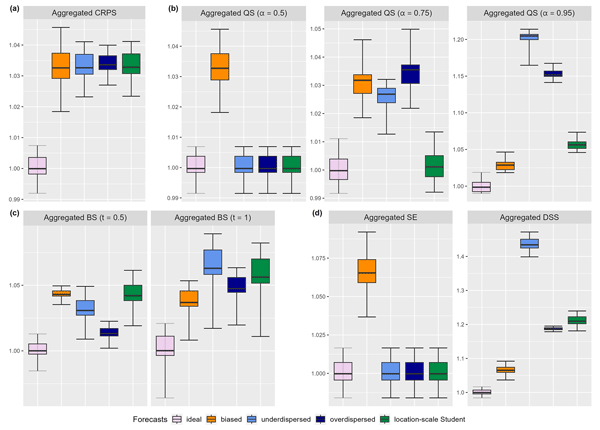
Correctly forecasting weather is crucial for decision-making in various fields. Standard multivariate verification tools have limitations, and a single tool cannot fully characterize predictive performance. We formalize a framework based on aggregation and transformation to build interpretable verification tools. These tools target specific features of forecasts, improving predictive performance characterization and bridging the gap between theoretical and physics-based tools.
Stephen Jewson, Trevor Sweeting, and Lynne Jewson
Adv. Stat. Clim. Meteorol. Oceanogr., 11, 1–22, https://doi.org/10.5194/ascmo-11-1-2025, https://doi.org/10.5194/ascmo-11-1-2025, 2025
Short summary
Short summary
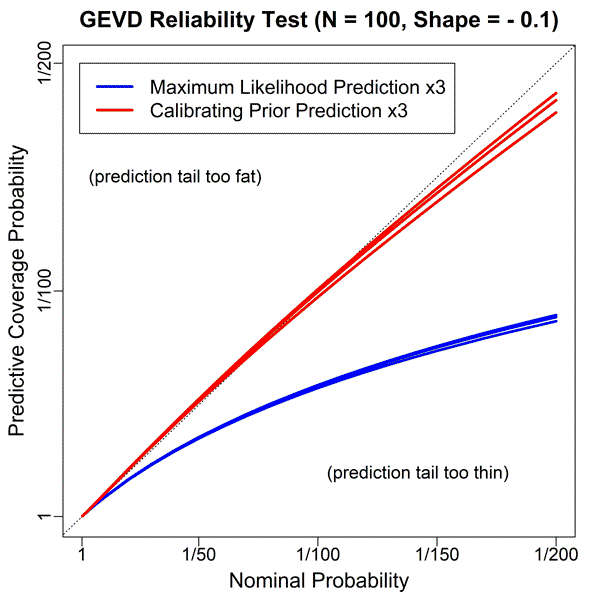
We investigate how to make statistical predictions of extreme weather such that events predicted to occur with a probability of 1 % will occur 1 % of the time. We apply the methods we describe to a standard extreme weather attribution example from the recent climate literature. We find that the methods we describe imply that extremes are roughly twice as likely as when estimated using maximum likelihood. We have developed a software package to make it easy to apply these methods.
Viet Dung Nguyen, Sergiy Vorogushyn, Katrin Nissen, Lukas Brunner, and Bruno Merz
Adv. Stat. Clim. Meteorol. Oceanogr., 10, 195–216, https://doi.org/10.5194/ascmo-10-195-2024, https://doi.org/10.5194/ascmo-10-195-2024, 2024
Short summary
Short summary
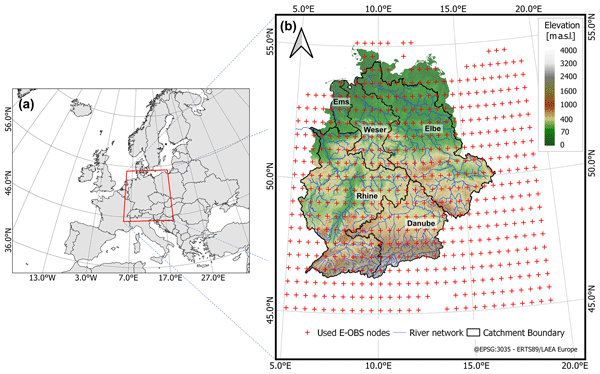
We present a novel stochastic weather generator conditioned on circulation patterns and regional temperature, accounting for dynamic and thermodynamic atmospheric changes. We extensively evaluate the model for the central European region. It statistically downscales precipitation for future periods, generating long, spatially and temporally consistent series. Results suggest an increase in extreme precipitation over the region, offering key benefits for hydrological impact studies.
Juliette Mukangango, Amanda Muyskens, and Benjamin W. Priest
Adv. Stat. Clim. Meteorol. Oceanogr., 10, 143–158, https://doi.org/10.5194/ascmo-10-143-2024, https://doi.org/10.5194/ascmo-10-143-2024, 2024
Short summary
Short summary
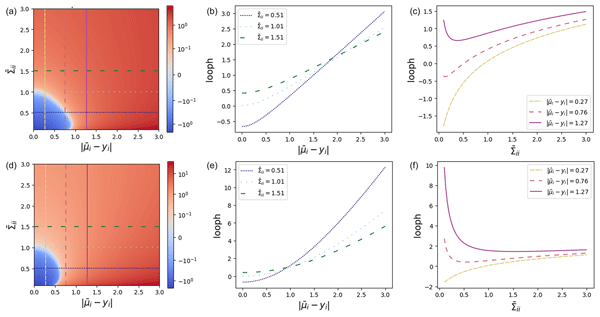
In this study, we investigated the performance of Gaussian process regression (GP) models in handling outlier-affected spatial datasets. Our findings emphasized that models with the proposed methods provided accurate predictions and reliable uncertainty quantification, showcasing resilience against outliers. Overall, our study contributes to advancing the understanding of GP regression in spatial contexts and offers practical solutions to enhance its applicability in outlier-rich environments.
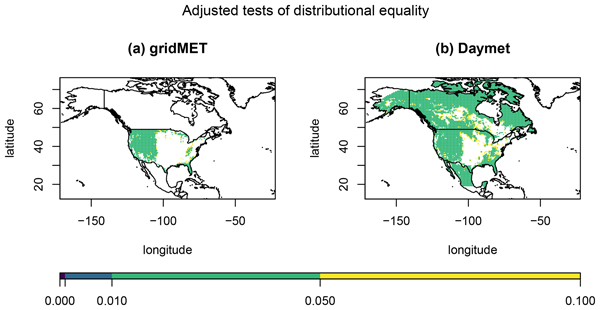
Joshua P. French, Piotr S. Kokoszka, and Seth McGinnis
Adv. Stat. Clim. Meteorol. Oceanogr., 10, 123–141, https://doi.org/10.5194/ascmo-10-123-2024, https://doi.org/10.5194/ascmo-10-123-2024, 2024
Short summary
Short summary
Future climate behavior is typically modeled using computer-based simulations, which are generated for both historical and future time periods. The trustworthiness of these models can be assessed by determining whether the simulated historical climate matches what was observed. We provide a tool that allows researchers to identify major differences between observed climate and climate model predictions, which will hopefully lead to further model refinements.
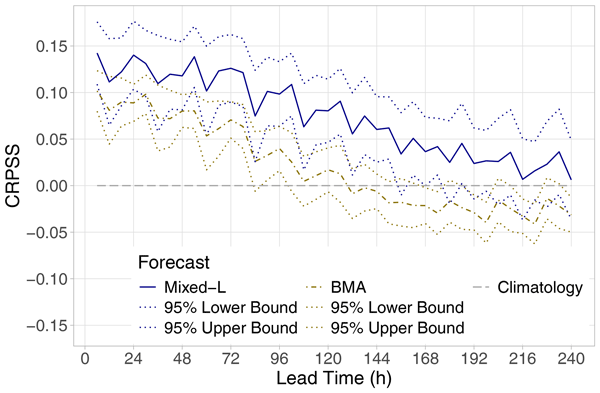
Ágnes Baran and Sándor Baran
Adv. Stat. Clim. Meteorol. Oceanogr., 10, 105–122, https://doi.org/10.5194/ascmo-10-105-2024, https://doi.org/10.5194/ascmo-10-105-2024, 2024
Short summary
Short summary
The paper proposes a novel parametric model for statistical post-processing of visibility ensemble forecasts; investigates various approaches to parameter estimation; and, using two case studies, provides a detailed comparison with the existing state-of-the-art forecasts. The introduced approach consistently outperforms both the raw ensemble forecasts and the reference parametric post-processing method.
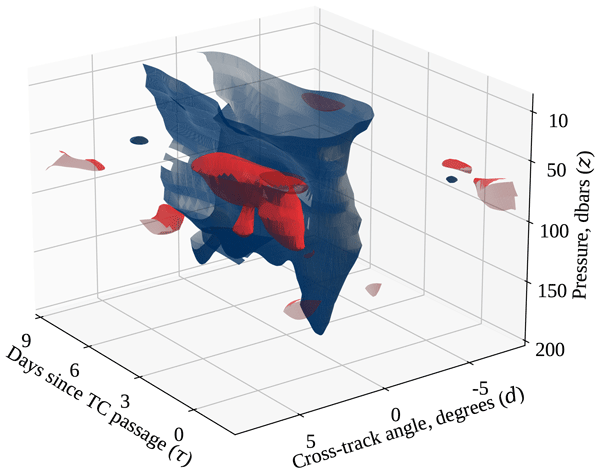
Addison J. Hu, Mikael Kuusela, Ann B. Lee, Donata Giglio, and Kimberly M. Wood
Adv. Stat. Clim. Meteorol. Oceanogr., 10, 69–93, https://doi.org/10.5194/ascmo-10-69-2024, https://doi.org/10.5194/ascmo-10-69-2024, 2024
Short summary
Short summary
We introduce a new statistical framework to estimate the change in subsurface ocean temperature following the passage of a tropical cyclone (TC). Our approach combines tools handling seasonal variations and spatial dependence in the data, culminating in a three-dimensional characterization of the interaction between TCs and the ocean. Our work allows us to obtain new scientific insights, and we expect it to be generally applicable to studying the impact of TCs on other ocean phenomena.
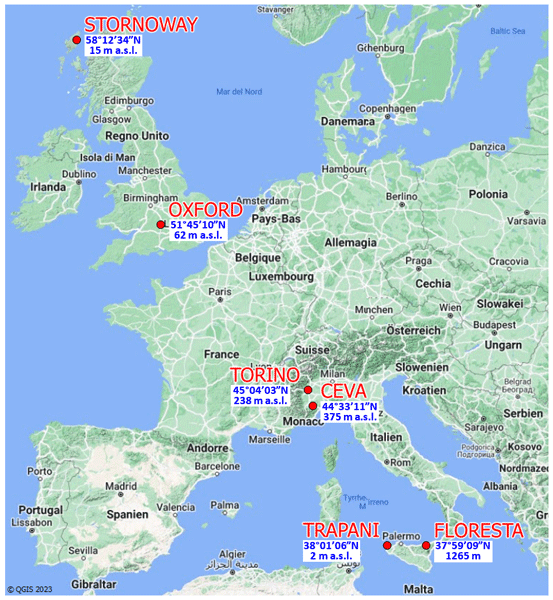
Giorgio Baiamonte, Carmelo Agnese, Carmelo Cammalleri, Elvira Di Nardo, Stefano Ferraris, and Tommaso Martini
Adv. Stat. Clim. Meteorol. Oceanogr., 10, 51–67, https://doi.org/10.5194/ascmo-10-51-2024, https://doi.org/10.5194/ascmo-10-51-2024, 2024
Short summary
Short summary
In hydrology, the probability distributions are used to determine the probability of occurrence of rainfall events. In this study, two different methods for modeling rainfall time characteristics have been applied: a direct method and an indirect method that make it possible to relax the assumptions of the renewal process. The analysis was extended to two additional time variables that may be of great interest for practical hydrological applications: wet chains and dry chains.
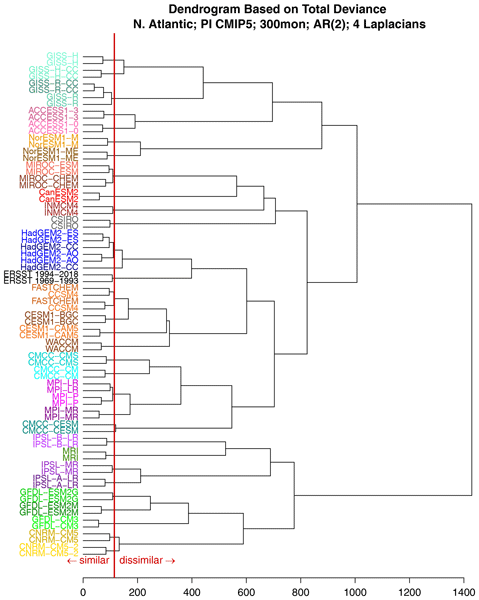
Timothy DelSole and Michael K. Tippett
Adv. Stat. Clim. Meteorol. Oceanogr., 10, 1–27, https://doi.org/10.5194/ascmo-10-1-2024, https://doi.org/10.5194/ascmo-10-1-2024, 2024
Short summary
Short summary
This paper introduces a method to assess whether two data sets come from the same source. Current methods do not adequately consider spatial and temporal correlations and their annual cycles in a comprehensive test. This method addresses that gap, thereby providing a new and rigorous tool for evaluating the realism of climate simulations and measuring changes in variability over time.
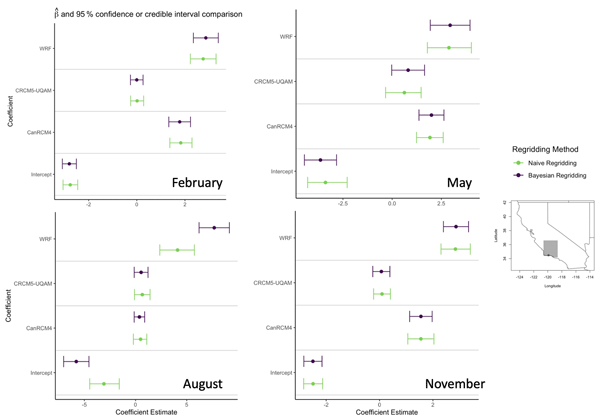
Maggie D. Bailey, Douglas Nychka, Manajit Sengupta, Aron Habte, Yu Xie, and Soutir Bandyopadhyay
Adv. Stat. Clim. Meteorol. Oceanogr., 9, 103–120, https://doi.org/10.5194/ascmo-9-103-2023, https://doi.org/10.5194/ascmo-9-103-2023, 2023
Short summary
Short summary
To ensure photovoltaic (PV) plants last, we need to understand how climate change affects solar radiation. Climate models help predict future radiation for PV plants, but there is often uncertainty. We explore this uncertainty and its impact on building PV plants. We highlight the importance of considering uncertainties for accurate planning and management. A California case study shows a practical application for the solar industry.
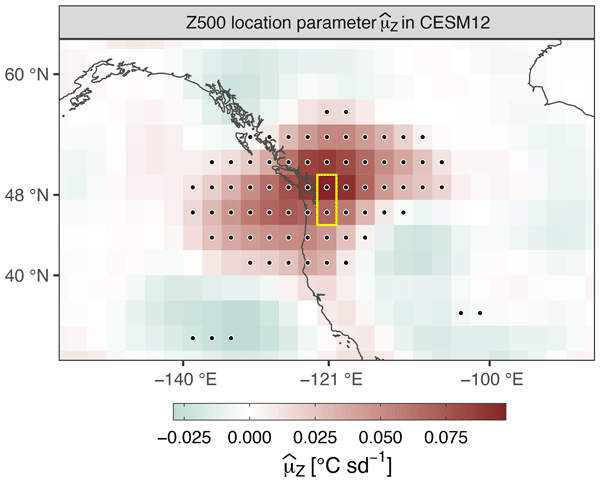
Joel Zeder and Erich M. Fischer
Adv. Stat. Clim. Meteorol. Oceanogr., 9, 83–102, https://doi.org/10.5194/ascmo-9-83-2023, https://doi.org/10.5194/ascmo-9-83-2023, 2023
Short summary
Short summary
The intensities of recent heatwave events, such as the record-breaking heatwave in early June 2021 in the Pacific Northwest area, are substantially altered by climate change. We further quantify the contribution of the local weather situation and the land surface conditions with a statistical model suited for extreme data. Based on this method, we can answer
what ifquestions, such as estimating the change in the 2021 heatwave temperature if it happened in a world without climate change.
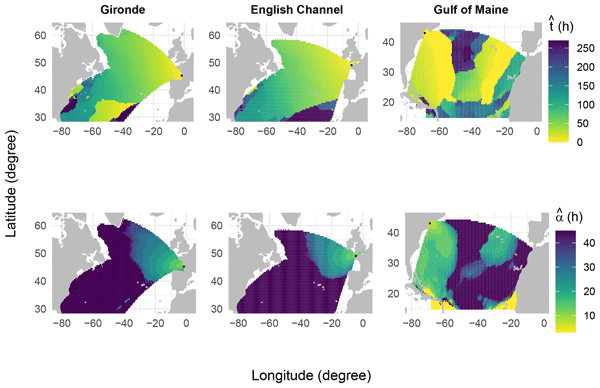
Said Obakrim, Pierre Ailliot, Valérie Monbet, and Nicolas Raillard
Adv. Stat. Clim. Meteorol. Oceanogr., 9, 67–81, https://doi.org/10.5194/ascmo-9-67-2023, https://doi.org/10.5194/ascmo-9-67-2023, 2023
Short summary
Short summary
Ocean wave climate has a significant impact on human activities, and its understanding is of socioeconomic and environmental importance. In this study, we propose a statistical model that predicts wave heights in a location in the Bay of Biscay. The proposed method allows us to understand the spatiotemporal relationship between wind and waves and predicts well both wind seas and swells.

Benjamin James Washington, Lynne Seymour, and Thomas L. Mote
Adv. Stat. Clim. Meteorol. Oceanogr., 9, 1–28, https://doi.org/10.5194/ascmo-9-1-2023, https://doi.org/10.5194/ascmo-9-1-2023, 2023
Short summary
Short summary
We develop new methodology to statistically model known bias in general atmospheric circulation models. We focus on Puerto Rico specifically because of other important ongoing and long-term ecological and environmental research taking place there. Our methods work even in the presence of Puerto Rico's broken climate record. With our methods, we find that climate change will not only favor a warmer and wetter climate in Puerto Rico, but also increase the frequency of extreme rainfall events.

Katarina Lashgari, Gudrun Brattström, Anders Moberg, and Rolf Sundberg
Adv. Stat. Clim. Meteorol. Oceanogr., 8, 225–248, https://doi.org/10.5194/ascmo-8-225-2022, https://doi.org/10.5194/ascmo-8-225-2022, 2022
Short summary
Short summary
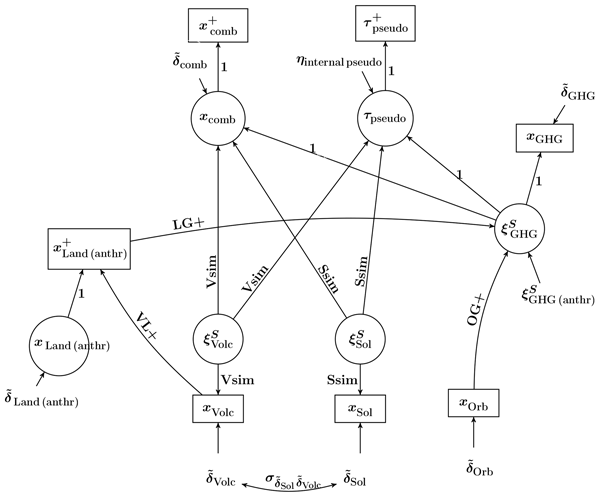
This work theoretically motivates an extension of the statistical model used in so-called detection and attribution studies to structural equation modelling. The application of one of the models suggested is exemplified in a small numerical study, whose aim was to check the assumptions typically placed on ensembles of climate model simulations when constructing mean sequences. he result of this study indicated that some ensembles for some regions may not satisfy the assumptions in question.
Katarina Lashgari, Anders Moberg, and Gudrun Brattström
Adv. Stat. Clim. Meteorol. Oceanogr., 8, 249–271, https://doi.org/10.5194/ascmo-8-249-2022, https://doi.org/10.5194/ascmo-8-249-2022, 2022
Short summary
Short summary
The performance of a new statistical framework containing various structural equation modelling (SEM) models is evaluated in a pseudo-proxy experiment in comparison with the performance of statistical models used in many detection and attribution studies. Each statistical model was fitted to seven continental-scale regional temperature data sets. The results indicated the SEM specification is the most appropriate for describing the underlying latent structure of the simulated data analysed.
Qiuyi Wu, Julie Bessac, Whitney Huang, Jiali Wang, and Rao Kotamarthi
Adv. Stat. Clim. Meteorol. Oceanogr., 8, 205–224, https://doi.org/10.5194/ascmo-8-205-2022, https://doi.org/10.5194/ascmo-8-205-2022, 2022
Short summary
Short summary
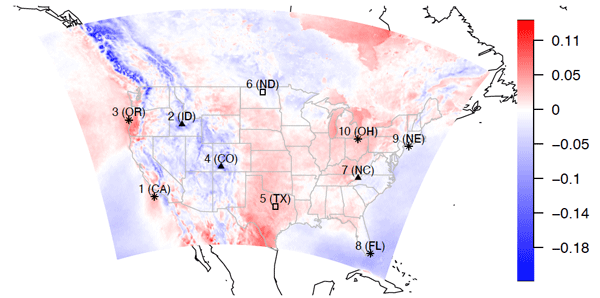
We study wind conditions and their potential future changes across the U.S. via a statistical conditional framework. We conclude that changes between historical and future wind directions are small, but wind speeds are generally weakened in the projected period, with some locations being intensified. Moreover, winter wind speeds are projected to decrease in the northwest, Colorado, and the northern Great Plains (GP), while summer wind speeds over the southern GP slightly increase in the future.
Timothy DelSole and Michael K. Tippett
Adv. Stat. Clim. Meteorol. Oceanogr., 7, 73–85, https://doi.org/10.5194/ascmo-7-73-2021, https://doi.org/10.5194/ascmo-7-73-2021, 2021
Short summary
Short summary
After a new climate model is constructed, a natural question is whether it generates realistic simulations. Here,
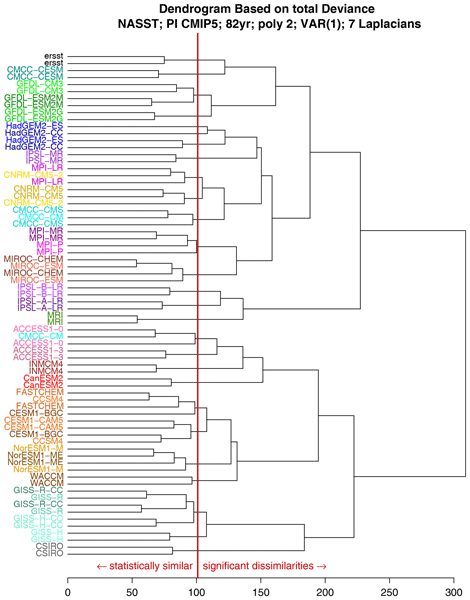
realisticdoes not mean that the detailed patterns on a particular day are correct, but rather that the statistics over many years are realistic. Past approaches to answering this question often neglect correlations in space and time. This paper proposes a method for answering this question that accounts for correlations in space and time.
Julie Bessac and Philippe Naveau
Adv. Stat. Clim. Meteorol. Oceanogr., 7, 53–71, https://doi.org/10.5194/ascmo-7-53-2021, https://doi.org/10.5194/ascmo-7-53-2021, 2021
Short summary
Short summary
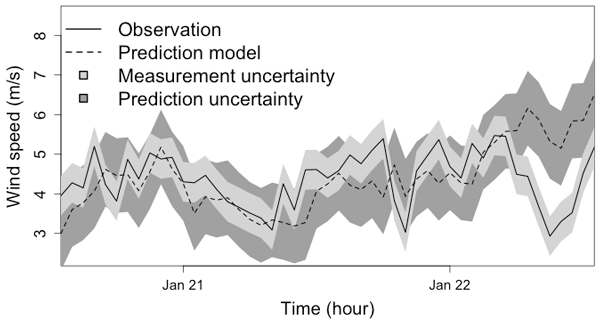
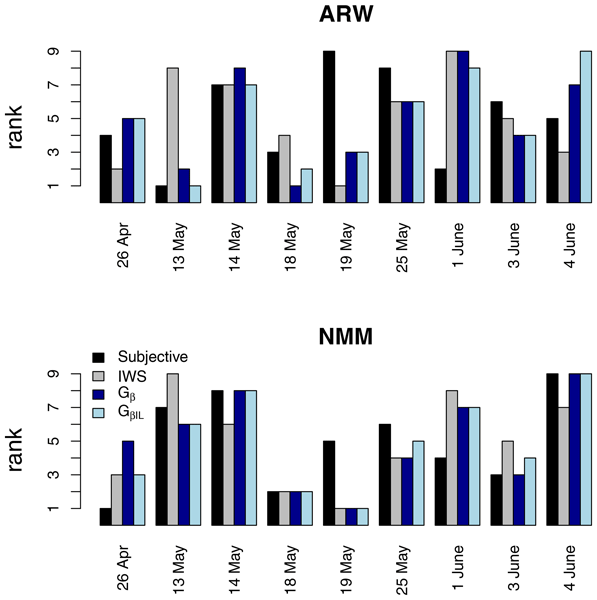
We propose a new forecast evaluation scheme in the context of models that incorporate errors of the verification data. We rely on existing scoring rules and incorporate uncertainty and error of the verification data through a hidden variable and the conditional expectation of scores. By considering scores to be random variables, one can access the entire range of their distribution and illustrate that the commonly used mean score can be a misleading representative of the distribution.
Eric Gilleland
Adv. Stat. Clim. Meteorol. Oceanogr., 7, 13–34, https://doi.org/10.5194/ascmo-7-13-2021, https://doi.org/10.5194/ascmo-7-13-2021, 2021
Short summary
Short summary
Verifying high-resolution weather forecasts has become increasingly complicated,
and simple, easy-to-understand summary measures are a good alternative. Recent work has demonstrated some common pitfalls with many such summaries. Here, new summary measures are introduced that do not suffer from these drawbacks, while still providing meaningful information.
Thomas Patrick Leahy
Adv. Stat. Clim. Meteorol. Oceanogr., 7, 1–11, https://doi.org/10.5194/ascmo-7-1-2021, https://doi.org/10.5194/ascmo-7-1-2021, 2021
Short summary
Short summary
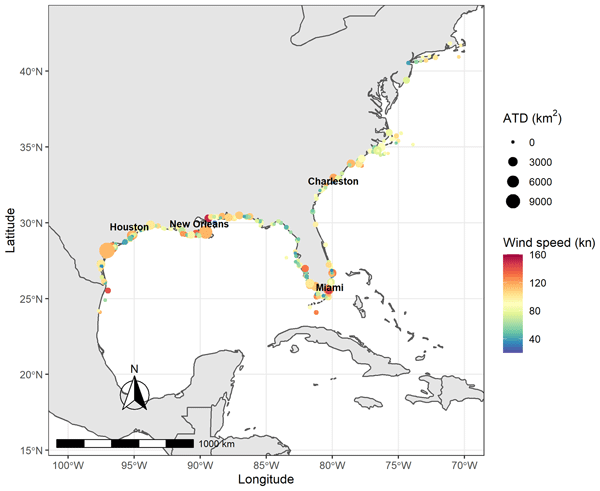
This study looked at estimating damages caused by hurricanes in the United States. It assessed the relationship between the maximum wind speed at landfall and the resulting damage caused. The study found that the complex processes that determine the size of the damages inflicted could be estimated using this simple relationship. This work could be used to examine how often extreme damage events are likely to occur and the impact of stronger hurricane winds on the US Atlantic and Gulf coasts.
Yoann Robin and Aurélien Ribes
Adv. Stat. Clim. Meteorol. Oceanogr., 6, 205–221, https://doi.org/10.5194/ascmo-6-205-2020, https://doi.org/10.5194/ascmo-6-205-2020, 2020
Short summary
Short summary
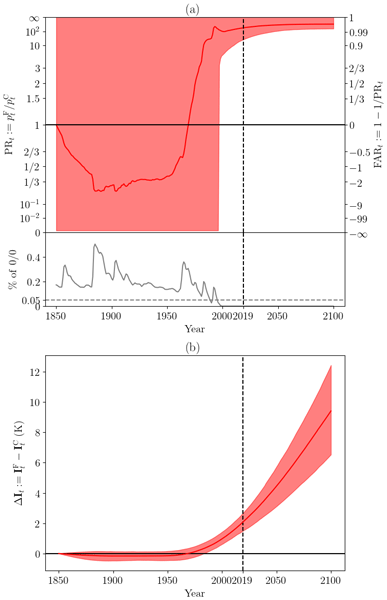
We have developed a new statistical method to describe how a severe weather event, such as a heat wave, may have been influenced by climate change. Our method incorporates both observations and data from various climate models to reflect climate model uncertainty. Our results show that both the probability and the intensity of the French July 2019 heatwave have increased significantly in response to human influence. We find that this heat wave might not have been possible without climate change.

Timothy DelSole and Michael K. Tippett
Adv. Stat. Clim. Meteorol. Oceanogr., 6, 159–175, https://doi.org/10.5194/ascmo-6-159-2020, https://doi.org/10.5194/ascmo-6-159-2020, 2020
Short summary
Short summary
Scientists often are confronted with the question of whether two time series are statistically distinguishable. This paper proposes a test for answering this question. The basic idea is to fit each time series to a time series model and then test whether the parameters in that model are equal. If a difference is detected, then new ways of visualizing those differences are proposed, including a clustering technique and a method based on optimal initial conditions.

Joshua North, Zofia Stanley, William Kleiber, Wiebke Deierling, Eric Gilleland, and Matthias Steiner
Adv. Stat. Clim. Meteorol. Oceanogr., 6, 79–90, https://doi.org/10.5194/ascmo-6-79-2020, https://doi.org/10.5194/ascmo-6-79-2020, 2020
Short summary
Short summary
Very short-term forecasting, called nowcasting, is used to monitor storms that pose a significant threat to people and infrastructure. These threats could include lightning strikes, hail, heavy precipitation, strong winds, and possible tornados. This paper proposes a fast approach to nowcasting lightning threats using simple statistical methods. The proposed model results in fast nowcasts that are more accurate than a competitive, computationally expensive, approach.

Ola Haug, Thordis L. Thorarinsdottir, Sigrunn H. Sørbye, and Christian L. E. Franzke
Adv. Stat. Clim. Meteorol. Oceanogr., 6, 1–12, https://doi.org/10.5194/ascmo-6-1-2020, https://doi.org/10.5194/ascmo-6-1-2020, 2020
Short summary
Short summary
Trends in gridded temperature data are commonly assessed independently for each grid cell, ignoring spatial coherencies. This may severely affect the interpretation of the results. This article proposes a space–time model for temperatures that allows for joint assessments of the trend across locations. In a case study of summer season trends in Europe, it is found that the region with a significant trend under spatial coherency is vastly different from that under independent assessments.

Alexis Hannart
Adv. Stat. Clim. Meteorol. Oceanogr., 5, 161–171, https://doi.org/10.5194/ascmo-5-161-2019, https://doi.org/10.5194/ascmo-5-161-2019, 2019
Short summary
Short summary
In climate change attribution studies, one often seeks to maximize a signal-to-noise ratio, where the
signalis the anthropogenic response and the
noiseis climate variability. A solution commonly used in D&A studies thus far consists of projecting the signal on the subspace spanned by the leading eigenvectors of climate variability. Here I show that this approach is vastly suboptimal – in fact, it leads instead to maximizing the noise-to-signal ratio. I then describe an improved solution.
Moritz N. Lang, Georg J. Mayr, Reto Stauffer, and Achim Zeileis
Adv. Stat. Clim. Meteorol. Oceanogr., 5, 115–132, https://doi.org/10.5194/ascmo-5-115-2019, https://doi.org/10.5194/ascmo-5-115-2019, 2019
Short summary
Short summary
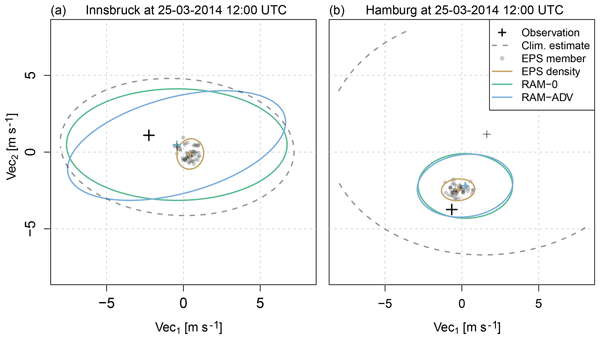
Accurate wind forecasts are of great importance for decision-making processes in today's society. This work presents a novel probabilistic post-processing method for wind vector forecasts employing a bivariate Gaussian response distribution. To capture a possible mismatch between the predicted and observed wind direction caused by location-specific properties, the approach incorporates a smooth rotation of the wind direction conditional on the season and the forecasted ensemble wind direction.

X. Joey Wang, John R. J. Thompson, W. John Braun, and Douglas G. Woolford
Adv. Stat. Clim. Meteorol. Oceanogr., 5, 57–66, https://doi.org/10.5194/ascmo-5-57-2019, https://doi.org/10.5194/ascmo-5-57-2019, 2019
Short summary
Short summary
This paper presents the analysis of data from small-scale laboratory experimental smouldering fires that were digitally video-recorded. The video images of these fires bear a resemblance to remotely sensed images of wildfires and provide an opportunity to fit and assess a spatial model for fire spread that attempts to account for uncertainty in fire growth. We found that the fitting method is feasible, and the spatial model provides a suitable mathematical for the fire spread process.
Robin Tokmakian and Peter Challenor
Adv. Stat. Clim. Meteorol. Oceanogr., 5, 17–35, https://doi.org/10.5194/ascmo-5-17-2019, https://doi.org/10.5194/ascmo-5-17-2019, 2019
Short summary
Short summary
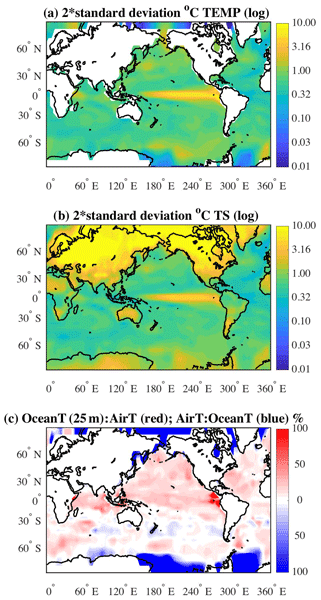
As an example of how to robustly determine climate model uncertainty, the paper describes an experiment that perturbs the initial conditions for the ocean's temperature of a climate model. A total of 30 perturbed simulations are used (via an emulator) to estimate spatial uncertainties for temperature and precipitation fields. We also examined (using maximum covariance analysis) how ocean temperatures affect air temperatures and precipitation over land and the importance of feedback processes.
Thorsten Simon, Georg J. Mayr, Nikolaus Umlauf, and Achim Zeileis
Adv. Stat. Clim. Meteorol. Oceanogr., 5, 1–16, https://doi.org/10.5194/ascmo-5-1-2019, https://doi.org/10.5194/ascmo-5-1-2019, 2019
Short summary
Short summary
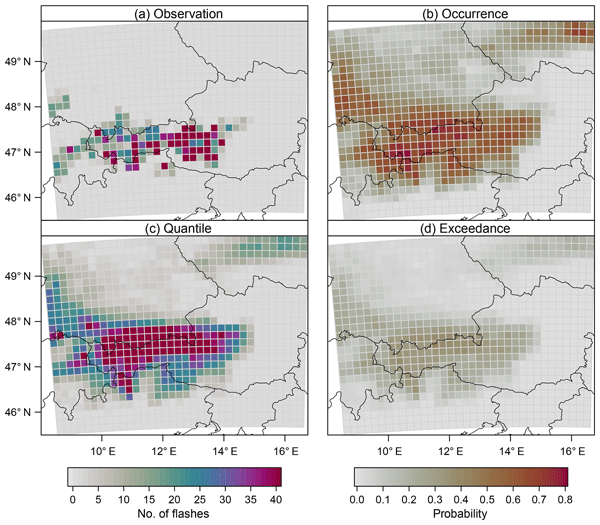
Lightning in Alpine regions is associated with events such as thunderstorms,
extreme precipitation, high wind gusts, flash floods, and debris flows.
We present a statistical approach to predict lightning counts based on
numerical weather predictions. Lightning counts are considered on a grid
with 18 km mesh size. Skilful prediction is obtained for a forecast horizon
of 5 days over complex terrain.
Tony E. Wong
Adv. Stat. Clim. Meteorol. Oceanogr., 4, 53–63, https://doi.org/10.5194/ascmo-4-53-2018, https://doi.org/10.5194/ascmo-4-53-2018, 2018
Short summary
Short summary
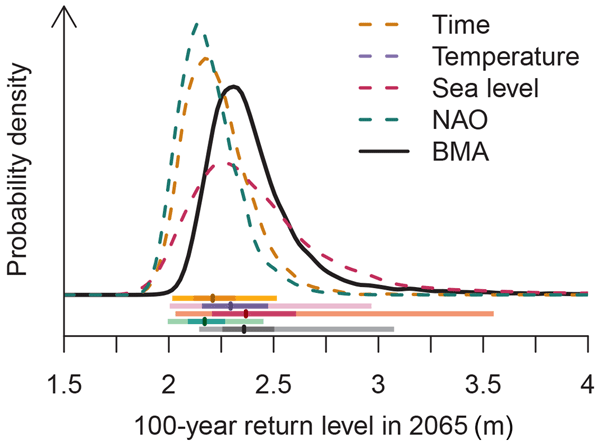
Millions of people worldwide are at a risk of coastal flooding, and this number will increase as the climate continues to change. This study analyzes how climate change affects future flood hazards. A new model that uses multiple climate variables for flood hazard is developed. For the case study of Norfolk, Virginia, the model predicts 23 cm higher flood levels relative to previous work. This work shows the importance of accounting for climate change in effectively managing coastal risks.
Amy Braverman, Snigdhansu Chatterjee, Megan Heyman, and Noel Cressie
Adv. Stat. Clim. Meteorol. Oceanogr., 3, 93–105, https://doi.org/10.5194/ascmo-3-93-2017, https://doi.org/10.5194/ascmo-3-93-2017, 2017
Short summary
Short summary
In this paper, we introduce a method for expressing the agreement between climate model output time series and time series of observational data as a probability value. Our metric is an estimate of the probability that one would obtain two time series as similar as the ones under consideration, if the climate model and the observed series actually shared the same underlying climate signal.
Joshua P. French, Seth McGinnis, and Armin Schwartzman
Adv. Stat. Clim. Meteorol. Oceanogr., 3, 67–92, https://doi.org/10.5194/ascmo-3-67-2017, https://doi.org/10.5194/ascmo-3-67-2017, 2017
Short summary
Short summary
We assess the mean temperature effect of global and regional climate model combinations for the North American Regional Climate Change Assessment Program using varying classes of linear regression models, including possible interaction effects. We use both pointwise and simultaneous inference procedures to identify regions where global and regional climate model effects differ. We conclusively show that accounting for multiple comparisons is important for making proper inference.
László Varga and András Zempléni
Adv. Stat. Clim. Meteorol. Oceanogr., 3, 55–66, https://doi.org/10.5194/ascmo-3-55-2017, https://doi.org/10.5194/ascmo-3-55-2017, 2017
Short summary
Short summary
This paper proposes a new generalisation of the block bootstrap methodology, which allows for any positive real number as expected block size. We use this bootstrap for determining the p values of a homogeneity test for copulas. The methods are applied to a temperature data set - we have found some significant changes in the dependence structure between the standardised temperature values of pairs of observation points within the Carpathian Basin.
Andrew Poppick, Elisabeth J. Moyer, and Michael L. Stein
Adv. Stat. Clim. Meteorol. Oceanogr., 3, 33–53, https://doi.org/10.5194/ascmo-3-33-2017, https://doi.org/10.5194/ascmo-3-33-2017, 2017
Short summary
Short summary
We show that ostensibly empirical methods of analyzing trends in the global mean temperature record, which appear to de-emphasize assumptions, can nevertheless produce misleading inferences about trends and associated uncertainty. We illustrate how a simple but physically motivated trend model can provide better-fitting and more broadly applicable results, and show the importance of adequately characterizing internal variability for estimating trend uncertainty.
John Tipton, Mevin Hooten, and Simon Goring
Adv. Stat. Clim. Meteorol. Oceanogr., 3, 1–16, https://doi.org/10.5194/ascmo-3-1-2017, https://doi.org/10.5194/ascmo-3-1-2017, 2017
Short summary
Short summary
We present a statistical framework for the reconstruction of historic temperature patterns from sparse, irregular data collected from observer stations. A common statistical technique for climate reconstruction uses modern era data as a set of temperature patterns that can be used to estimate the spatial temperature patterns. We present a framework for exploration of different assumptions about the sets of patterns used in the reconstruction while providing statistically rigorous estimates.
Georgina Davies and Noel Cressie
Adv. Stat. Clim. Meteorol. Oceanogr., 2, 155–169, https://doi.org/10.5194/ascmo-2-155-2016, https://doi.org/10.5194/ascmo-2-155-2016, 2016
Short summary
Short summary
Sea surface temperature (SST) is a key component of global climate models, particularly in the tropical Pacific Ocean where El Niño and La Nina events have worldwide implications. In our paper, we analyse monthly SSTs in the Niño 3.4 region and find a transformation that removes a spatial mean-variance dependence for each month. For 10 out of 12 months in the year, the transformed monthly time series gave more accurate or as accurate forecasts than those from the untransformed time series.
Eric Gilleland, Melissa Bukovsky, Christopher L. Williams, Seth McGinnis, Caspar M. Ammann, Barbara G. Brown, and Linda O. Mearns
Adv. Stat. Clim. Meteorol. Oceanogr., 2, 137–153, https://doi.org/10.5194/ascmo-2-137-2016, https://doi.org/10.5194/ascmo-2-137-2016, 2016
Short summary
Short summary
Several climate models are evaluated under current climate conditions to determine how well they are able to capture frequencies of severe-storm environments (conditions conducive for the formation of hail storms, tornadoes, etc.). They are found to underpredict the spatial extent of high-frequency areas (such as tornado alley), as well as underpredict the frequencies in the areas.
Whitney K. Huang, Michael L. Stein, David J. McInerney, Shanshan Sun, and Elisabeth J. Moyer
Adv. Stat. Clim. Meteorol. Oceanogr., 2, 79–103, https://doi.org/10.5194/ascmo-2-79-2016, https://doi.org/10.5194/ascmo-2-79-2016, 2016
Sergei N. Rodionov
Adv. Stat. Clim. Meteorol. Oceanogr., 2, 63–78, https://doi.org/10.5194/ascmo-2-63-2016, https://doi.org/10.5194/ascmo-2-63-2016, 2016
David Bolin, Arnoldo Frigessi, Peter Guttorp, Ola Haug, Elisabeth Orskaug, Ida Scheel, and Jonas Wallin
Adv. Stat. Clim. Meteorol. Oceanogr., 2, 39–47, https://doi.org/10.5194/ascmo-2-39-2016, https://doi.org/10.5194/ascmo-2-39-2016, 2016
Julie Bessac, Pierre Ailliot, Julien Cattiaux, and Valerie Monbet
Adv. Stat. Clim. Meteorol. Oceanogr., 2, 1–16, https://doi.org/10.5194/ascmo-2-1-2016, https://doi.org/10.5194/ascmo-2-1-2016, 2016
Short summary
Short summary
Several multi-site stochastic generators of zonal and meridional components of wind are proposed in this paper. Various questions are explored, such as the modeling of the regime in a multi-site context, the extraction of relevant clusterings from extra variables or from the local wind data, and the link between weather types extracted from wind data and large-scale weather regimes. We also discuss the relative advantages of hidden and observed regime-switching models.
E. M. Schliep, A. E. Gelfand, and D. M. Holland
Adv. Stat. Clim. Meteorol. Oceanogr., 1, 59–74, https://doi.org/10.5194/ascmo-1-59-2015, https://doi.org/10.5194/ascmo-1-59-2015, 2015
Short summary
Short summary
There is considerable demand for accurate air quality information in human health analyses. The sparsity of ground monitoring stations across the US motivates the need for advanced statistical models to predict air quality metrics. We propose a statistical model that jointly models ground-monitoring station data and satellite-obtained data allowing for temporal and spatial misalignment, missingness, and spatially and temporally varying correlation to enhance prediction of particulate matter.
R. Philbin and M. Jun
Adv. Stat. Clim. Meteorol. Oceanogr., 1, 29–44, https://doi.org/10.5194/ascmo-1-29-2015, https://doi.org/10.5194/ascmo-1-29-2015, 2015
T. K. Doan, J. Haslett, and A. C. Parnell
Adv. Stat. Clim. Meteorol. Oceanogr., 1, 15–27, https://doi.org/10.5194/ascmo-1-15-2015, https://doi.org/10.5194/ascmo-1-15-2015, 2015
Cited articles
Allcroft, D. J. and Glasbey, C. A.: A Latent Gaussian Markov Random-Field Model for Spatiotemporal Rainfall Disaggregation, J. Roy. Stat. Soc. C-App., 52, 487–498, 2003.
Barnes, E. A.: Revisiting the Evidence Linking Arctic Amplification to Extreme Weather in Midlatitudes, Geophys. Res. Lett., 40, 4734–4739, 2013.
Barnes, E. A. and Polvani, L.: Response of the Midlatitude Jets, and of Their Variability, to Increased Greenhouse Gases in the CMIP5 Models, J. Climate, 26, 7117–7135, 2013.
Brillinger, D. R.: Time Series: Data Analysis and Theory, Vol. 36, SIAM, Philadelphia, PA, 1981.
Collins, W. D., Bitz, C. M., Blackmon, M. L., Bonan, G. B., Bretherton, C. S., Carton, J. A.,Chang, P., Doney, S. C., Hack, J. J., Henderson, T. B., Kiehl, J. T., Large, W. G., McKenna, D. S., Santer, B. D., and Smith, R. D.: The Community Climate System Model Version 3 (CCSM3), J. Climate, 19, 2122–2143, 2006.
Davison, A. C. and Hinkley, D. V.: Bootstrap Methods and Their Application, Cambridge University Press, Cambridge, UK, 1997.
Diaz-Nieto, J. and Wilby, R. L.: A Comparison of Statistical Downscaling and Climate Change Factor Methods: Impacts on Low Flows in the River Thames, United Kingdom, Climatic Change, 69, 245–268, 2005.
Eisner, S., Voss, F., and Kynast, E.: Statistical bias correction of global climate projections – consequences for large scale modeling of flood flows, Adv. Geosci., 31, 75–82, https://doi.org/10.5194/adgeo-31-75-2012, 2012.
Francis, J. A. and Vavrus, S. J.: Evidence Linking Arctic Amplification to Extreme Weather in Mid-Latitudes, Geophys. Res. Lett., 39, L06801, https://doi.org/10.1029/2012GL051000, 2012.
Hansen, J., Sato, M., and Ruedy, R.: Perception of Climate Change, P. Natl. Acad. Sci., 109, E2415–E2423, 2012.
Hawkins, E., Osborne, T. M., Ho, C. K., and Challinor, A. J.: Calibration and Bias Correction of Climate Projections for Crop Modelling: An Idealised Case Study over Europe, Agr. Forest Meteorol., 170, 19–31, 2013.
Held, I. M. and Soden, B. J.: Robust Responses of the Hydrological Cycle to Global Warming, J. Climate, 19, 5686–5699, 2006.
Ho, C., Stephenson, D., Collins, M., Ferro, C., and Brown, S.: Calibration Strategies: A Source of Additional Uncertainty in Climate Change Projections, B. Am. Meteorol. Soc., 93, 21–26, 2012.
Huntingford, C., Jones, P. D., Livina, V. N., Lenton, T. M., and Cox, P. M.: No Increase in Global Temperature Variability Despite Changing Regional Patterns, Nature, 500, 327–330, 2013.
IPCC: IPCC Fourth Assessment Report: Working Group I Report "The Physical Science Basis", Cambridge University Press, Cambridge, United Kingdom and New York, NY, USA, 2007.
Karl, T., Knight, R., and Plummer, N.: Trends in High-Frequency Climate Variability in the Twentieth Century, Nature, 377, 217–220, 1995.
Lambert, S. J. and Boer, G. J.: CMIP1 Evaluation and Intercomparison of Coupled Climate Models, Clim. Dynam., 17, 83–106, 2001.
McCullagh, P. and Nelder, J. A.: Generalized Linear Models, Vol. 37, CRC Press, Boca Raton, FL, 1989.
Pawitan, Y. and O'Sullivan, F.: Nonparametric Spectral Density Estimation Using Penalized Whittle Likelihood, J. Am. Stat. Assoc., 89, 600–610, 1994.
Priestley, M. B.: Non-Linear and Non-Stationary Time Series Analysis, Academic Press, Waltham, MA, 1988.
Saha, S., Moorthi, S., Pan, H.-L., Wu, X., Wang, J., Nadiga, S., Tripp, P., Kistler, R., Woollen, J., Behringer, D., Liu, H., Stokes, D., Grumbine, R., Gayno, G., Wang, J., Hou, Y.-T., Chuang, H.-Y., Juang, H.-M. H., Sela, J., Iredell, M., Treadon, R., Kleist, D., Van Delst, P., Keyser, D., Derber, J., Ek, M., Meng, J., Wei, H., Yang, R., Lord, S., Van Den Dool, H., Kumar, A., Wang, W., Long, C., Chelliah, M., Xue, Y., Huang, B., Schemm, J.-K., Ebisuzaki, W., Lin, R., Xie, P., Chen, M., Zhou, S., Higgins, W., Zou, C.-Z., Liu, Q., Chen, Y., Han, Y., Cucurull, L., Reynolds, R. W., Rutledge, G., and Goldberg, M.: The NCEP Climate Forecast System Reanalysis, B. Am. Meteorol. Soc., 91, 1015–1057, 2010.
Schär, C., Vidale, P. L., Lüthi, D., Frei, C., Häberli, C., Liniger, M. A., and Appenzeller, C.: The Role of Increasing Temperature Variability in European Summer Heatwaves, Nature, 427, 332–336, 2004.
Schlenker, W. and Roberts, M. J.: Nonlinear Temperature Effects Indicate Severe Damages to US Crop Yields Under Climate Change, P. Natl. Acad. Sci., 106, 15594–15598, 2009.
Screen, J. A. and Simmonds, I.: Exploring Links Between Arctic Amplification and Mid-Latitude Weather, Geophys. Res. Lett., 40, 959–964, https://doi.org/10.1002/grl.50174, 2013.
Shumway, R. H. and Stoffer, D. S.: Time Series Analysis and Its Applications: With R Examples, Springer, New York City, NY, 2011.
Timmermann, A., Oberhuber, J., Bacher, A., Esch, M., Latif, M., and Roeckner, E.: Increased El Niño Frequency in a Climate Model Forced by Future Greenhouse Warming, Nature, 398, 694–697, 1999.
Vose, R. S., Schmoyer, R. L., Steurer, P. M., Peterson, T. C., Heim, R., Karl, T. R., and Eischeid, J. K.: The Global Historical Climatology Network: Long-Term Monthly Temperature, Precipitation, Sea Level Pressure, and Station Pressure Data, Tech. rep., Oak Ridge National Lab., TN (United States). Carbon Dioxide Information Analysis Center, 1992.
Wheeler, T. R., Craufurd, P. Q., Ellis, R. H., Porter, J. R., and Vara Prasad, P.: Temperature Variability and the Yield of Annual Crops, Agriculture, Ecosystems & Environment, 82, 159–167, 2000.
Whittle, P.: On Stationary Processes in the Plane, Biometrika, 41, 434–449, 1954.
Wood, A. W., Maurer, E. P., Kumar, A., and Lettenmaier, D. P.: Long-Range Experimental Hydrologic Forecasting for the Eastern United States, J. Geophys. Res.-Atmos., 70, ACL6.1–ACL6.15, https://doi.org/10.1029/2001JD000659, 2002.
Wood, A. W., Leung, L. R., Sridhar, V., and Lettenmaier, D.: Hydrologic Implications of Dynamical and Statistical Approaches to Downscaling Climate Model Outputs, Climatic Change, 62, 189–216, 2004.


